C-17 Cockpit Systems
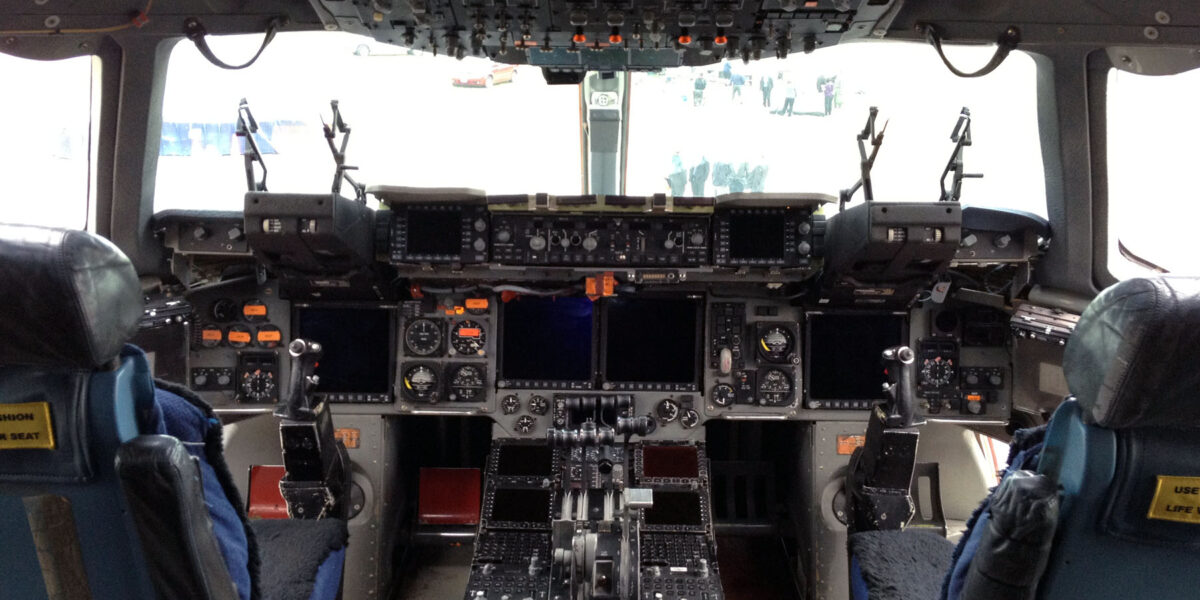
The C-17 Globemaster III features one of the most advanced cockpits in military aviation. Designed for a crew of just three—pilot, copilot, and loadmaster—the flight deck integrates sophisticated avionics that would traditionally require a larger crew. This comprehensive guide covers the major systems pilots encounter in the C-17 cockpit.
Flight Deck Overview
The C-17’s fully integrated digital cockpit represents a significant advancement over earlier military transports. The flight deck includes positions for pilot, copilot, and two observers, with the loadmaster typically operating from the cargo compartment. Below the flight deck, a walk-in avionics bay provides maintenance personnel with easy access to electronic systems.
The cockpit design philosophy emphasizes reduced crew workload through automation while maintaining full manual control capability when needed. This approach allows two pilots to safely operate an aircraft that rivals the cargo capacity of the older C-5 Galaxy, which required a crew of five.
Primary Flight Displays
Four Honeywell multifunction cathode-ray tube (CRT) displays form the heart of the C-17’s instrument panel. These high-resolution displays are highly customizable, allowing pilots to configure information presentation according to mission requirements and personal preferences.
The multifunction displays (MFDs) provide:
- Primary flight data including airspeed, altitude, and attitude
- Navigation information with moving map displays
- System status and health monitoring
- Engine performance parameters
- Weather radar returns
The digital display architecture reduces cockpit complexity compared to traditional analog instruments while improving reliability through built-in test (BIT) features that streamline troubleshooting and maintenance.
Head-Up Display System
The C-17 features two full-capability Head-Up Displays (HUDs), one for each pilot. These transparent screens project critical flight information directly into the pilot’s field of view, eliminating the need to look down at instruments during critical phases of flight.
The HUD displays essential information including:
- Airspeed and altitude
- Flight path vector
- Approach guidance symbology
- Tactical information during airdrops
The original HUD system, supplied by GEC Avionics, has been upgraded over the years. Current C-17s are equipped with modernized HUD systems from Elbit Systems, offering improved reliability and enhanced capability for low-visibility operations and precision landings.
Flight Management System
The Flight Management Computer (FMC) serves as the brain of the aircraft’s navigation and route planning. This sophisticated system integrates multiple data sources to ensure efficient and safe flight paths.
The FMC works with:
- GPS satellite navigation
- Inertial Navigation System (INS)
- Flight planning databases
- Performance calculations
Pilots can program complete flight plans including waypoints, altitude constraints, and speed profiles. The system calculates fuel requirements, optimal cruise altitudes, and time estimates while continuously updating based on actual conditions.
Electronic Flight Control System
The C-17 uses a quadruple-redundant fly-by-wire flight control system, meaning pilot inputs are transmitted electronically rather than through mechanical cables. This system offers several advantages over traditional controls.
Key features include:
- Four independent computer channels for redundancy
- Automatic flight envelope protection
- Improved handling characteristics
- Mechanically actuated backup system for emergency use
The digital flight controls enable capabilities that would be difficult or impossible with mechanical systems, including the C-17’s impressive short-field performance and steep approach capability.
Engine Indicating and Crew Alerting System
The Engine Indicating and Crew Alerting System (EICAS) continuously monitors the health of the four Pratt & Whitney F117-PW-100 engines and other vital aircraft systems. When anomalies are detected, the system alerts the crew through visual and aural warnings.
EICAS monitors:
- Engine thrust and temperature parameters
- Fuel flow and quantity
- Oil pressure and temperature
- Hydraulic system status
- Electrical system health
- Environmental control systems
The system prioritizes alerts, ensuring crews address the most critical issues first while providing detailed information for troubleshooting less urgent conditions.
Navigation and Communication Systems
The C-17 cockpit features comprehensive communication and navigation systems designed for global operations, including missions in remote or hostile environments.
Communication systems include:
- Multiple VHF and UHF radios
- HF radio for long-range communication
- Satellite communication (SATCOM)
- Secure voice capability
- Data link systems
Navigation equipment includes:
- Dual GPS receivers
- Inertial navigation systems
- VOR/ILS receivers
- TACAN
- Radar altimeter
- Weather radar
Central Computer Systems
The C-17’s avionics architecture relies on several central computers working together:
- Two Lockheed Martin mission computers handle overall system integration
- One Hamilton Sundstrand data management computer processes and routes information
- Two Honeywell air data computers calculate atmospheric parameters
This distributed computing approach provides redundancy while enabling sophisticated data fusion across multiple systems.
Enhanced Vision Systems
Modern C-17s incorporate Enhanced Vision System (EVS) technology to improve situational awareness in challenging conditions. These systems use infrared and low-light cameras to provide pilots with visibility beyond what the human eye can perceive.
EVS is particularly valuable for:
- Operations in reduced visibility
- Night missions without lighting
- Austere airfield operations
- Threat detection in tactical environments
Recent Upgrades and Modernization
The C-17 fleet continues to receive upgrades to maintain operational relevance:
Block 16 upgrades included new weather radar and various avionics improvements to enhance all-weather capability.
Block 21 upgrades added:
- Automatic Dependent Surveillance-Broadcast (ADS-B) capability
- Identification Friend or Foe (IFF) modifications
- Communication and navigation system updates
- Improved flight management computer software
These ongoing modernization efforts ensure the C-17 remains capable of operating in evolving airspace environments while maintaining its tactical edge.
Cockpit Resource Management
The C-17’s advanced cockpit systems are designed to support effective Crew Resource Management (CRM). The logical layout, consistent display formats, and automated alerting help pilots maintain situational awareness while managing the complex demands of airlift operations.
Understanding these systems thoroughly is essential for C-17 pilots. While automation handles many routine tasks, pilots must remain proficient in all systems to handle abnormal situations and emergency procedures effectively.
