Royal Australian Air Force C-17 Fleet and RAAF Globemaster Guide
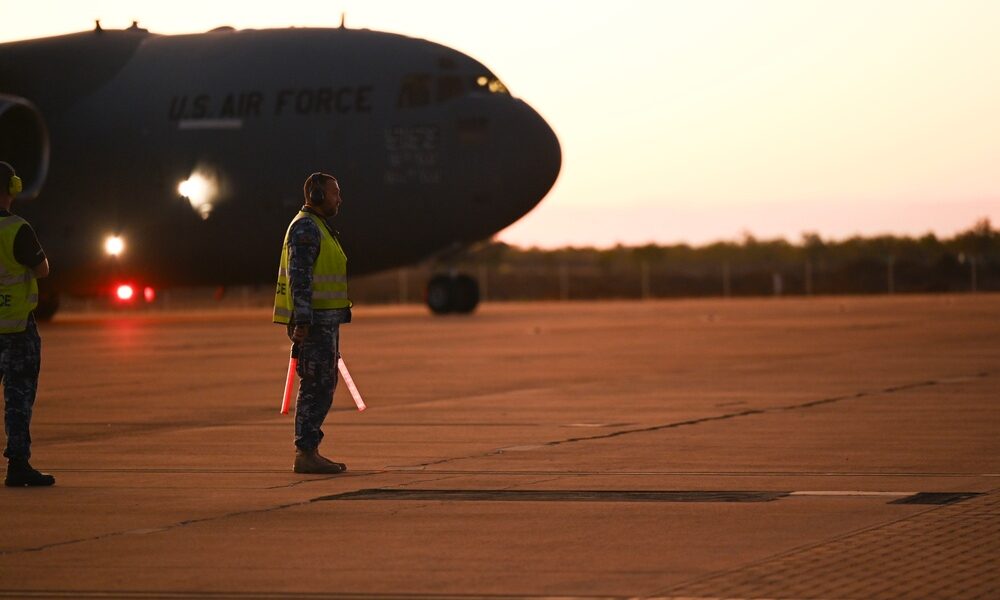
The Royal Australian Air Force operates one of the most capable international C-17 fleets outside the United States. With eight Globemaster III aircraft based at RAAF Base Amberley in Queensland, Australia fields a strategic airlift force that punches well above its weight in regional operations and global humanitarian response. This guide examines Australia’s C-17 program from acquisition to current operations.
Fleet Overview
RAAF C-17 Statistics:
- Aircraft: 8 C-17A Globemaster III
- Operating Unit: No. 36 Squadron
- Base: RAAF Base Amberley, Queensland
- First delivery: December 2006
- Final delivery: November 2015
- Designation: C-17A (same as USAF)
Acquisition History
Australia’s path to the C-17 reflects strategic foresight and fortunate timing:
Timeline:
- 2006: First four aircraft ordered through Foreign Military Sales
- December 2006: First aircraft delivered (A41-206)
- 2008: Fifth aircraft ordered
- 2011: Sixth aircraft ordered
- 2012: Government announces order for seventh and eighth aircraft
- November 2015: Final aircraft delivered, just before production line closure
Australia’s acquisition timing proved fortunate—the 2012 order for the seventh and eighth aircraft came just three years before Boeing closed the C-17 production line permanently.
No. 36 Squadron
No. 36 Squadron, the “Fireballs,” operates all Australian C-17s:
Squadron History:
- Formed: 1942 (originally Douglas DC-3 transport)
- Reformed with C-17: December 2006
- Previous aircraft: C-130E/H Hercules
- Motto: “Primus Inter Pares” (First Among Equals)
Current Structure:
- Approximately 250 personnel
- Flight crews, loadmasters, and support staff
- Maintenance provided by No. 35 Squadron
- Integrated with USAF sustainment system
Mission Capabilities
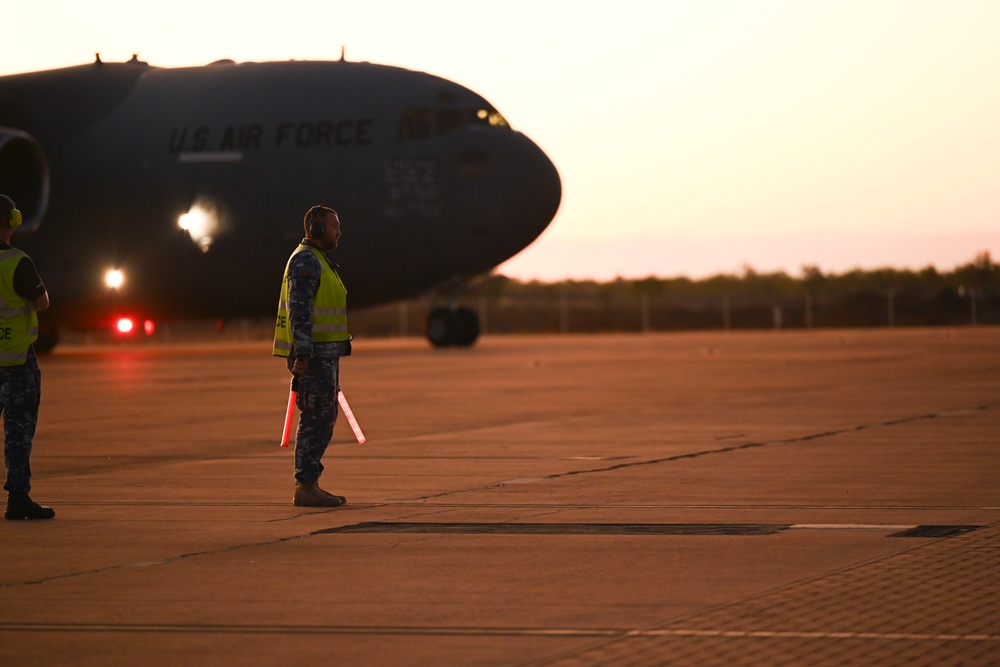
The RAAF utilizes the C-17 across the full spectrum of operations:
Primary Missions:
- Strategic airlift within the Indo-Pacific region
- Humanitarian assistance and disaster relief (HADR)
- Australian Defence Force deployments
- Medical evacuation (aeromedical)
- VIP and head-of-state transport
- Support to deployed operations
Notable Operations:
- Afghanistan and Middle East sustainment
- Pacific island disaster response (cyclones, tsunamis)
- Bushfire emergency support
- COVID-19 medical equipment delivery
- Solomon Islands stabilization support
- Ukraine humanitarian assistance
Regional Significance
Australia’s C-17 fleet holds strategic importance in the Indo-Pacific:
Geographic Advantages:
- Positioned to respond across Pacific island nations
- Critical for Southeast Asian disaster response
- Enables rapid deployment to northern Australia
- Supports Antarctic operations (Davis and Casey stations)
Alliance Integration:
- Regular exercises with USAF C-17 units
- Interoperability with US Pacific Air Forces
- Part of broader Australian-American defense cooperation
- Supports Five Eyes intelligence community logistics
Training and Standardization
Australian C-17 crews train to USAF standards:
Pilot Training:
- Initial qualification at Altus AFB, Oklahoma (USA)
- C-17 Formal Training Unit alongside USAF students
- Continuation training at RAAF Amberley
- Instructor pilot upgrade through USAF system
Loadmaster Training:
- Basic loadmaster course at Altus AFB
- C-17 specific qualification in United States
- Advanced certifications for airdrop, aeromedical
- Joint training exercises with international partners
RAAF Base Amberley
Australia’s C-17s operate from the country’s largest air base:
Base Overview:
- Location: 40 km southwest of Brisbane, Queensland
- Runway: 10,000+ feet, capable of all operations
- Also hosts: F/A-18F Super Hornets, EA-18G Growlers, KC-30A tankers
- Major expansion completed for C-17 operations
Infrastructure:
- Purpose-built C-17 maintenance facilities
- Dedicated ramp space for eight aircraft
- Integrated logistics hub for air mobility
- Located near major port facilities for joint operations
Humanitarian Operations Excellence
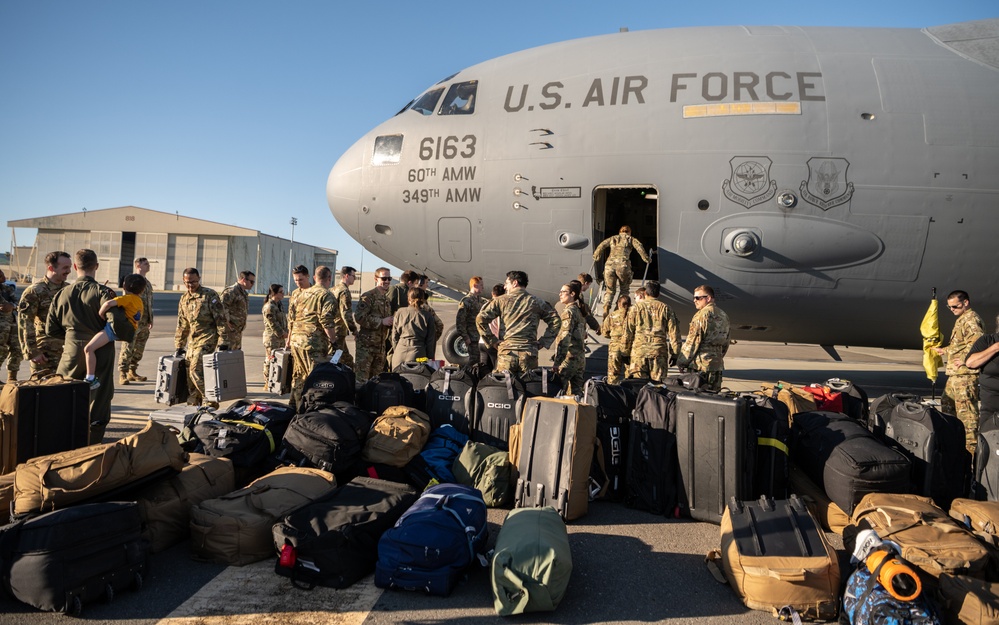
The RAAF C-17 fleet has earned recognition for disaster response:
Key Humanitarian Missions:
- 2010 Pakistan floods: Multiple relief flights
- 2011 Christchurch earthquake: Rapid response to New Zealand
- 2014 MH370 search: Support equipment delivery
- 2015 Nepal earthquake: Aid delivery
- 2019-2020 Australian bushfires: Interstate firefighting support
- 2022 Tonga volcanic eruption: First responder aircraft
The Tonga response particularly demonstrated C-17 capabilities—Australian aircraft delivered aid when the airport was covered in volcanic ash and most other aircraft couldn’t land.
Fleet Sustainment
Australia participates in the Globemaster III Sustainment Partnership:
- Integrated with Boeing’s C-17 support system
- Parts pooling with USAF and other operators
- Shared depot maintenance capabilities
- Contractor logistics support in Australia
- Software and system upgrades coordinated globally
This partnership reduces sustainment costs and ensures the RAAF fleet maintains the same capability standard as USAF aircraft.
Comparison with Regional Operators
Indo-Pacific C-17 Operators:
- Australia: 8 aircraft
- India: 11 aircraft
- United States (Pacific-based): 50+ across multiple bases
- Qatar and UAE: 8 each (Middle East but deploy regionally)
Australia fields the largest Allied C-17 fleet in the Pacific region, second only to the United States.
Future Outlook
With C-17 production ended, Australia’s fleet represents a fixed strategic asset:
Sustainment Priorities:
- Planned service life through 2040s
- Ongoing modernization upgrades
- Potential interest in any used aircraft becoming available
- No direct replacement currently identified
Emerging Requirements:
- Increased Indo-Pacific presence demands
- Growing humanitarian response requirements
- AUKUS-related logistics support
- Northern Australia basing expansion
The Australian C-17 Story
Australia’s C-17 program represents a strategic success story. The decision to acquire these aircraft—and the foresight to order additional aircraft before production ended—gives Australia airlift capability unmatched by any nation of similar size.
For a country defined by vast distances and regional responsibilities across the Pacific, the C-17 provides response capability that smaller transports simply cannot match. Whether delivering disaster relief to Tonga, supporting Antarctic research, or deploying forces overseas, the RAAF Globemaster fleet remains Australia’s primary tool for projecting power and providing assistance across the Indo-Pacific.
The eight aircraft represent a national strategic asset that will serve Australia for decades to come.

Subscribe for Updates
Get the latest articles delivered to your inbox.
We respect your privacy. Unsubscribe anytime.