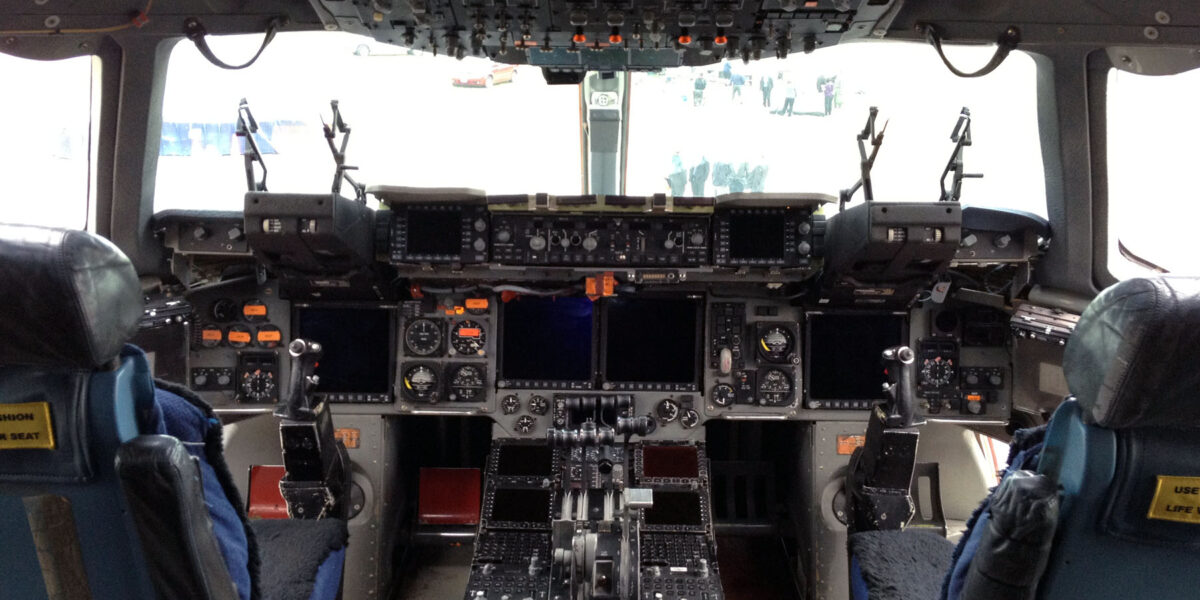
Green World at 250 Feet: Inside the C-17’s Terrifying Night Low-Level Missions

At 250 feet above the ground, in total darkness, the world through night vision goggles glows an eerie green. Trees, hills, and obstacles race past at 250 knots while the crew flies a precise route that threads between terrain features and threat envelopes. This is C-17 night low-level operations—one of the most demanding and exhilarating missions in military aviation. Here’s what it takes to fly a 585,000-pound aircraft through the darkness just above the trees.

Why Fly Low at Night

Night low-level operations aren’t about thrill-seeking—they’re about survival and mission success:

Threat Avoidance

Modern air defense systems are deadly effective against aircraft flying predictable patterns at medium or high altitude. Flying low and fast exploits radar limitations:

  • Terrain masks the aircraft from ground-based radar
  • Low altitude reduces detection range
  • High speed minimizes exposure time
  • Darkness adds another layer of protection

Tactical Delivery

Many C-17 missions require arriving at a forward location with minimal warning:

  • Assault landings at contested airfields
  • Airdrops to forces in contact
  • Covert resupply of special operations forces

Approaching at low level delays detection until the aircraft is nearly at the objective.

Night Vision Goggle Basics

How NVGs Work

Night vision goggles amplify available light—starlight, moonlight, and even airglow—to create a visible image. The AN/AVS-9 goggles used in the C-17 provide:

  • Image intensification: Up to 50,000x light amplification
  • Field of view: 40 degrees horizontal
  • Resolution: Sufficient to see terrain, obstacles, and runway features

The Green World

The phosphor screen that displays the amplified image glows green—the color human eyes perceive most easily. After hours in NVGs, this green world becomes natural, though the limited field of view requires constant head movement to build situational awareness.

Limitations

NVGs aren’t magic—they have significant limitations:

  • No depth perception: The image is essentially two-dimensional
  • Weather dependent: Clouds and precipitation degrade performance
  • Limited FOV: Easy to miss threats outside the goggle view
  • Halos and blooming: Bright lights can wash out the image

Crews train extensively to compensate for these limitations through technique and teamwork.

Planning the Low-Level Route

Route Selection

Night low-level routes are carefully planned to:

  • Avoid known threats and population centers
  • Use terrain masking to maximum advantage
  • Provide escape routes if threats are encountered
  • Account for aircraft performance at low altitude

Terrain Analysis

Detailed terrain study is essential:

  • Identify all obstacles: towers, wires, ridgelines
  • Mark emergency climb-out areas
  • Note terrain features for visual navigation
  • Plan altitude steps to clear terrain changes

The route is typically flown in the simulator before the actual mission, allowing crews to preview every turn and terrain feature.

Weather Considerations

Low-level night flying demands good weather:

  • Minimum ceiling heights to allow maneuvering
  • Visibility requirements for NVG effectiveness
  • Moon angle considerations (illumination varies dramatically)
  • Fog and haze that degrade NVG performance

Flying the Profile

Crew Coordination

Night low-level is a team effort:

Pilot Flying (PF):

  • Flies the aircraft using NVGs and instruments
  • Maintains altitude and airspeed
  • Executes turns at planned points

Pilot Monitoring (PM):

  • Monitors navigation and timing
  • Backs up altitude and obstacle awareness
  • Manages radios and systems
  • Provides callouts at critical points

Loadmasters:

  • Monitor cargo through NVGs
  • Watch for threats from side windows
  • Prepare for airdrop or landing as mission requires

The Altitude Challenge

Maintaining precise altitude at 250-500 feet while maneuvering requires total concentration:

  • Radar altimeter provides actual height above ground
  • GCAS (Ground Collision Avoidance System) provides backup warning
  • NVG view shows terrain but depth perception is limited
  • Pilot must cross-check instruments with outside view constantly

Descending just 100 feet during a turn could put the aircraft in the trees. There’s no room for distraction.

Speed Management

Low-level speeds are typically 250-300 knots indicated airspeed:

  • Fast enough to minimize exposure time
  • Slow enough to maneuver safely
  • Matching the planned fuel consumption

At these speeds, terrain features approach rapidly. A turn point identified through NVGs arrives in seconds, demanding precise timing.

Terrain Following and Terrain Avoidance

Manual Terrain Following

C-17 low-level is flown manually—no autopilot-coupled terrain following like some fighters use. The pilot flies based on:

  • NVG view of terrain
  • Radar altimeter readout
  • Planned route and altitude profile
  • GCAS warnings as backup

Pop-Up Maneuvers

When threats are detected or terrain requires, the aircraft may “pop up” to a higher altitude temporarily:

  • Climb to clear obstacle or ridge
  • Return to low altitude once clear
  • Minimize time at higher, more vulnerable altitude

Ground Collision Avoidance System

GCAS is the last line of defense against controlled flight into terrain:

  • Continuously compares aircraft trajectory with terrain database
  • Provides warnings when collision is predicted
  • Can command automatic climb if threat is imminent

GCAS is a backup, not a primary terrain avoidance tool. Crews fly to avoid ever triggering GCAS warnings.

NVG Lighting

Cockpit Lighting

The C-17 cockpit uses NVG-compatible lighting:

  • Blue-green filters prevent interference with goggle image
  • Intensity adjustable to minimize cockpit reflection
  • All displays readable through goggles or unaided

External Lights

Formation and position lights are NVG-compatible:

  • Invisible to the naked eye at distance
  • Visible through NVGs for formation flying
  • Allow covert operations while maintaining visual contact

Training Requirements

NVG low-level qualification requires extensive training:

Initial Qualification

  • Ground academics on NVG theory and limitations
  • Simulator sessions building to low altitude
  • Daytime low-level flights to learn terrain following
  • Progressive NVG training at increasing difficulty
  • Check ride demonstrating all required skills

Currency Requirements

Pilots must fly regular NVG sorties to remain qualified. Skills erode quickly without practice, and the stakes are too high for rusty performance.

The Psychological Dimension

Night low-level tests mental discipline:

  • Managing fear of the unseen terrain below
  • Maintaining concentration through hours of demanding flying
  • Trusting instruments when NVG view is ambiguous
  • Working as a team under high-stress conditions

Crews who master this mission develop confidence that carries into all flying. If you can fly NVGs at 250 feet in combat conditions, everything else seems straightforward.

Why It Matters

Night low-level capability is what makes the C-17 a true tactical airlifter. The ability to penetrate defended airspace under cover of darkness and deliver heavy cargo where it’s needed gives combatant commanders options no other airlifter provides.

For C-17 crews, qualifying for NVG low-level represents a significant professional achievement. It demands the highest level of airmanship, crew coordination, and situational awareness. Those skills, once developed, enhance every other mission the crew flies.

Jason Michael

Jason Michael

Author

Jason Michael is a Pacific Northwest gardening enthusiast and longtime homeowner in the Seattle area. He enjoys growing vegetables, cultivating native plants, and experimenting with sustainable gardening practices suited to the region's unique climate.

✈️ Get the latest C-17 news & insider content

Shop C-17 Gear

Subscribe for Updates

Get the latest articles delivered to your inbox.