Reflections of a C-17 Pilot
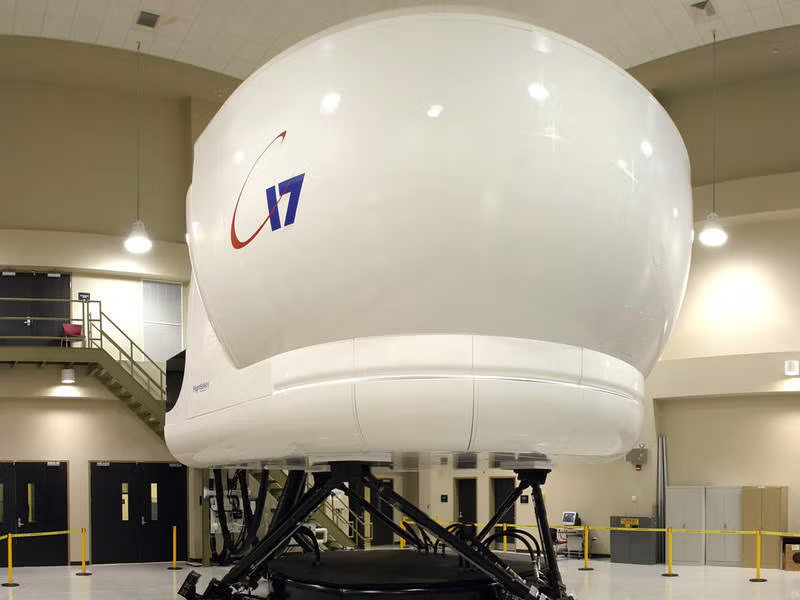
Someone asked me recently what it’s like to fly the C-17 for a living. I started with the standard stuff—mission variety, cool aircraft, travel. But then I realized the real answer is more complicated.
The Weight You Carry
There’s a moment during every flight when it hits me: I’m responsible for this aircraft, the crew, and whatever we’re hauling. Sometimes that’s pallets of MREs. Sometimes it’s wounded service members heading home. Sometimes it’s a flag-draped coffin.
That weight doesn’t go away when you land. It follows you home. The nights when you replay decisions, wondering if you should have done something different. The missions where everything went right but you still feel the tension days later.
New pilots think the hardest part is learning the systems. It’s not. The hardest part is carrying the responsibility without letting it crush you.
Long Hours in a Small Space
I’ve spent thousands of hours sitting in that left seat. After a while, the cockpit becomes oddly comfortable—your own weird office at 35,000 feet. You learn to appreciate the quiet stretches, the time to think.
Sunrise over the Atlantic. Watching thunderstorms build from above. The stars when you’re flying over the Pacific and there’s nothing below but dark water for thousands of miles. These moments make the job feel like something more than just work.
But there’s also the fatigue. The 18-hour duty days. Landing somewhere at 3 AM local time when your body thinks it’s noon. Trying to sleep in a hotel room where the previous crew left the curtains open and now the sun is destroying any chance of rest.
The People You Fly With
The crew becomes a second family. You’re stuck together for days or weeks at a time, in tight quarters, dealing with whatever the mission throws at you. Some of my closest friendships started in that cockpit.
There’s a communication that develops after enough flights together. A look, a gesture, and your copilot knows exactly what you’re thinking. When things go wrong—and they do—that unspoken understanding matters more than any checklist.
I remember a flight where we had a serious system malfunction over hostile territory. No panic. No raised voices. Just three people working the problem, trusting each other completely. We got the jet on the ground safely. Afterward, we didn’t even talk about it much. Didn’t need to.
What It Changes
Flying the C-17 changed how I see things. Small problems don’t bother me like they used to—perspective shifts when you’ve dealt with actual emergencies. I’m more patient with uncertainty. Plans fall apart all the time in this job; you learn to adapt.
I’ve also learned that the quiet moments matter. It’s easy to focus on the dramatic stuff—the combat zones, the difficult approaches, the high-stakes missions. But most of the job is routine. Learning to find meaning in the routine is part of staying sane.
Is It Worth It?
Ask me on a good day and I’ll say yes without hesitation. Ask me after a week of broken sleep and endless delays and the answer might be slower coming.
But flying is what I’m meant to do. The C-17 is the best aircraft I’ve ever been trusted to operate. And despite everything—the stress, the time away, the weight of responsibility—I can’t imagine doing anything else.
Recommended Aviation Gear
David Clark H10-13.4 Aviation Headset
The industry standard for aviation headsets.
Pilots Handbook of Aeronautical Knowledge
Essential FAA handbook for every pilot.
As an Amazon Associate, we earn from qualifying purchases.

Subscribe for Updates
Get the latest articles delivered to your inbox.
We respect your privacy. Unsubscribe anytime.