How C-17 Loadmasters Fit 585,000 Pounds in One Aircraft
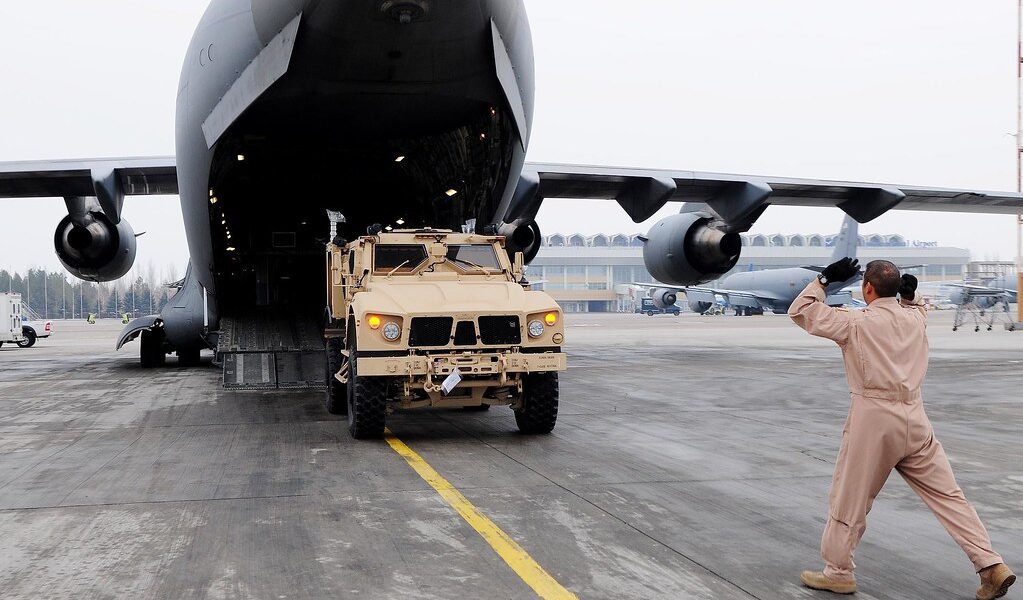
Loading a C-17 to its maximum 585,000-pound takeoff weight is part science, part art, and entirely critical. Get the math wrong, and you might end up with an aircraft that won’t rotate, climbs dangerously slowly, or handles unpredictably. As someone who’s signed off on countless load plans, I can tell you that understanding weight and balance isn’t just for loadmasters—it’s essential knowledge for every crew member.
The Basic Math
Here are the numbers that define C-17 loading:
- Maximum Takeoff Weight: 585,000 pounds
- Maximum Landing Weight: 513,000 pounds
- Operating Empty Weight: ~282,500 pounds
- Maximum Payload: 170,900 pounds
- Maximum Fuel: ~237,000 pounds (35,546 gallons)
Simple math reveals the trade-off: with empty weight at 282,500 pounds and maximum takeoff at 585,000, you have about 302,500 pounds of capacity for fuel and payload combined. You can’t take maximum payload AND maximum fuel—the sum would exceed limits.
Cargo Bay Dimensions
The C-17’s cargo bay defines what can physically fit, regardless of weight:
- Length: 88 feet (68 feet of flat floor plus ramp)
- Width: 18 feet between wall constraints
- Height: 12.4 feet to ceiling at centerline
- Floor capacity: Can handle concentrated loads up to 36,000 pounds per linear foot
This floor strength is remarkable—the C-17 can carry M1 Abrams tanks, Apache helicopters, and other heavy equipment that would crush lesser aircraft. The titanium floor structure distributes these extreme loads into the airframe.
Center of Gravity: The Critical Calculation
Weight alone doesn’t determine if an aircraft is safe to fly—the location of that weight matters enormously. The Center of Gravity (CG) must fall within a defined envelope for controllable flight.
CG Limits
The C-17’s CG is expressed as a percentage of Mean Aerodynamic Chord (MAC):
- Forward limit: Approximately 11% MAC (varies with weight)
- Aft limit: Approximately 44% MAC (varies with weight)
Forward CG makes the aircraft nose-heavy and harder to rotate for takeoff. Extreme forward CG could mean the elevators can’t generate enough pitch authority to fly normally.
Aft CG makes the aircraft less stable—it responds more quickly to pitch inputs but becomes increasingly difficult to control. Extreme aft CG results in an unflyable aircraft.
Calculating CG
Every item loaded contributes to CG based on its weight and position. The fundamental equation:
Total Moment = Sum of (Individual Weight × Arm from Datum)
CG Location = Total Moment ÷ Total Weight
Loadmasters use specialized computers and software to quickly calculate CG as items are loaded. The cockpit weight and balance system displays current CG and alerts crews if loading would put CG outside limits.
Load Planning Process
Before Loading
- Receive cargo manifest with weights and dimensions
- Determine required fuel load based on mission profile
- Calculate available payload capacity
- Develop loading sequence that maintains CG throughout loading
- Verify floor loading doesn’t exceed structural limits
During Loading
As cargo comes aboard, loadmasters:
- Weigh items if weights are uncertain
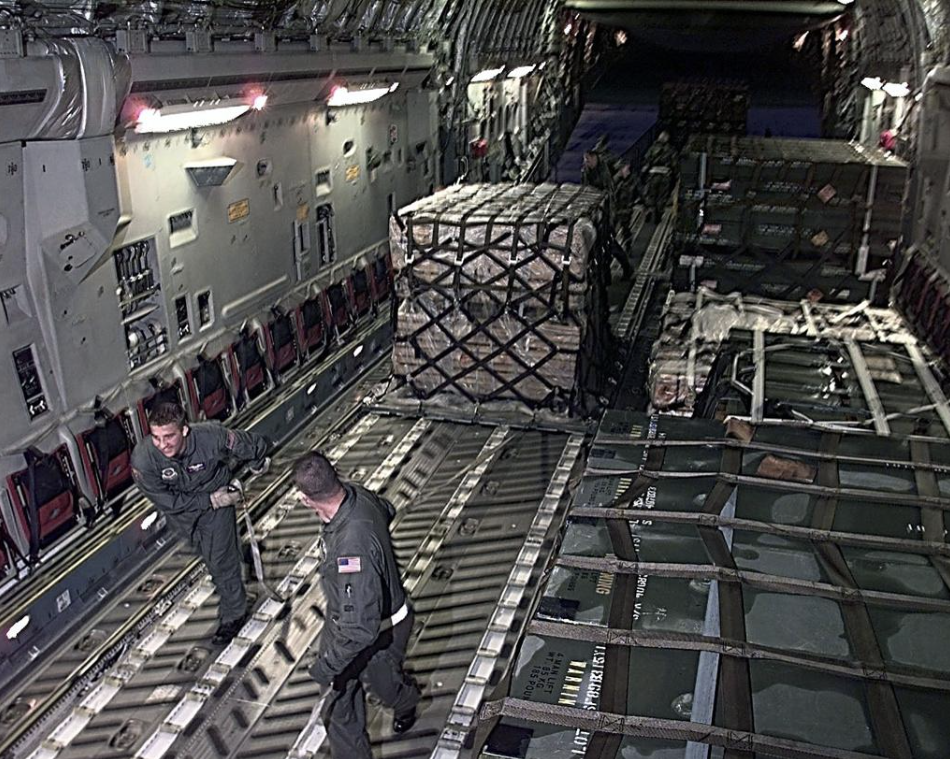
- Position cargo according to the load plan
- Secure items with chains, straps, and nets
- Update CG calculations as each item is positioned
- Verify final configuration before flight
In-Flight Considerations
CG changes during flight as fuel burns. The fuel management system automatically transfers fuel between tanks to maintain balance, but crews monitor this process. A malfunction could allow CG to drift toward limits during a long flight.
Cargo Restraint
Getting weight on the aircraft is only half the challenge—it must stay in place during flight. The C-17 can pull up to 2.5 Gs during maneuvering and encounters turbulence that imposes significant acceleration forces.
Restraint Requirements
Cargo restraint is calculated based on:
- Forward: 3G restraint (cargo tries to move forward during braking)
- Aft: 1.5G restraint (cargo tries to move aft during acceleration)
- Lateral: 1.5G restraint (cargo tries to move sideways during turns)
- Vertical: 2G restraint (cargo tries to lift during maneuvers)
Tie-Down Equipment
The C-17’s cargo floor features a grid of tie-down rings rated for 25,000 pounds each. Loadmasters use:
- Chains with tension devices for heavy equipment
- Straps for lighter cargo
- Nets for palletized loads
- Specialized restraint systems for vehicles and aircraft
Proper restraint takes time but prevents catastrophic cargo shift. A loose M1 tank sliding through the cargo bay would destroy equipment and likely cause loss of aircraft control.
Special Loading Scenarios
Outsize Cargo
The C-17’s party trick is carrying “outsize” cargo—items too big for any other tactical airlifter. This includes:
- M1 Abrams main battle tanks
- AH-64 Apache helicopters (partially disassembled)
- Multiple up-armored Humvees
- Stryker armored vehicles
Loading these items requires careful planning—they often push against both weight and CG limits simultaneously.
Airdrop Loads
Cargo configured for airdrop has additional requirements. The load must:
- Extract cleanly from the aircraft
- Clear all obstructions during release
- Maintain aircraft CG within limits as cargo exits
For heavy airdrop, multiple platforms may exit in sequence. The load plan must ensure CG stays acceptable through the entire extraction process—challenging when 50,000 pounds of cargo slides out the back in seconds.
Medical Evacuation
Aeromedical evacuation configurations replace cargo pallets with patient litter stanchions. While individual patients weigh far less than cargo pallets, the medical equipment, attendants, and life support systems add up. CG planning ensures the aircraft remains balanced whether carrying 8 critical patients or 80 ambulatory casualties.
Weight and Balance Computers
Modern C-17s feature computerized weight and balance systems that:
- Display current gross weight and CG
- Predict takeoff and landing CG
- Alert crews to out-of-limit conditions
- Account for fuel burn during flight
These systems don’t replace crew knowledge—they enhance it. Crews must understand the fundamentals to catch computer errors and handle manual calculations if systems fail.
The Loadmaster’s Role
The two loadmasters on every C-17 crew are cargo experts. They:
- Develop and execute load plans
- Physically configure and secure cargo
- Calculate weight and balance
- Brief pilots on cargo configuration and special considerations
- Monitor cargo during flight
Loadmasters undergo extensive training in weight and balance, cargo restraint, and specialized procedures. Their expertise is essential for every mission involving cargo.
Why It Matters
Proper loading is a safety fundamental. Aircraft have been lost to improper weight and balance—cargo shifts during takeoff, CG outside limits, overweight conditions exceeding structural capabilities. The C-17’s impressive cargo capability comes with responsibility: every pound must be accounted for and properly positioned.
For C-17 crews, weight and balance awareness is constant. Pilots rely on loadmasters for cargo expertise, but they must understand the fundamentals to validate load plans and recognize problems. The math behind loading a C-17 isn’t just academic—it’s what keeps heavy iron flying safely.
Compare the official C-17 payload and pallet limits in the cargo-capacity guide. Read the related guide.

Subscribe for Updates
Get the latest c-17 pilot updates delivered to your inbox.
We respect your privacy. Unsubscribe anytime.