C-17 Fleet: 275 Aircraft and Every Global Operator
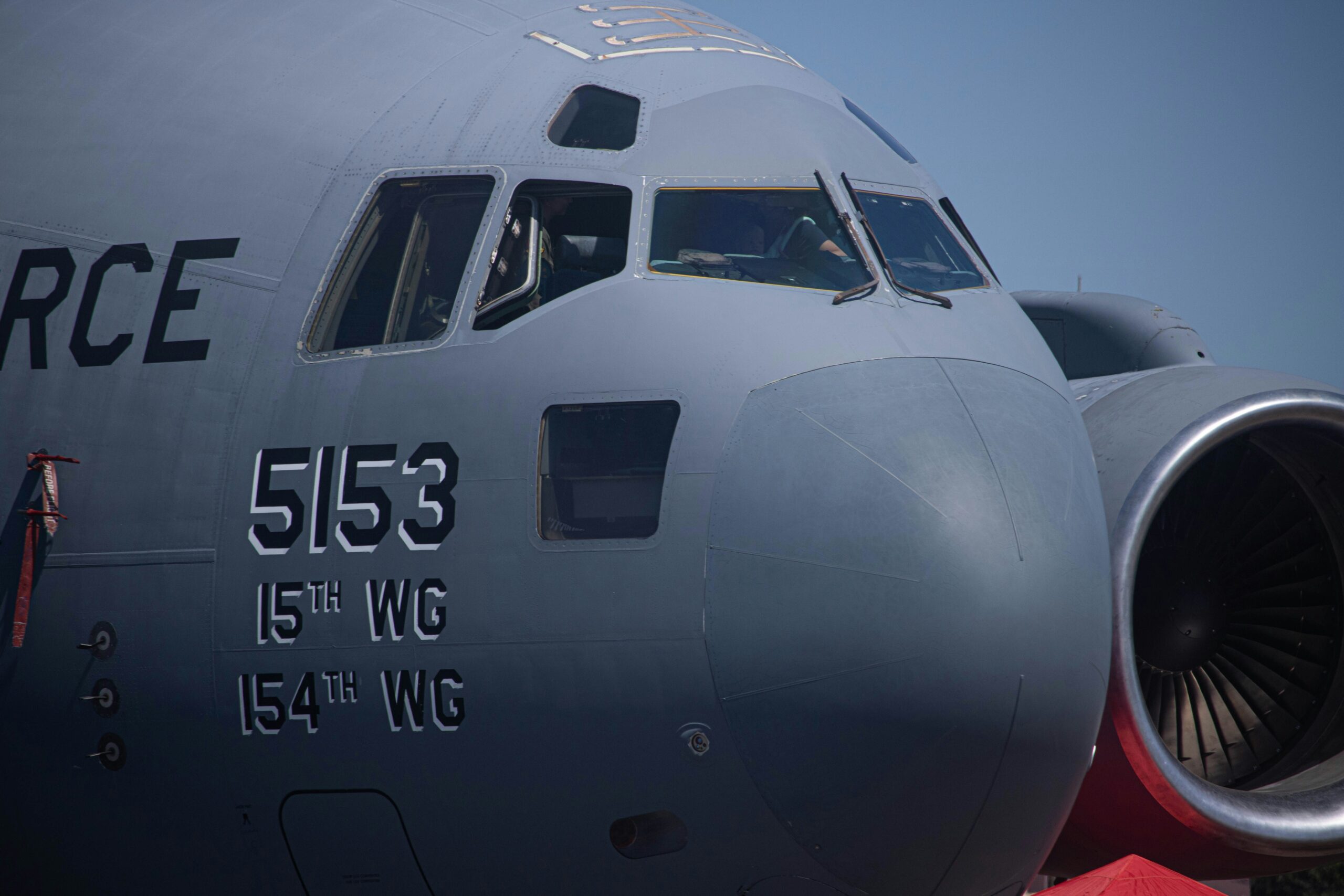
Boeing reports that 275 C-17 Globemaster III aircraft operate worldwide: 222 delivered to the U.S. Air Force and 53 delivered to international partners. The global operator community includes the United States, seven individual foreign air forces and the 12-nation Strategic Airlift Capability based in Hungary.
The total is easy to misstate because “operators,” “countries,” “delivered aircraft” and the U.S. Air Force’s current inventory are not identical measures. This guide keeps those categories separate and cites the date or source behind each figure.
Current C-17 fleet by operator
| Operator | Aircraft | Public basis |
|---|---|---|
| U.S. Air Force | 222 | USAF inventory, current as of April 2025; Boeing 2026 delivery summary |
| Royal Air Force | 8 | RAF fleet history and current aircraft material |
| Royal Australian Air Force | 8 | RAAF aircraft page |
| Royal Canadian Air Force | 5 | Canadian defence fleet reporting |
| Indian Air Force | 11 | Boeing international delivery total and public operator records |
| Qatar Emiri Air Force | 8 | Boeing international delivery total and public operator records |
| United Arab Emirates Air Force | 8 | Boeing international delivery total and public operator records |
| Kuwait Air Force | 2 | Boeing international delivery total and public operator records |
| Strategic Airlift Capability | 3 | NATO |
| Worldwide | 275 | 222 USAF + 53 international |
Why some official pages say 222 and others say 223
The Air Force fact sheet says the service acquired a final fleet of 223 aircraft, while its April 2025 inventory rows total 222: 146 active-duty, 50 Air National Guard and 26 Air Force Reserve aircraft. Boeing’s February 2026 delivery summary also uses 222 delivered to the U.S. Air Force, although another Boeing program page describes 223 at 12 bases.
Those statements use different program and inventory contexts. For a current fleet table, the dated Air Force inventory and Boeing’s latest 222-plus-53 delivery summary provide the clearest reproducible total. The discrepancy should be disclosed instead of silently mixing figures.
U.S. Air Force fleet
The Air Force remains the dominant operator. Its April 2025 fact sheet reports 146 active-duty, 50 Air National Guard and 26 Air Force Reserve C-17s. Air Mobility Command operates aircraft from Travis, Dover, Joint Base Lewis-McChord, Joint Base Charleston and Joint Base McGuire-Dix-Lakehurst. Pacific Air Forces operates them from Alaska and Hawaii, with additional Guard, Reserve, training and test locations.
The U.S. mission set includes strategic delivery, tactical airlift, airdrop and aeromedical evacuation. The same aircraft can carry up to 170,900 pounds of cargo, 102 troops or paratroopers, or the published aeromedical configuration. See the C-17 cargo-capacity guide for those figures.
United Kingdom
The Royal Air Force operates eight C-17s with 99 Squadron at RAF Brize Norton. The United Kingdom initially leased four aircraft in 2000, then expanded to eight; the RAF says the eighth aircraft was delivered in May 2012.
Australia
The Royal Australian Air Force operates eight C-17As from RAAF Base Amberley with No. 36 Squadron. Australia introduced four aircraft between 2006 and 2008, then doubled the fleet.
Canada
Canada calls the aircraft the CC-177 Globemaster III. Canadian defence reporting lists a fleet of five, introduced between 2007 and 2015.
India, Qatar, the UAE and Kuwait
India has 11 aircraft, making it the largest C-17 operator outside the United States. Qatar and the United Arab Emirates each have eight, while Kuwait has two. Together these four fleets account for 29 of Boeing’s 53 international-partner aircraft.
The 12-nation Strategic Airlift Capability
The Strategic Airlift Capability jointly operates three C-17s through the Heavy Airlift Wing at Pápa Air Base in Hungary. NATO says the participating nations jointly acquire, operate and share costs and flight hours for the aircraft. The fleet is multinational rather than a ninth national air-force inventory.
The 12 participants are Bulgaria, Estonia, Finland, Hungary, Lithuania, the Netherlands, Norway, Poland, Romania, Slovenia, Sweden and the United States.
How many C-17s were built?
Boeing’s current fleet material says 275 C-17As were delivered between 1993 and 2015. Older totals sometimes include developmental airframes or use different cutoffs, which is why figures such as 279 appear in secondary summaries. For the operating customer fleet, Boeing’s current figure is 275.
C-17 fleet FAQ
How many C-17s are operating worldwide?
Boeing reports 275: 222 delivered to the U.S. Air Force and 53 to international partners.
How many countries operate the C-17?
Eight countries operate national fleets: the United States, United Kingdom, Australia, Canada, India, Qatar, the United Arab Emirates and Kuwait. A separate multinational Strategic Airlift Capability operates three aircraft for 12 participating nations.
Which country has the most C-17s outside the United States?
India, with 11 aircraft.
Is the C-17 still in production?
No. Deliveries ended in 2015. Boeing continues to sustain and modernize the global fleet.
Official sources
- Boeing: C-17 global fleet and operator list
- Boeing: 2026 fleet delivery summary
- U.S. Air Force: C-17 inventory and locations
- Royal Air Force: eight-aircraft fleet history
- Royal Australian Air Force: C-17A fleet
- NATO: Strategic Airlift Capability
For the budget context behind operating this fleet, see the official C-17 cost-per-flight-hour rates.

Subscribe for Updates
Get the latest c-17 pilot updates delivered to your inbox.
We respect your privacy. Unsubscribe anytime.