How to Become a C-17 Loadmaster: Current Training Path
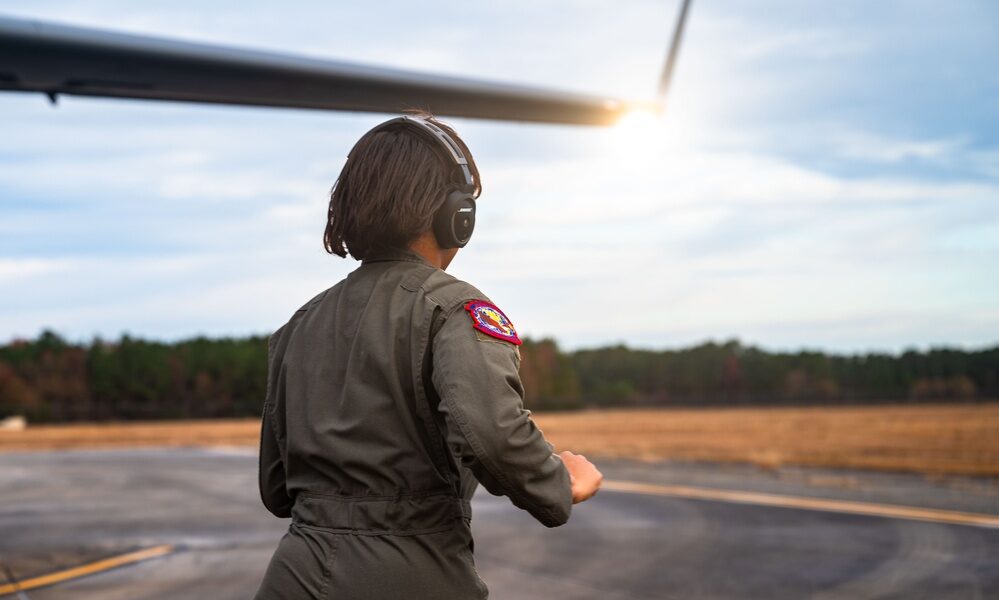
A C-17 loadmaster is an enlisted aircrew member responsible for cargo and passenger loading, restraint, weight-and-balance work and cargo-compartment safety. The current Air Force specialty framework calls the broader field Mobility Force Aviator; official personnel documents identify the C-17 loadmaster shred as 1A1X2C.
The path generally includes enlistment and job qualification, Basic Military Training, Career Enlisted Aviator and Mobility Force Aviator instruction, survival training, C-17 initial qualification at Altus Air Force Base, and unit training. Exact sequencing and availability can change, so applicants should verify the current contract and course pipeline with an Air Force recruiter.
C-17 loadmaster path at a glance
- Meet Air Force enlistment and aviation-career requirements.
- Qualify for and obtain an available Mobility Force Aviator/loadmaster position.
- Complete Basic Military Training.
- Complete Career Enlisted Aviator fundamentals and Mobility Force Aviator preparation.
- Complete required survival and emergency training.
- Complete C-17 Loadmaster Initial Qualification at Altus AFB.
- Report to an assigned unit and complete continuation or mission qualification requirements.
What a C-17 loadmaster does
The Air Force describes a basic C-17 crew of two pilots and one loadmaster. The loadmaster’s work connects the aircraft, cargo, passengers and flight crew.
- Verify cargo dimensions, weight and documentation.
- Plan and check aircraft loading and center-of-gravity limits using approved data.
- Direct loading and unloading.
- Ensure cargo, vehicles and equipment are restrained correctly.
- Brief and monitor passengers or troops.
- Configure and monitor the cargo compartment for the mission.
- Coordinate with pilots and ground personnel.
The public C-17 fact sheet lists 18 pallet positions, a maximum payload of 170,900 pounds and capacity for 102 troops or paratroopers. Those are aircraft capacities, not a do-it-yourself load plan. Qualified loadmasters use current technical guidance for each mission.
The current Mobility Force Aviator specialty
Older articles and recruiting material may use the standalone “Aircraft Loadmaster” name or legacy 1A2X1 code. The current Department of the Air Force Career Field Education and Training Plan uses 1A1X2 for Mobility Force Aviator and lists 1A1X2C for C-17 loadmaster in current personnel material.
The broader specialty includes aircraft-specific duties and training paths. Getting a Mobility Force Aviator position does not mean an applicant can independently choose the C-17; contracts, component vacancies, qualification and Air Force needs matter.
Step 1: enlist and qualify
Applicants must meet the general requirements to enlist and the current standards for the aviation specialty. These can include age, citizenship, education, aptitude, medical, physical, background and aircrew requirements.
Because career availability changes, the authoritative answer is the job or vacancy offered in writing through the applicable Active Duty, Reserve or Air National Guard process. Do not rely on a blog’s old ASVAB score or course list as a guarantee.
Step 2: Basic Military Training
New enlisted Airmen complete Basic Military Training before technical and flying training. The Air Force recruiting site currently describes enlisted BMT as 7.5 weeks, but reporting dates and administrative time can affect an individual’s overall pipeline.
Step 3: Career Enlisted Aviator and Mobility Force Aviator training
The current Air Force training plan lists a Career Enlisted Aviator Fundamentals Course and a Mobility Force Aviator FTU Preparatory Course at Joint Base San Antonio-Lackland, Texas.
These courses establish the aviation and mission foundations needed before aircraft-specific qualification. The same plan lists training in areas such as aircraft fundamentals, weight and balance, airfield operations, mission planning and cargo load planning.
Step 4: survival and emergency training
The official career-field training index lists Advanced SERE Skills Training and Emergency Parachute and Water Survival Training at Fairchild Air Force Base, Washington. The exact order and required courses depend on the student’s pipeline and current training management.
Step 5: C-17 initial qualification at Altus
The Air Force training plan lists C-17 Loadmaster Initial Qualification—course C17LIQ—at Altus Air Force Base, Oklahoma. It also lists later C-17 instructor-loadmaster and airdrop courses.
Altus training uses computer-based instruction, cargo-compartment trainers, simulated loadmaster stations and aircraft events. Air Education and Training Command describes the cargo trainer as replicating the vital switches and panels needed for configuration familiarity while letting students practice directing cargo loading and building confidence.
Step 6: unit qualification and progression
After initial qualification, a loadmaster reports to an assigned unit for the training and currency requirements applicable to that mission and position. Career progression can include experienced, instructor, evaluator and leadership responsibilities, but timing depends on proficiency, rank, experience, unit needs and current policy.
How long does the pipeline take?
There is no reliable universal total. Course dates, waiting periods, student category, component, aircraft assignment and training availability all affect elapsed time. The official training plan identifies the required course structure but does not promise one end-to-end duration for every new C-17 loadmaster.
Loadmaster pay
Loadmasters receive enlisted basic pay based on grade and years of service, plus applicable allowances and individually authorized incentive or special pays. Aircraft type does not create a separate basic-pay table.
Use the 2026 Air Force loadmaster pay guide for current DFAS examples and the distinctions between basic pay, BAH, BAS, enlisted-flyer incentive pay and travel reimbursement.
What the job is like
The job combines technical calculation, physical cargo work, passenger responsibility, teamwork and irregular travel. Actual days vary widely: training, local flying, inspections, alert requirements, deployments and long-range airlift do not follow one scripted 24-hour schedule.
See a day in the life of a C-17 loadmaster as an illustrative mission narrative, not a universal schedule.
C-17 loadmaster FAQ
Is a C-17 loadmaster an officer?
No. The loadmaster is an enlisted aircrew position.
What is the current Air Force specialty?
Current Air Force documents use Mobility Force Aviator 1A1X2, with 1A1X2C identifying C-17 loadmaster.
Can you enlist specifically for the C-17?
That depends on the component, written job availability, qualifications and Air Force needs. Applicants should verify the exact offered position before signing.
Where do C-17 loadmasters train?
The current Air Force training plan lists foundational courses at JBSA-Lackland, survival courses at Fairchild AFB and C-17 Loadmaster Initial Qualification at Altus AFB.
Do loadmasters fly the aircraft?
No. The pilot and copilot fly the aircraft. The loadmaster manages cargo, loading, weight and balance, passengers and cargo-compartment duties.
Official sources
- Department of the Air Force: Mobility Force Aviator Career Field Education and Training Plan
- Air National Guard: current 1A1X2C C-17 loadmaster identifier
- AETC: C-17 pilot and loadmaster training at Altus
- AETC: C-17 loadmaster cargo training in 2025
- U.S. Air Force: C-17 crew and cargo specifications
Airdrop is one of the loadmaster role’s most specialized missions; see the C-17 airdrop guide.

Subscribe for Updates
Get the latest c-17 pilot updates delivered to your inbox.
We respect your privacy. Unsubscribe anytime.