Inside the C-17 Cockpit: Flight Deck, Displays and Crew
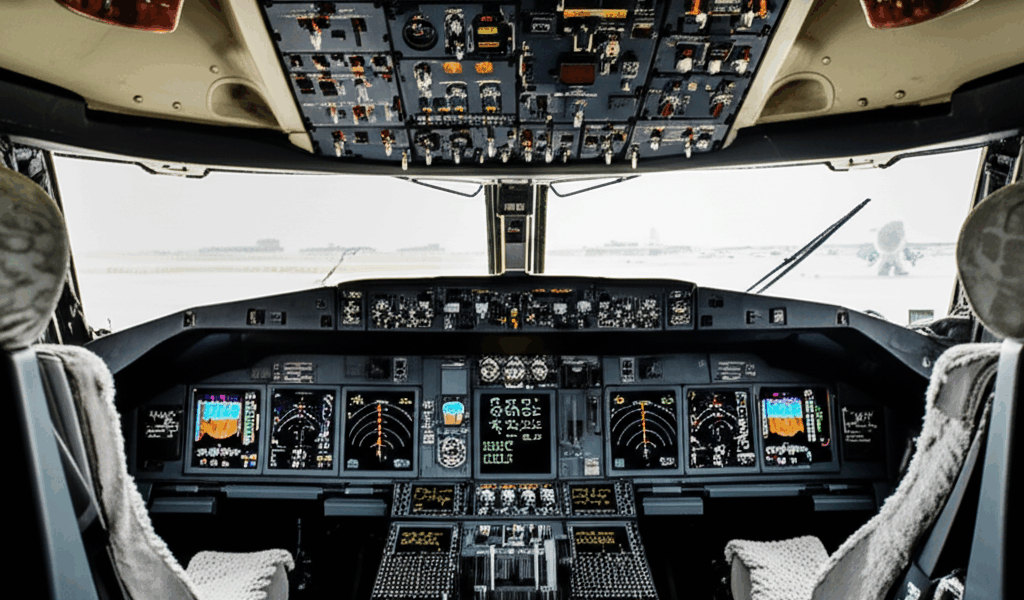
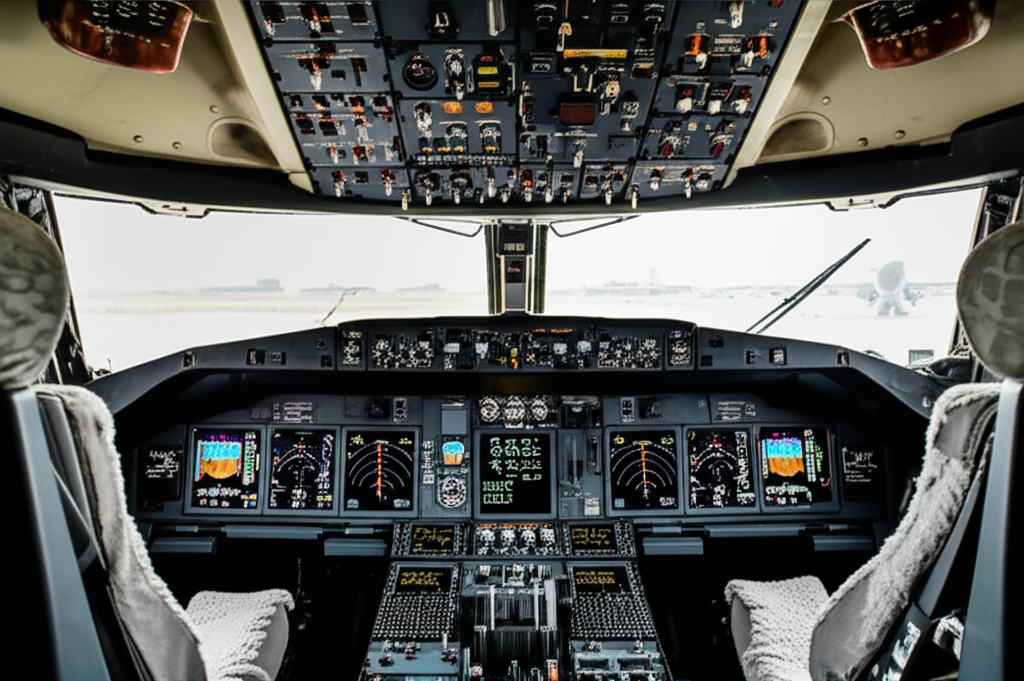
The C-17 Globemaster III cockpit is a two-pilot flight deck with two full-time head-up displays, four multifunction displays and electronically controlled flight controls. A pilot and copilot operate the flight deck while a loadmaster manages the cargo compartment, loading and weight-and-balance responsibilities.
This overview uses public U.S. Air Force and Boeing material. It describes visible design features and crew roles, not checklists, limitations or operating procedures.
C-17 cockpit at a glance
| Feature | Public specification |
|---|---|
| Pilots | Pilot and copilot |
| Observer positions | Two |
| Head-up displays | Two full-time, all-function HUDs |
| Main multifunction displays | Four active-matrix liquid-crystal displays |
| Flight controls | Quadruple-redundant electronic system with mechanical backup |
| Basic aircraft crew | Pilot, copilot and loadmaster |
Two-pilot flight deck
The C-17’s basic crew is three: two pilots and one loadmaster. The integrated electronic cockpit and cargo system allow that crew to operate the aircraft without a separate flight engineer or navigator position. Additional qualified personnel may be carried when a mission, training requirement or crew-duty plan calls for them.
The flight deck also has two observer positions. These are distinct from the pilot and copilot seats and should not be confused with the aircraft’s standard operating crew.
Head-up displays
Boeing lists two full-time, all-function head-up displays. A HUD places essential flight information in the pilot’s forward field of view, reducing the need to alternate constantly between the outside view and the instrument panel. Air Force history of the C-17 program identifies the HUD as one of the features intended to support precision landings at small airfields.
The Air Force tested replacement HUDs for the C-17 in 2018. Those units were designed with a wider field of view, enhanced processing and easier installation and removal. Boeing announced a broader flight-deck modernization effort in 2026 to address avionics obsolescence and keep the fleet supportable through 2075.
Four multifunction displays
The published cockpit specification includes four multifunction active-matrix liquid-crystal displays. These electronic displays consolidate flight, navigation, engine and aircraft-system information that older transport designs spread across more individual instruments and crew stations.
Display redundancy matters on a long-range military transport. Public Boeing material describes a digital navigation system and a quadruple-redundant electronic flight-control system with mechanical backup. Exact display selections, failure responses and crew procedures belong in current approved guidance rather than a public overview.
Control sticks and electronic flight controls
Unlike large transports built around conventional control yokes, the C-17 uses control sticks. Air Force reporting highlights the control stick, HUD and modern electronic cockpit among the features that distinguish the aircraft.
Boeing describes the flight-control architecture as quadruple-redundant electronic control with mechanical backup. The design supports the C-17’s combination of strategic range, large payload and operations from short or austere airfields, but public specifications should not be treated as operating instruction.
How the loadmaster fits into the crew
The loadmaster normally works primarily in the cargo compartment rather than occupying a pilot seat. The role includes cargo loading and restraint, weight-and-balance work, passenger or troop safety and coordination with the pilots. That division of labor is why the Air Force describes the basic aircraft crew as pilot, copilot and loadmaster.
For the aircraft behind the cockpit, see the C-17 interior and cargo-hold guide. For the career path, see how to become a C-17 pilot.
C-17 cockpit FAQ
How many pilots fly a C-17?
The basic crew includes two pilots: a pilot and copilot. The third basic crew member is the loadmaster.
Does the C-17 have a flight engineer?
No flight engineer is listed in the standard three-person crew. Integrated avionics and aircraft systems support the two-pilot flight deck.
How many cockpit displays does the C-17 have?
Boeing publicly lists two full-time head-up displays and four multifunction active-matrix liquid-crystal displays.
Is the C-17 cockpit being modernized?
Yes. Boeing announced a 2026 flight-deck modernization effort intended to replace obsolescent components, consolidate legacy systems and introduce a modular open-systems architecture.
Official sources
- Boeing: C-17 cockpit and aircraft specifications
- U.S. Air Force: C-17 Globemaster III fact sheet
- Air Mobility Command: Acquiring the C-17 Globemaster III
- U.S. Air Force: C-17 replacement HUD testing
- Boeing: 2026 C-17 flight-deck modernization

Subscribe for Updates
Get the latest c-17 pilot updates delivered to your inbox.
We respect your privacy. Unsubscribe anytime.