What Will Replace the C-17 Globemaster? The Future of US Airlift
Why the C-17 Is So Hard to Replace
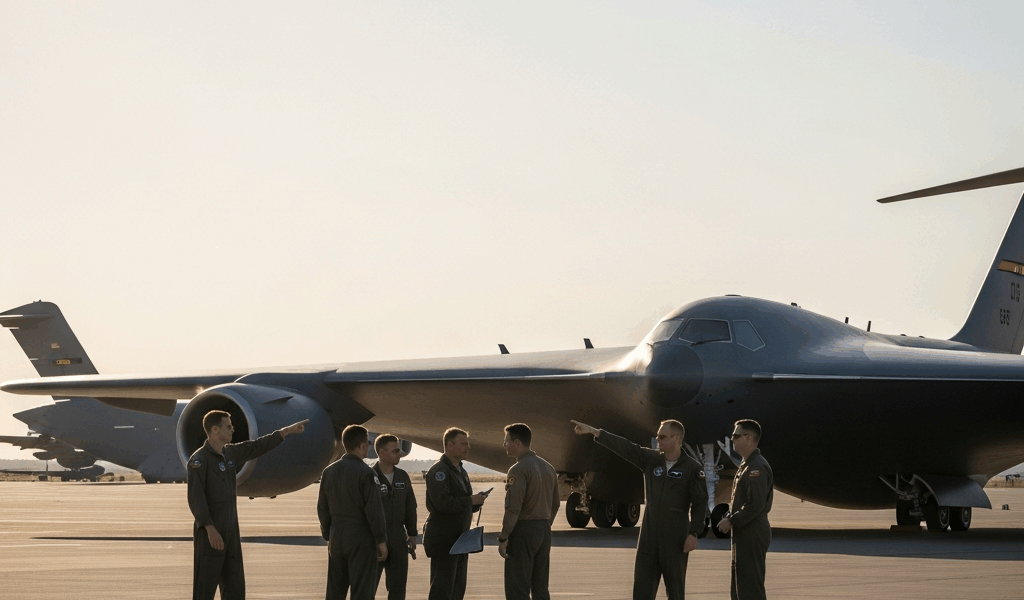
Replacing the C-17 Globemaster has gotten complicated with all the speculation flying around. Squadron bars, crew rooms at McChord, comment sections — someone’s always asking what comes next. And honestly, the answer hasn’t changed: nothing currently flying, and nothing currently funded. That’s not doom-saying. That’s what happens when an aircraft does things no other airplane on earth does simultaneously, and has been doing them for decades.
The C-17 Globemaster III sits inside a performance envelope that took Boeing engineers years to crack — one the Air Force has never been willing to surrender. Here’s what that actually looks like when the wheels hit dirt:
- Short-field performance on austere surfaces. The aircraft operates from unpaved strips as short as 3,000 feet. I’ve watched it land at strips that looked more like fire roads than runways — Bagram, forward locations scattered across the Pacific, dirt strips carved out of African terrain. The C-17 genuinely doesn’t care. The engineers built in a thrust reverser system aggressive enough to stop 585,000 pounds in the distance a regional jet needs just to slow down. That’s not an accident.
- Outsized cargo capacity. Up to 170,900 pounds of payload. MRAPs. Bradley IFVs. Helicopters with rotors folded down. You cannot move a heavy armor-dependent Army without an aircraft that carries that hardware point-to-point — no seaport required.
- Aerial refueling. The refueling receptacle gives the C-17 effectively unlimited range when tanker support is available. You can launch from the continental US and reach anywhere on earth. Not many airlifters can say that — honestly, almost none.
- Thrust reversal for ground maneuvering. The aircraft can back itself using engine thrust alone. Sounds minor. It is not. At a confined airfield with no ground equipment, backing a loaded jet into position changes the entire operational picture.
The proposals that keep circulating outside the community — commercial freighter conversions, modified 777Fs, 747-8F derivatives — fail on item one, every single time. A 777F is a magnificent airplane. Enormous cargo loads, efficient cruise performance. It needs 7,500 feet of paved runway. The moment you’re operating from a forward location that hasn’t been developed, that airplane is dead weight to you. The C-130 Super Hercules solves the short-field problem beautifully but caps at roughly 42,000 pounds of payload. There’s a capability gap between those two aircraft — a wide one — and the C-17 fills it alone.
Any replacement has to hit all three legs of that triangle: outsized payload, short-field austere performance, global range. Miss one leg and the Air Force is accepting a specific operational limitation that will surface in the next conflict. I understood this intellectually in training. I understood it viscerally the first time I watched a C-17 back onto a ramp in the dark at a strip with no lighting and no ground crew, engines howling in reverse. That’s what makes the C-17 endearing to us in the airlift community — the capability isn’t a spec sheet number. It’s real.
The NGAL Program — What Is It and Where Is It Now
Probably should have opened with this section, honestly, because most people searching this question want the program status before the context. So here it is.
The Next Generation Airlift program — NGAL — is the Air Force’s formal framework for eventually replacing the C-17. As of early 2026, it’s still in requirements definition. No Request for Proposals has been issued. No competing design exists on paper with government funding behind it. The program lives as a concept, a stack of ongoing studies, and a line item in future planning documents that keeps getting pushed to the right.
But what is NGAL, really? In essence, it’s a placeholder — a structured intent to replace an irreplaceable aircraft. But it’s much more than that. It’s the Air Force wrestling out loud with a requirements problem that has no clean answer.
The original framework suggested initial operating capability somewhere in the 2035–2040 range. That timeline has slipped. People who follow this closely now put IOC realistically in the 2040–2045 window — and even that assumes requirements definition wraps on schedule and the budget environment cooperates. Neither is guaranteed.
The central question NGAL still hasn’t answered: does the replacement need to replicate the C-17’s full capability spectrum, or does the Air Force accept a tradeoff? More efficient cruise payload in exchange for reduced short-field performance? Better fuel economy with slightly less outsized cargo volume? Every time that conversation surfaces in planning circles, someone walks through what surrendering short-field performance actually costs operationally — and the room goes quiet. That stall is why the program keeps slipping. The requirements are brutally hard to reconcile with a clean-sheet design that’s also affordable.
Previous Replacement Attempts — Why They Failed
NGAL isn’t the first attempt. The defense trade press underreports this, probably because the program history makes the current situation look even more uncertain than it already is. Don’t make my mistake of assuming this conversation started recently.
The Advanced Mobility Aircraft concept emerged in the 1990s — studies commissioned, working groups convened, meetings held in generic conference rooms with bad coffee. The conclusion: the C-17 production line was healthy, the airframe was young, and replacement planning could wait until the 2020s or beyond. The concept dissolved without producing a competing design.
Commercial freighter modifications got serious analytical attention — not just informal hallway conversations. The 777F and 747-8F both went through the evaluation. Both failed the short-field requirement. A commercial aircraft optimized for long-haul cargo efficiency between developed airports can’t be re-engineered for 3,000-foot dirt strips without essentially rebuilding the wing, landing gear, and propulsion system. At that point you’ve spent more than a clean-sheet design would cost — and you’ve inherited the structural constraints of the commercial platform on top of it.
Frustrated by each failed avenue, program planners kept returning to the same wall: the performance envelope is unique, expensive to replicate, and incompatible with commercial derivative shortcuts. Production restart discussions for the C-17 itself came up seriously after Boeing closed the Long Beach line in 2015 — apparently more seriously than was ever widely reported. Boeing has been candid that a restart would require between $2 billion and $4 billion in tooling reconstruction. That number kills the conversation immediately. Spending $3 billion to restart production of a 1990s design, even an exceptional one, is difficult to justify when the existing fleet can be sustained through service life extension. There is no cheap path to replacing the C-17.
Boeing, Lockheed, or Northrop — Who Could Build the Replacement
When the NGAL RFP does get issued — realistic window is 2027 to 2028 — three names will dominate the competition.
Boeing built the C-17. The institutional knowledge of that airframe lives in their engineering organization — the structural design choices, the thrust reverser system, the short-field landing behavior. That’s a genuine competitive advantage when the technical requirements are this specific. The concern is manufacturing execution. Boeing’s defense programs have had well-documented production struggles through the 2020s, and that history has eroded confidence in their schedule commitments. The knowledge is there. The execution question mark is real.
Lockheed Martin builds the C-130J Super Hercules at a production line in Marietta, Georgia — currently active, currently delivering aircraft. Manufacturing momentum matters in defense competitions. Lockheed also has deep relationships across the Air Force airlift community, built over decades of C-130 sustainment. The knock: their airlift experience lives at the C-130 scale. The jump in complexity to C-17 scale is not trivial, and the program record at that weight class is thin.
Northrop Grumman is a credible systems integrator with B-21 Raider production experience behind it. Less obvious as an airlift competitor — but defense competitions have surprised people before. Worth watching.
The dark horse is a US-European collaborative bid involving Airbus Defence and Space. The A400M Atlas already meets a portion of the C-17’s requirement set — capable tactical airlifter, solid short-field performance. But the A400M is a European program, and buying a foreign-designed aircraft for the US strategic airlift mission faces congressional resistance that would have to be overcome at the political level. Don’t rule it out as a teaming vehicle. Don’t bet on it as the prime.
Rough timeline, assuming no further slippage: RFP in 2027–2028, contract award around 2030–2031, first flight somewhere in 2035–2038, IOC in 2040–2045.
Will the C-17 Fly Past 2040
Yes. Full stop.
The youngest C-17s rolled off the Long Beach line in 2013 and 2015. By 2040 they’ll be 25 to 27 years old. For a large military airlifter, that’s middle age — not retirement age. The B-52H fleet is operational past 60 years. The C-5M Super Galaxy has been flying in various configurations since the 1960s. Military airframes, properly maintained and periodically updated, have service lives that would genuinely surprise anyone coming from commercial aviation.
Air Mobility Command’s service life extension programs for the C-17 are already underway — structural inspections, landing gear overhauls, wing component replacements. The physical airframe can be sustained well into the 2040s and in reduced numbers possibly into the 2050s. The constraint isn’t metal fatigue. It’s electronics. Avionics, sensors, comms systems, and defensive suites age faster than aluminum and titanium — considerably faster.
The C-17s flying in 2040 will need significant cockpit and self-protection modernization to remain viable in a contested environment. Expect a dedicated avionics modernization program — scoped roughly like what the Air Force did with the C-5M upgrade — to sustain the fleet through the NGAL development gap. New mission computers, updated threat detection, a glass cockpit refresh. That work is coming.
The operating assumption among C-17 crews right now is straightforward: this aircraft is your career. Pick up the C-17 as a new co-pilot in 2026 and you will likely retire from it. The aircraft replacing it may be in early operational testing by the time your retirement paperwork is due. That’s not a complaint — the C-17 is an extraordinary machine. It’s just an accurate read of the timeline, the budget environment, and the engineering problem NGAL has to solve before any new jet takes its place.

Subscribe for Updates
Get the latest c-17 pilot updates delivered to your inbox.
We respect your privacy. Unsubscribe anytime.