How Much Does a C-17 Pilot Make? Pay, Bonuses, and Career Path
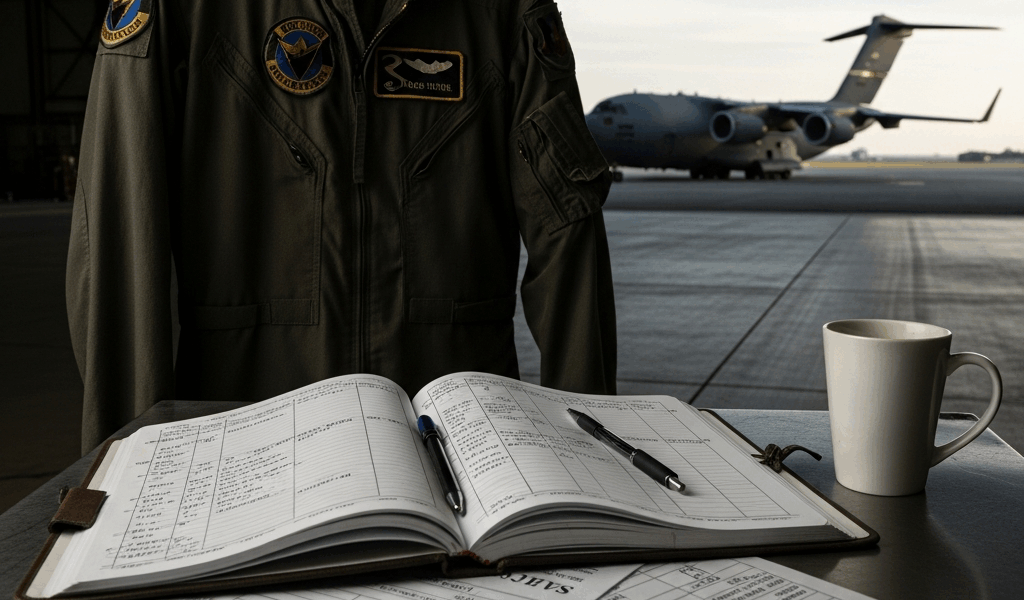
C-17 Pilot Pay: What You Actually Earn, From Copilot to Career Airline
C-17 pilot compensation has gotten complicated with all the noise flying around online—pay calculators, Reddit threads, and recruiter pitches that cherry-pick numbers. The real picture runs from roughly $39,000 as a brand-new second lieutenant to well north of $180,000 once you stack bonuses on top of senior officer base pay. But those headline numbers don’t mean much without context. Where you are in your career, which retention contracts you’ve signed, and honestly how long you’re willing to tolerate military life—all of it shapes what you actually take home.
As someone who spent years embedded with C-17 crews—following training pipelines, sitting in on retention negotiations, watching guys run spreadsheets at kitchen tables overseas—I learned everything there is to know about what this career actually pays. Not the DoD fact sheet version. The version that matters when you’re deciding between a cargo jet and a commercial airline seat.
Base Pay by Rank — What C-17 Pilots Actually Earn
Start with base pay. The 2024 DoD pay tables govern everything here—there’s no special “C-17 pilot rate.” Transport pilots and fighter pilots sit on the same scale. Rank and years of service are all that matter. That’s actually worth understanding, because it means you’re competing for the same compensation tier as an F-22 driver, just flying a very different machine with very different demands.
Officer Rank Structure and Base Pay
A newly commissioned second lieutenant—O-1, fresh out of Officer Training School, hasn’t touched a military aircraft yet—earns $39,468 annually in 2024. Call it $3,289 a month before taxes. Not glamorous. The dorms at your first base aren’t glamorous either, for what it’s worth.
First lieutenant (O-2) kicks in around year four—roughly $45,530. About a 15% bump. Still not a jaw-dropping number, but UPT is happening simultaneously, so the psychological ledger feels better. You’re finally flying.
Captain (O-3) is where most C-17 pilots live for the longest stretch of their early career. At four years of service, that’s around $52,668. By year 10, a captain pulls $73,116. So when someone asks what a C-17 copilot makes—that’s your answer. Somewhere between $52,000 and $73,000 in base pay, depending on time in service. The spread matters.
Major (O-4) is when it genuinely starts climbing. Year 10 as a major: $82,434. Year 16: $95,880. This is aircraft commander territory—real responsibility, real pay. Still not what makes senior pilots wealthy, though. That’s the bonuses, which I’ll get to.
Lieutenant colonel (O-5) base pay at year 10 sits around $98,352, scaling up to $133,416 by year 20. These are the squadron commanders, wing staff pilots, senior aircraft commanders. If you’ve made it here on the C-17, you’re either locked in for a 20-year retirement or you’re setting up a very attractive transition to a major airline captain seat.
Aviation Incentive Pay — The Real Number
But what is Aviation Incentive Pay? In essence, it’s a monthly stipend the Air Force adds to every flying pilot’s paycheck—$200 to $1,000 depending on rank and commitment. But it’s much more than that. It’s the number the online calculators consistently ignore, and ignoring it distorts the whole picture.
A captain flying C-17s typically draws around $840 monthly in AvIP—$10,080 per year. Majors are closer to $1,000 monthly. Stack that onto a 10-year captain’s base pay and you’re at $83,196 instead of $73,116. That’s a 14% difference that actually matters when you’re building a household budget in, say, Charleston or McChord.
One catch: you only get AvIP while you’re flying. Staff jobs—even attractive ones with good promotion optics—kill it. A lot of pilots have turned down career-enhancing moves specifically because losing $10,000 annually in AvIP made the math ugly. Don’t make my mistake of underestimating how much that affects morale during a non-flying tour.
The Bonuses — Aviation Retention Pay
Probably should have opened with this section, honestly. Retention bonuses are the actual fulcrum of every career decision a C-17 pilot makes around the 10-year mark. The Air Force Aviation Retention Pay program—ARP—exists for one reason: to keep experienced pilots from walking out the door to Southwest, United, or American the moment they hit airline eligibility.
How Aviation Retention Pay Works
ARP isn’t automatic—it’s negotiated, and the terms shift based on what the Air Force actually needs at a given moment. For transport pilots—C-17 drivers included—current packages typically start around $25,000 annually and can reach $65,000 for senior pilots willing to commit to longer extensions. The offer usually lands around the nine-year mark. Three-year or four-year contracts are standard. Sign, and you get a lump sum plus annual payments. Walk, and you start junior at a regional.
A typical modern C-17 captain package might break down like this: $30,000 spread across a three-year contract—$10,000 per year—plus a $15,000 annual AvIP bump for staying committed. That’s $75,000 in additional income above base pay over three years. Real money. It’s also the moment pilots sit down with a legal pad and start doing math they probably didn’t expect to be doing in their early thirties.
The Math Behind Retention Decisions
I watched a major I know—stationed at Ramstein, eleven years in, coffee going cold on the table—run the numbers in an Excel spreadsheet one evening. He’d received a $60,000 ARP offer for a four-year extension. United had already sent a conditional job letter. He built two scenarios, old-school, on a laptop with a cracked hinge.
Scenario one, staying four years: Full ARP money, retire at year 15, then join United as a new hire captain—not junior first officer, because the airlines value military command time. Four more years of military pay, bonuses, BAH in Germany added up to roughly $480,000. United new-hire captain pay projected around $256,000 in year one at $320/hour for 800 annual hours.
Scenario two, leaving immediately: First officer slot at United, $175/hour, roughly $140,000 annually, building seniority faster—but forfeiting the ARP and four years of military paychecks totaling around $320,000.
He took the ARP. The $160,000 gap between military and airline year-one pay, layered on top of four additional years of seniority progression once he did transition, made staying marginally better. Marginally. He loved the airplane, which helped. He did not love the deployment cycle, which almost tipped it the other way.
The Current ARP Market
As of 2024, the Air Force is throwing retention money at pilots with something close to urgency. Commercial airlines have been pulling military aviators out of the service at a pace that’s genuinely alarming to force planners. C-17 captains and majors are among the most aggressively courted—strategic airlift experience is genuinely hard to replace, and Transportation Command knows it.
TRANSCOM runs the C-17 fleet globally. Losing experienced crews creates operational gaps that take years to close. A new C-17 pilot needs 300 to 400 hours in type before they’re mission-ready—and training one costs approximately $500,000. That’s the leverage experienced pilots carry into retention conversations, whether they realize it or not.
Career Progression — Copilot to Aircraft Commander
Pay doesn’t exist in a vacuum—it tracks almost exactly with where a pilot is in their career progression. A UPT graduate and a 12-year aircraft commander are both “C-17 pilots,” but they’re living in entirely different financial realities. The timeline is actually pretty predictable once you know the checkpoints.
Year One to Three — Copilot Phase
After UPT—roughly 13 months, mostly in Texas or Mississippi—a new pilot heads to Initial Qualification training at Altus Air Force Base in Oklahoma. Plan on 18 to 24 weeks. Graduate as a fully qualified copilot, still supervised, still building hours. Rank is usually first lieutenant or captain. AvIP is running, base pay is running, and if the base is somewhere with a meaningful cost of living—Joint Base Lewis-McChord in Washington, for instance—the Basic Allowance for Housing adds another $1,500 to $2,400 monthly depending on dependent status.
Total compensation picture for a first-tour copilot: roughly $55,000 to $65,000 annually. Then deployments start. C-17 rotations to the Middle East, Europe, or Pacific happen on roughly 18 to 24-month cycles—and a three-month rotation typically adds $5,500 to $7,000 in tax-free hardship pay. The year you deploy, the numbers look materially better.
Year Three to Eight — Aircraft Commander Phase
Once checked out as an aircraft commander—which requires a formal evaluation, a commander’s recommendation, and a pile of logged hours that varies by unit—everything shifts. That’s what makes the AC upgrade endearing to us C-17 guys: it’s not just a title change. The pay bumps, the mission authority expands, and suddenly you’re the one signing off on the aircraft forms at 0300 in Bagram or Ramstein or Diego Garcia, which is its own kind of strange satisfaction.
Aircraft commanders in the O-3 to O-4 range, factoring in AvIP and BAH, are typically clearing $85,000 to $110,000 annually—more during deployment years. This new level of compensation evolves steadily over time and eventually becomes the foundation enthusiasts know and leverage when making the airline transition decision later.
While you won’t need a financial advisor immediately, you will need a handful of honest conversations with pilots a few years ahead of you in the pipeline. First, you should model your own ARP scenario—at least if you’re approaching year eight and starting to get LinkedIn messages from airline recruiters. X might be the best option, as the retention decision requires full financial clarity. That is because the ARP math changes every year based on force needs, and a number that was generous in 2022 looks different against 2024 airline first-year pay scales.
Frustrated by the lack of straight answers from the finance office, one aircraft commander I know built his own pay calculator using a beat-up spiral notebook and data pulled from MyPay at 11pm on a Tuesday. This new tool spread through his squadron over the following months and eventually evolved into the shared spreadsheet template C-17 crews at his base still pass around today.
The career path isn’t without trade-offs—deployment tempo, family strain, and the military’s particular brand of bureaucratic friction are real. But the compensation, stacked properly, is also real. Know the numbers before you decide anything.

Subscribe for Updates
Get the latest c-17 pilot updates delivered to your inbox.
We respect your privacy. Unsubscribe anytime.