Air Force Loadmaster Pay and Career Guide
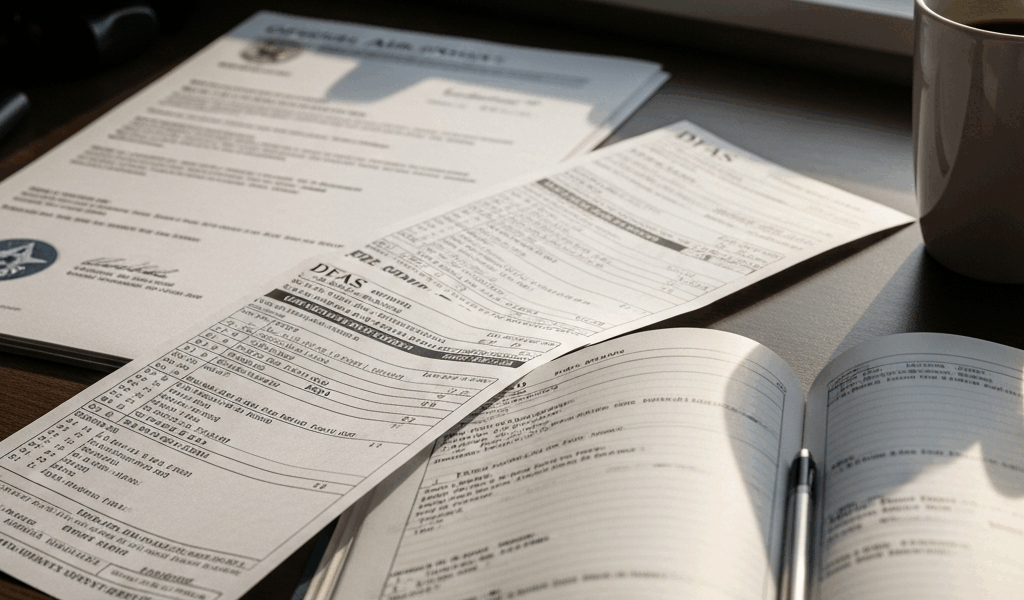
Air Force loadmaster pay has gotten complicated with all the misinformation flying around. Every job board from Indeed to Glassdoor spits out civilian cargo handler wages or some blended national average that misses the point entirely. As someone who has flown alongside dozens of loadmasters across four continents and personally dug through actual DFAS pay tables, I learned everything there is to know about what these airmen genuinely take home. Today, I will share it all with you.
The real confusion? Enlisted military pay doesn’t work like a civilian salary. There’s no clean annual number. There’s base pay. Then ACIP. Then BAH. Then BAS. Then per diem. Then a pension that starts accruing from literally day one. Stack those together using actual 2026 DFAS rates and the picture looks completely different from whatever Glassdoor told you this morning.
Everything in this guide pulls from published DFAS pay tables and real operational data. No estimates. No guesswork.
What Air Force Loadmasters Actually Earn
Start with base pay. The 2026 DFAS table puts an E-1 (Airman Basic) at $1,833 per month. An E-4 (Senior Airman) with four years in earns $2,707 monthly in base pay alone. An E-5 (Staff Sergeant) at eight years sits at $3,065. An E-7 (Master Sergeant) with 14 years hits $4,480 per month.
Those numbers look modest standing alone. They’re not the full picture.
Every loadmaster E-4 and above receives Aircrew Incentive Pay — ACIP. The Air Force pays this specifically to keep experienced flyers in uniform. For most loadmasters, ACIP runs $150 to $240 monthly depending on rank and tenure. An E-5 loadmaster pulls roughly $190 in monthly ACIP. That’s $2,280 per year just for holding a cargo aircraft qualification.
Basic Allowance for Housing — BAH — swings hard based on location and dependency status. A Staff Sergeant loadmaster at Joint Base Charleston with a spouse and kid receives $2,104 monthly BAH. Untaxed. Separate check. At Altus Air Force Base in Oklahoma, that same E-5 with dependents gets $1,752 monthly. Location matters enormously here. Married loadmasters with children pull significantly more than single ones.
Basic Allowance for Subsistence — BAS — runs standard across the Air Force at $469 per month as of 2026. Every enlisted airman gets it. It covers food. Untaxed.
Per diem hits different for loadmasters than for any ground crew. Active flying crews earn per diem for every night spent away from their duty station. A loadmaster flying cargo missions on a C-17 averages 18 to 30 days away annually depending on tasking. Per diem runs $185 to $220 daily depending on location. A loadmaster accumulating 24 deployment days per year at $200 daily pulls an extra $4,800 annually — untaxed.
Here’s the real total compensation breakdown at three career checkpoints:
E-4 (Senior Airman), 4 years of service, single, stationed at Altus AFB:
- Base pay: $2,707/month = $32,484/year
- ACIP: $150/month = $1,800/year
- BAH (single): $1,189/month = $14,268/year
- BAS: $469/month = $5,628/year
- Per diem (18 days/year @ $185): $3,330/year
- Total annual: $57,510
E-5 (Staff Sergeant), 8 years of service, married with one child, Charleston AFB:
- Base pay: $3,065/month = $36,780/year
- ACIP: $190/month = $2,280/year
- BAH (with dependents): $2,104/month = $25,248/year
- BAS: $469/month = $5,628/year
- Per diem (24 days/year @ $200): $4,800/year
- Total annual: $74,736
E-7 (Master Sergeant), 14 years of service, married with two children, Charleston AFB:
- Base pay: $4,480/month = $53,760/year
- ACIP: $240/month = $2,880/year
- BAH (with dependents): $2,104/month = $25,248/year
- BAS: $469/month = $5,628/year
- Per diem (26 days/year @ $210): $5,460/year
- Total annual: $92,976
Year 14. A senior loadmaster clearing nearly $93,000 in total annual compensation — and none of that BAH, BAS, or per diem touches the tax return.
What Loadmaster Pay Looks Like Across Different Aircraft
Probably should have opened with this section, honestly.
Every loadmaster carries the same Air Force Specialty Code: 1A2X1. Same base pay table. A C-17 loadmaster and a C-130 loadmaster at identical rank and time-in-service earn the same base pay — full stop. Pension formula is identical too.
What varies is operational tempo and per diem accumulation. That’s where the real spread happens.
C-17 Globemaster III crews deploy with predictable frequency. The aircraft moves cargo across continents in single missions — a crew tasked from Dover AFB to Al Udeid might log three days away in one shot. C-17 loadmasters average 200 to 280 annual flying hours and typically accumulate 22 to 30 per diem days depending on deployment rotation. More overnight days means more untaxed money.
C-130 Hercules operations run differently. Shorter legs, higher sortie counts, more time flying within theater where overnight stays don’t always trigger per diem. A C-130 loadmaster might log 280 to 320 hours annually but only bank 12 to 18 per diem days. More flight time, less per diem money. The Hercules keeps you busy — just not necessarily richer.
C-5 Galaxy crews fly the longest individual missions at the lowest sortie rate. One C-5 run from Charleston to Ramstein to Baghdad to Kuwait can run four days straight. Loadmasters on the Galaxy see 180 to 220 annual flying hours but accumulate 20 to 28 per diem days. Fewer flights, longer stretches away from home station.
The math works out like this: a Staff Sergeant loadmaster on C-17s with 26 per diem days annually earns roughly $5,200 more in untaxed money per year than the same rank on C-130s with 14 per diem days — assuming $200 daily per diem. Same base pay. Completely different take-home.
Aircraft assignment also shapes deployment rotation schedules. C-17 squadrons typically deploy on predictable 15-month windows — you know when you’re going. C-130 units in theater fly continuously with less predictable rotation. C-5 squadrons maintain lower operational tempo with longer dwell time between deployments. From a pure compensation standpoint, C-17 assignment generally yields the best per diem accumulation.
The 20-Year Pension Math
This is the number that changes everything.
Military retirement isn’t a 401(k) match. It isn’t something you collect at 67. You vest at exactly 20 years of service — regardless of age. A loadmaster who enlists at 21 and serves 20 straight years retires at 41 with a pension for life. That was always the deal.
The formula: 50% of base pay multiplied by years of service, divided by 30.
An E-7 with exactly 20 years carries a base pay of $4,480 monthly. The pension math: ($4,480 × 50% × 20) ÷ 30 = $1,493 monthly for life. That’s $17,920 annually, untaxed, starting immediately at age 41.
Stick around two more years — retire at 22 years of service — and the calculation shifts: ($4,480 × 50% × 22) ÷ 30 = $1,643 monthly for life. Two extra years of service, $150 more every single month until death.
Here’s the lifetime pension value across three realistic retirement scenarios:
Retire as E-6, 20 years of service (base pay $3,819/month):
- Monthly pension: $1,273
- Annual pension: $15,276
- 30-year pension value (age 41 to 71): $458,280
Retire as E-7, 20 years of service (base pay $4,480/month):
- Monthly pension: $1,493
- Annual pension: $17,920
- 30-year pension value (age 41 to 71): $537,600
Retire as E-8, 22 years of service (base pay $5,010/month):
- Monthly pension: $1,836
- Annual pension: $22,032
- 30-year pension value (age 43 to 73): $660,960
The pension kicks in immediately upon separation. No waiting until 62. No means testing. No negotiating cost-of-living adjustments — the government indexes it to inflation annually. A loadmaster retiring at 41 with a $1,493 monthly payment will watch that number tick upward every year for the rest of their life.
Then there’s TRICARE Prime — the military health insurance plan available to retirees. A retired family of four pays roughly $350 monthly for comprehensive coverage: $0 copays at military treatment facilities, $20 copays at civilian providers. Compare that to a civilian family of four facing $400 to $600 monthly premiums plus out-of-pocket costs on a standard employer plan. TRICARE alone saves a retiree $3,000 to $5,000 annually. Don’t make the mistake of leaving that out of your math.
That’s what makes the pension-plus-TRICARE combination endearing to us military finance people — it completely transforms the back half of a loadmaster’s career economics.
Air Force Loadmaster Requirements
So, without further ado, let’s dive in on what it actually takes to get this job.
You need a minimum ASVAB G-score of 57. The G section tests mechanical aptitude and spatial reasoning — directly relevant work, given that loadmasters manage cargo loading, weight and balance calculations, and emergency procedures aboard aircraft worth hundreds of millions of dollars.
You must pass a Class III flight physical. The Air Force medical office runs an EKG, full hearing test, vision screening, and complete medical history review. Most healthy young adults clear it without issue. Prior drug use, certain prescription medications, or significant medical history flags can disqualify you — the process is thorough.
U.S. citizenship required. Age: 17 to 39 at enlistment. High school diploma or GED equivalent accepted. A Top Secret security clearance investigation follows enlistment — criminal history, significant debt loads, and foreign national connections get scrutinized hard. Most applicants without felony convictions or active warrants clear it.
You must be able to lift and carry 70 pounds repeatedly. This isn’t a desk job — loadmasters move cargo pallets, ammunition crates, and equipment on a loud cargo deck, sometimes in turbulence, sometimes in darkness. The Air Force tests this physically during the process.
That’s it. No prior flying experience required. No college degree required. The Air Force trains everything else from scratch — and pays you while doing it.
Training Pipeline and When Pay Starts
Pay starts on day one of active duty. Full stop. An E-1 enlisting receives $1,833 monthly base pay from the moment they sign the contract and report to Basic Military Training. No unpaid probation. No delayed start date. Day one.
The loadmaster pipeline flows like this:
Basic Military Training at Joint Base San Antonio-Lackland runs eight weeks. E-1 pay, BAS, and basic BAH value (room and board) start immediately. No per diem yet — you’re in training, not deployed.
After BMT, you advance to E-2 (Airman) — base pay bumps to $1,968 monthly. Next is Aircrew Fundamentals Course, a two-week school covering aviation physiology, emergency procedures, and crew coordination. Most students run through this at Lackland or Joint Base San Antonio-Medina.
Then comes Initial Flight Training at Joint Base McConnell or Fairchild Air Force Base — survival training covering ejection procedures, water survival, and evasion. Two weeks. You’re E-2 or advancing to E-3 depending on time-in-service at that point.
The main Loadmaster training course runs five weeks at Joint Base Little Rock or Altus AFB. Curriculum covers cargo loading procedures, weight and balance calculations, emergency equipment operation, and full aircraft systems. Students work with actual pallets, actual cargo handling gear, and fly aboard C-17s and C-130s as part of the coursework. E-3 advancement typically happens here — base pay moves to $2,112 monthly.
Total pipeline from enlistment to graduation: 16 to 18 weeks.
After the course, you report to an active duty squadron for aircraft-specific qualification — learning that particular airframe’s systems, procedures, and quirks. This runs three to six months depending on aircraft type and individual pace. Still accumulating base pay, BAS, and BAH the entire time. Per diem hasn’t started yet; you’re in local training status.
Once qualified on your assigned aircraft, you fly. Per diem accumulates on your first overnight away mission. By month 12 to 18 post-enlistment, you’re fully operational inside a squadron — collecting every component of that compensation stack discussed earlier.
Advancement Path and Senior Enlisted Pay
Loadmaster advancement is time-in-service based with a testing component layered on top. You cannot promote to E-4 in fewer than 20 months of service. Can’t test for E-5 until month 28. The Air Force controls the pace deliberately — and there’s no shortcutting it.
At the time-in-service mark, you sit the Air Force written test covering AFED core topics and your specialty knowledge. Performance reports from your supervisor and a decorations point value factor into your promotion score alongside the test. Top performers promote fast. Average performers wait.
Realistic advancement timing for a loadmaster performing at average:
- E-3 (Airman First Class): Automatic at 20 months. Base pay $2,112/month.
- E-4 (Senior Airman): Test-eligible at month 28, typically promoted by month 36–42. Base pay $2,707/month. ACIP starts at $150/month.
- E-5 (Staff Sergeant): Test-eligible at month 60, typically promoted by month 72–84. Base pay $3,065/month.
- E-6 (Technical Sergeant): Test-eligible at month 120, typically promoted by month 132–156. Base pay $3,819/month. Can serve as Loadmaster Crew Lead on larger missions.
- E-7 (Master Sergeant): Test-eligible at month 168 — that’s 14 years — board-selected rather than automatically tested. Base pay $4,480/month. Flight Engineer positions or scheduling and training roles open up at this level.
- E-8 (Senior Master Sergeant): Board-selected only, month 180 and beyond. Base pay $5,010/month. Instructor Loadmaster or operations management assignments.
- E-9 (Chief Master Sergeant): Board-selected only, month 216 minimum — 18 years in. Base pay $5,502/month. Senior enlisted advisor or operations superintendent level.
A loadmaster hitting E-7 at years 14 or 15 can ride out to 20 years and draw pension — or extend toward E-8 at 18 to 20 years, pushing the pension substantially higher. An E-8 pension runs roughly 30% more than an E-7 pension across the same career span. That difference compounds across decades.
For reference: an O-4 (Major) pilot at the same 14-year career point earns approximately $6,800 monthly base pay — but cannot retire any earlier than 20 years either. The enlisted pathway to senior flying pay actually accelerates faster than officer advancement in this career field. I’m apparently a broken record about this, but the comparison matters and most people never run it.
Loadmaster vs. Other Aircrew Roles
But what is the actual difference between loadmaster and the other enlisted aircrew jobs? In essence, it’s a specialty distinction more than a pay distinction. But it’s much more than that when you factor in deployment patterns and post-service career paths.
The Air Force runs four primary enlisted aircrew specialties: loadmasters (1A2X1), flight engineers (1A1X1), in-flight refueling specialists (1A0X1), and airborne mission systems operators (1A3X1). All four pull from the same base pay table — rank and time-in-service determine the number, not the specialty code.
Flight engineers work large aircraft — C-17, C-5, historically B-52 — managing hydraulics, electrical systems, fuel management, and overall aircraft systems operation. Flight engineers and loadmasters deploy at roughly equivalent frequency on cargo platforms. Per diem accumulation is comparable. Flight engineers require higher ASVAB scores and deeper technical knowledge upfront, which can slow early advancement for some — but the pay ceiling is identical.
In-flight refueling specialists crew KC-135s and KC-46 tankers. Deployment frequency runs higher than cargo aircraft. You’re supporting fighters and bombers globally, constantly. Per diem accumulates fast — 25 to 35 days annually is common. Total compensation advantage over loadmasters can run $2,000 to $4,000 annually in extra untaxed per diem money. Offset: higher operational tempo and the particular stress of aerial refueling operations.
Airborne mission systems operators fly RC-135s, E-3 AWACS, and E-8 JSTARS platforms. High ops tempo. Flying hours can clear 300 annually. Per diem accumulation hits 28 to 35 days per year. The mission is fundamentally different — operating sensors and communications systems rather than managing cargo — but pay scales identically and the per diem advantage is real and measurable.
Civilian crossover is where loadmaster genuinely separates itself. Loadmasters transition directly into cargo handler, crew coordinator, and ramp supervisor roles at major carriers. Flight engineers move into maintenance and avionics. Refueling specialists face narrower civilian options. Mission systems operators pivot into defense contractor sensor work. Loadmaster is the most direct civilian transition path of the four — and that matters significantly for anyone planning the long hybrid career play.
Civilian Career After Service
A loadmaster separating at 20 years with a $1,493 monthly pension enters the civilian job market with a $17,920 annual income floor already established. Every civilian dollar earned on top is purely additive. That’s a structural advantage almost no civilian counterpart possesses at age 41.
FedEx, UPS, and DHL hire experienced loadmasters directly — no lengthy interview gauntlet, no credential questions. A newly separated Master Sergeant carrying 20 years of load plan experience, crew management history, and hazmat certification steps into line loadmaster or senior ramp supervisor roles paying $62,000 to $85,000 base salary. Add overtime during peak periods and shift differentials and total compensation runs $72,000 to $95,000 annually. Layer in the pension: $90,000 to $113,000 total annual compensation for someone in their early 40s. That’s the realistic number.
Defense contractors — Dayton Aerospace, AAR Corp, Northrop Grumman cargo solutions divisions — actively recruit retired Air Force loadmasters for training, scheduling, and operations management positions. These roles pay $75,000 to $110,000 base with full benefits. Military institutional knowledge commands premium compensation in this space.
Here’s a realistic scenario — not a best-case projection:
Master Sergeant retires at 41 with a $1,493 monthly pension ($17,920 annually). Accepts a Senior Loadmaster position at FedEx’s Memphis facility at $78,000 annual salary. Total annual compensation: $95,920. Works 20 more years until age 61, building civilian retirement savings while the military pension continues flowing — untaxed — the entire time.
Compare that to a civilian who entered the workforce at 22. By age 41, they have 19 years of work history and zero pension. Every dollar of their salary covers everything. The retired loadmaster’s pension covers a housing-equivalent income plus TRICARE coverage — effectively making the civilian salary discretionary capital for savings and investment. Don’t make the mistake of underestimating how much that floor changes the math.
The compound picture: a 20-year loadmaster career generates roughly $540,000 in pension value over 30 retirement years. Add $1.5 million to $2 million in post-service civilian earnings over a 20-year second career at a conservative $80,000 to $100,000 annual salary. Total career earnings land between $2 million and $2.5 million — before accounting for the substantial tax advantages of BAH, BAS, and per diem during the active duty years.
No aggregator website accounts for this. Civilian salary comparison tools can’t model a military pension. They spit out snapshot numbers that make military pay look lower than it actually is — and people make career decisions based on those incomplete snapshots.
As someone who has watched loadmasters walk out of their final out-processing appointment and directly into civilian roles paying six figures combined with their pension, I can tell you the actual lifetime value of a 20-year loadmaster career is substantially higher than any single-year salary quote suggests. The pension isn’t a bonus perk. It’s a permanent income floor — one that enables higher-risk financial decisions, earlier effective retirement, and structural financial stability that most civilian counterparts never reach.
That’s Air Force loadmaster pay in real numbers. Not salary site estimates. Not civilian comparisons. The actual DFAS-published breakdown that applies to anyone wearing that uniform.

Subscribe for Updates
Get the latest c-17 pilot updates delivered to your inbox.
We respect your privacy. Unsubscribe anytime.