A Day in the Life of a C-17 Loadmaster
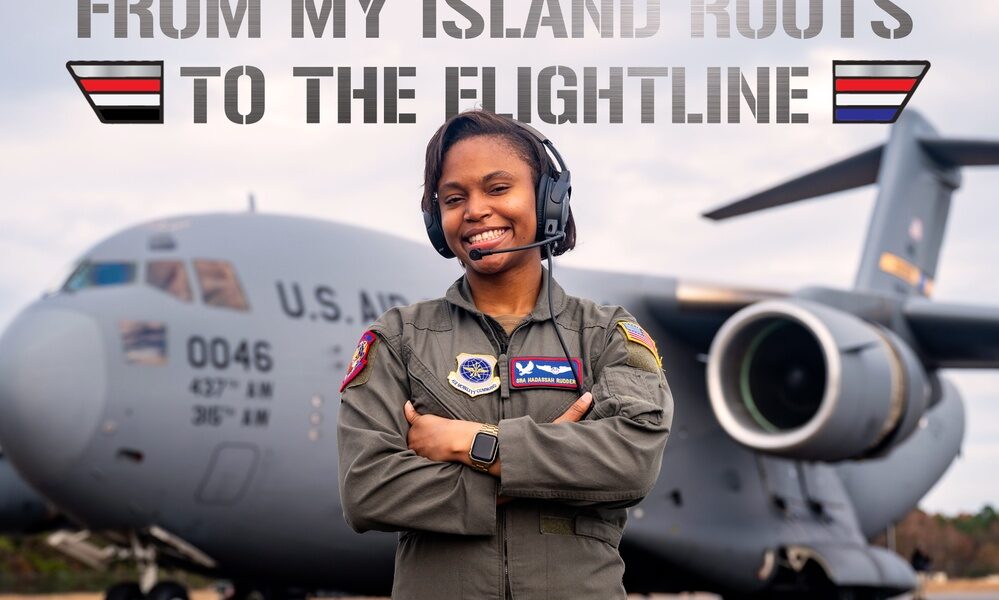
The alarm pierces through the darkness at 0330. For Staff Sergeant Marcus Chen, today marks another mission day as a C-17 Globemaster III loadmaster stationed at Joint Base Lewis-McChord. What follows is a detailed look at 24 hours in one of the Air Force’s most demanding yet rewarding career fields.
Pre-Dawn: Mission Preparation (0400-0600)
By 0400, Chen arrives at the squadron building for the pre-mission briefing. The mission board shows today’s tasking: a strategic airlift run carrying 65,000 pounds of humanitarian supplies to a forward operating location overseas, followed by a personnel movement of 134 passengers on the return leg.
“Every mission starts with paperwork,” Chen explains while reviewing the cargo manifest. “Weight and balance calculations are non-negotiable. Get them wrong, and you’ve got an aircraft that won’t fly right—or worse.”
The loadmaster’s pre-flight responsibilities include:
- Reviewing cargo documentation and hazmat declarations
- Calculating center of gravity and ensuring weight limits
- Coordinating with the aircraft commander on loading sequence
- Briefing the load team on safety procedures
- Inspecting all tie-down equipment and restraints
Aircraft Inspection (0600-0730)
The sun hasn’t risen when Chen climbs into the massive cargo bay. The C-17’s cavernous interior stretches 88 feet long and 18 feet wide—enough space to carry an M1 Abrams tank or three Apache helicopters.
His inspection checklist runs three pages:
Cargo Floor Systems: Chen walks the entire length of the aircraft, checking each of the 18 cargo floor roller sections. He tests the ball mat and roller conversion mechanisms, ensuring smooth transitions for palletized cargo.
Restraint Systems: Every tie-down ring, chain, and strap gets a visual and physical inspection. A single failed restraint at 35,000 feet could mean disaster.
Emergency Equipment: He verifies the location and condition of fire extinguishers, first aid kits, and emergency oxygen systems. The troop seats get checked for proper installation—today’s return flight carries soldiers heading home.
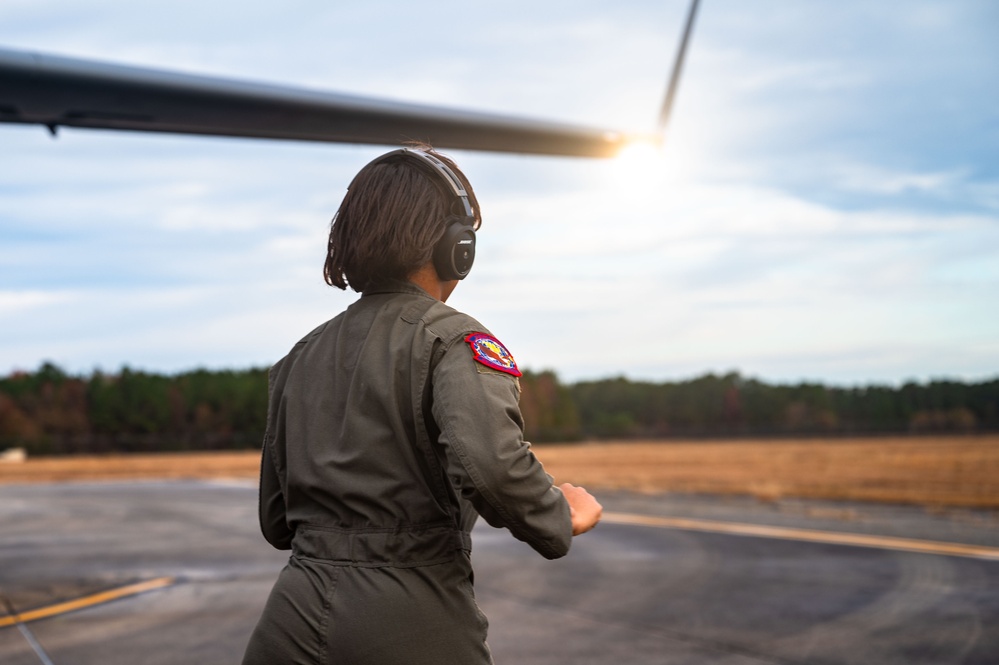
Cargo Loading Operations (0730-1000)
The K-loader backs up to the aircraft’s lowered ramp as Chen takes position. Eight pallets of humanitarian supplies—water purification systems, medical equipment, and emergency shelter materials—wait on the flight line.
“Loading is controlled chaos,” Chen says, directing the first pallet up the ramp with hand signals. “Everything has a specific spot based on weight and balance. Move one pallet, and you might have to recalculate the entire load plan.”
The loading sequence follows strict protocol:
- Position guides direct K-loader alignment
- Loadmaster confirms pallet weight against documentation
- Cargo moves up ramp onto roller system
- Pallet positioned according to load plan
- Locks engaged and restraints attached
- Loadmaster verifies paperwork matches actual position
Two and a half hours later, all cargo is secured. Chen completes final weight and balance calculations, confirming the aircraft’s center of gravity falls within acceptable limits.
Pre-Flight and Departure (1000-1130)
With the pilots completing their cockpit checks, Chen conducts the final walk-around. He verifies all cargo doors are secure, checks external lights, and inspects the landing gear one last time.
Inside the cargo bay, he briefs the small crew augmentation team joining the flight. Safety procedures, emergency exits, oxygen mask locations—the briefing covers everything needed for an overseas flight.
“Loadmaster, ready for engine start,” Chen reports over the intercom.
The four Pratt & Whitney turbofan engines spool up with a distinctive whine. Within minutes, the 585,000-pound aircraft rolls toward the runway.
In-Flight Operations (1130-1900)
Cruising at 28,000 feet over the Pacific, Chen’s work continues. Every 30 minutes, he walks the cargo bay, checking restraints and monitoring for any shifting loads.
“People think we just sit around during flight,” he notes during one inspection round. “Reality is, we’re constantly monitoring. Temperature changes, turbulence, altitude variations—all of it can affect cargo security.”
His in-flight duties include:
- Regular cargo inspections (minimum every 30 minutes)
- Coordination with pilots on weight changes (fuel burn affects balance)
- Monitoring environmental systems for cargo preservation
- Preparing for landing and potential rapid offload
- Maintaining communication logs
The cockpit calls back: “Loadmaster, we’ve got weather at destination. Expect turbulence on descent.”
Chen immediately conducts an additional cargo check, ensuring all restraints are at maximum tension.
Aerial Delivery Operations
While today’s mission doesn’t include airdrops, Chen is qualified in combat airdrop—one of the loadmaster’s most demanding skills.
“Airdrop is where you really earn your pay,” he explains. “You’re calculating release points, rigging parachutes, coordinating with the pilots on exact timing. The margin for error is measured in seconds and feet.”
C-17 loadmasters can execute multiple airdrop methods:
- Container Delivery System (CDS) for supplies
- Heavy equipment drops using extraction parachutes
- Personnel airdrops (static line and military freefall)
- Low-Altitude Parachute Extraction System (LAPES)
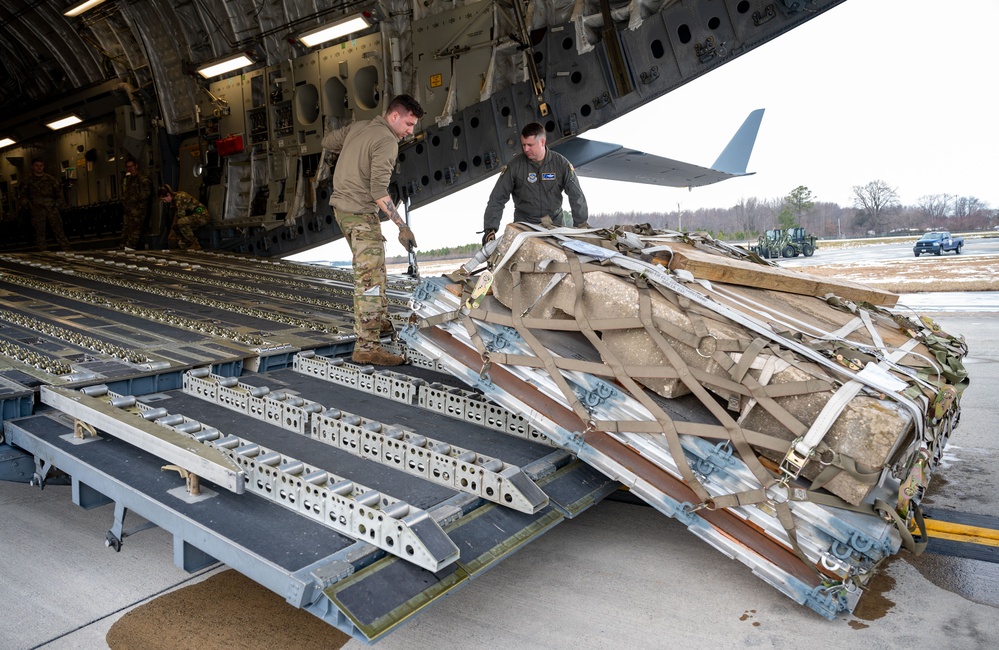
Arrival and Offload (1900-2100)
The C-17 touches down at the forward operating location as the sun sets. Within minutes of parking, the ramp is lowered and local cargo handlers arrive.
Offloading proceeds in reverse order of loading. Chen coordinates each pallet’s removal, ensuring documentation transfers properly to receiving personnel.
“Accountability doesn’t end when cargo leaves the aircraft,” he emphasizes. “Every item has to be signed for. These supplies are going to people who need them.”
The humanitarian cargo disappears into the night on waiting trucks. The aircraft sits empty—but not for long.
Reconfiguration and Passenger Loading (2100-2300)
The next phase requires transforming the cargo bay into a passenger compartment. Chen and a ground crew install 134 troop seats along the sidewalls and in palletized seat configurations.
“The C-17’s versatility is incredible,” Chen notes while securing a seat pallet. “Same aircraft that carried tanks yesterday carries troops today and might do an airdrop tomorrow.”
Soldiers waiting nearby begin boarding. Each receives a safety briefing:
- Seat belt and harness operation
- Emergency exit locations and procedures
- Oxygen system use
- Lavatory locations
- Movement restrictions during flight
These troops are heading home after deployment. The mood is cautiously optimistic.
The Return Flight (2300-0700+1)
Flying through the night, Chen manages a different set of responsibilities. Passenger comfort and safety replace cargo calculations.
He walks the cabin regularly, checking on passengers, answering questions, and ensuring the environmental systems maintain appropriate temperature and pressure.
“These soldiers have been through a lot,” Chen reflects. “Getting them home safe is our mission now.”
As dawn breaks over the Pacific, the familiar coastline of Washington State comes into view. The C-17 descends toward Joint Base Lewis-McChord.
Mission Complete (0700+1)
Twenty-seven hours after that 0330 alarm, Staff Sergeant Chen watches the last soldier step off the aircraft. Families wait on the tarmac—reunions that make the exhaustion worthwhile.
Post-flight duties remain: equipment inspection, maintenance write-ups, mission debriefing. But those can wait a few minutes.
“This is why we do it,” Chen says, watching a soldier embrace his family. “Every load we carry, every pallet we secure, every passenger we brief—it all connects to moments like this.”
The C-17 loadmaster career combines physical demands, technical expertise, and operational intensity unlike most other Air Force specialties. For those who answer the call, it offers experiences that define military service.
What Makes a Successful C-17 Loadmaster
Based on Staff Sergeant Chen’s experience, the essential qualities include:
Attention to Detail: Weight calculations, restraint inspections, safety briefings—every task requires precision.
Physical Fitness: Moving cargo, climbing through aircraft, working in various climates demands endurance.
Adaptability: No two missions are identical. Loadmasters must adjust to changing conditions instantly.
Communication Skills: Coordinating with pilots, ground crews, and passengers requires clear, professional interaction.
Technical Knowledge: Understanding aircraft systems, cargo characteristics, and emergency procedures is foundational.
For those considering the loadmaster career field, the message is clear: it’s demanding, unpredictable, and occasionally exhausting. It’s also meaningful in ways few other jobs can match.

Subscribe for Updates
Get the latest c-17 pilot updates delivered to your inbox.
We respect your privacy. Unsubscribe anytime.