C-17 and C-130: Battle of the Titans
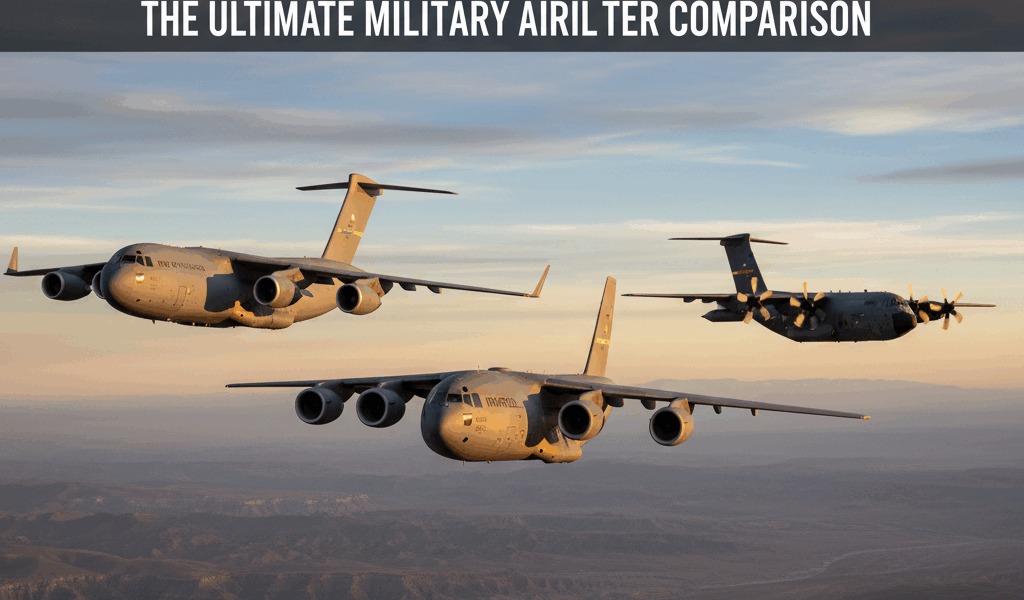
Put a C-17 Globemaster III next to a C-130 Hercules on the ramp and the size difference hits you immediately. The C-17 towers over its older sibling, nearly twice the cargo capacity crammed into a fuselage that dwarfs everything around it. But raw size doesn’t tell the whole story of why the Air Force operates both aircraft for missions that overlap more than you’d expect.
I’ve watched both aircraft operate from austere airfields, and each one brings capabilities the other can’t match. The question of which plane is “better” misses the point entirely—they’re complementary tools designed for related but distinct jobs.
The Tale of the Tape
Numbers first. The C-17 maxes out around 170,900 pounds of cargo. The C-130J Super Hercules tops out at roughly 42,000 pounds for tactical missions. That’s a factor of four difference that matters enormously when you’re moving heavy equipment.
An M1 Abrams tank won’t fit in a C-130. Period. The C-17 can carry one, just barely, and that’s the kind of capability that determines which aircraft gets the call when heavy armor needs to move fast. Apache helicopters, Patriot missile batteries, armored vehicles—the C-17 hauls what the C-130 physically cannot.
Range tells a similar story. A C-17 can fly roughly 2,400 nautical miles with a full payload, extending to intercontinental distances with aerial refueling. The C-130J manages about 2,050 nautical miles with maximum fuel, less with heavy cargo. For strategic airlift across oceans, the Globemaster wins decisively.
But approach those same numbers from a different angle and the calculus shifts.
Where the Hercules Shines
Land a C-17 at a forward operating base with a 3,500-foot dirt strip and watch the crew sweat. The aircraft can do it—the Globemaster was designed for short, austere runways—but it operates near its limits. A C-130 treats that same strip as comfortable terrain. The Herc was born to operate from places that would make civilian pilots refuse the approach.
The C-130’s lower takeoff and landing speeds, more robust landing gear, and higher-mounted engines keep it operational in conditions that would ground the C-17. Sand, gravel, snow—the Hercules handles surfaces that larger aircraft avoid. Improvised airstrips carved out of jungle or desert become viable operating bases.
Size works against the C-17 in contested environments too. A Hercules presents a smaller target, requires less space for parking and turnaround, and attracts less attention on the ground. During tactical operations where survivability matters more than payload, the smaller aircraft often makes more sense.
The C-130’s versatility extends beyond cargo hauling. The AC-130 gunship, EC-130 electronic warfare platform, HC-130 combat rescue variant, and MC-130 special operations transport all share the Hercules airframe. The C-17 does one thing exceptionally well; the C-130 does a dozen things competently.
Cost Reality
Operating costs explain why both aircraft remain in service. Flying a C-17 runs roughly $30,000 per hour all-in—fuel, maintenance, crew costs, everything. The C-130J costs approximately $15,000 per hour. Double the operating cost means you think hard about which missions genuinely require the bigger aircraft.
Sending a C-17 to move cargo that a C-130 could handle wastes money that the Air Force would rather spend elsewhere. The smaller aircraft makes economic sense for missions within its capability envelope. Reserve the Globemaster for payloads that justify the expense.
Acquisition costs paint a similar picture. A new C-17 ran about $218 million when production ended. C-130Js cost roughly $75 million depending on configuration. For the price of one Globemaster, you could buy nearly three Hercules aircraft and cover three times the operational locations simultaneously.
Mission Profiles
Strategic airlift—moving large quantities of equipment and personnel across oceans—belongs to the C-17. Flying tanks from the continental US to Poland, or delivering humanitarian supplies to disaster zones halfway around the world, these missions demand the Globemaster’s range and capacity.
Tactical airlift—supporting troops in theater with supplies, moving personnel between forward bases, resupplying remote outposts—often falls to the C-130. The aircraft goes where the fighting is, operating from strips that keep it close to the action.
Airborne operations work on both platforms, but differently. C-17s can drop heavy equipment that the C-130 can’t carry, including armored vehicles on parachute platforms. C-130s drop paratroopers more efficiently, their lower speed and altitude making for tighter drop patterns.
Special operations favor the Hercules almost exclusively. The MC-130 variants that support special operators have no C-17 equivalent. When SEALs or Delta operators need air support, they’re calling on some version of the C-130.
The Verdict That Isn’t
Asking which aircraft is superior misunderstands the relationship. The C-17 and C-130 don’t compete—they cooperate. The Globemaster delivers equipment to a main operating base; Hercules aircraft distribute that cargo forward to where it’s needed. The big jets provide strategic reach; the smaller ones provide tactical flexibility.
The Air Force operates both for good reason. Retiring either would create capability gaps that the remaining aircraft couldn’t fill. The C-17’s raw capacity and range complement the C-130’s versatility and austere field performance.
Pilots who’ve flown both tend to love whichever they’re currently assigned to. Loadmasters respect both aircraft for what they do well. The ground crews who maintain them understand that each airframe earns its place on the flight line.
Two giants, different missions, same Air Force. The battle of the titans isn’t a competition—it’s a partnership.

Subscribe for Updates
Get the latest articles delivered to your inbox.
We respect your privacy. Unsubscribe anytime.