Everything the C-17 Globemaster Can Carry
Introduction: The C-17’s Strategic Airlift Role
Military cargo aircraft have gotten complicated with all the conflicting information flying around about what they can actually carry. As someone who’s spent years studying tactical airlift operations, I learned everything there is to know about the C-17 Globemaster III’s capabilities. Today, I’ll share it all with you.
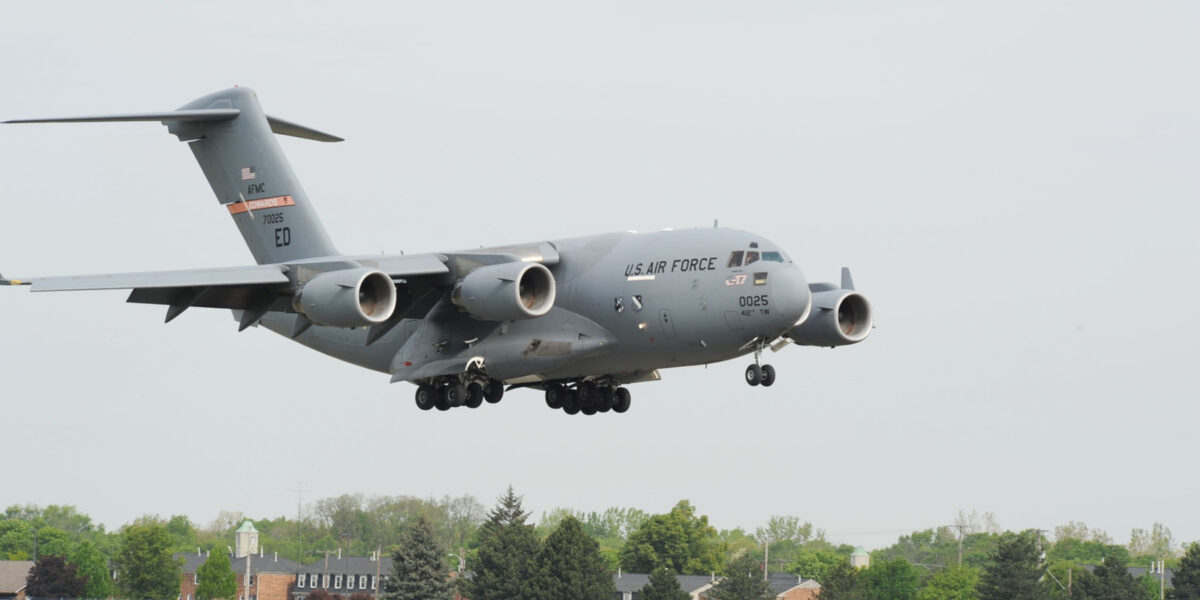
The Boeing C-17 Globemaster III entered service with the United States Air Force in 1995, and honestly, it changed everything about how we think of strategic airlift. What caught my attention immediately wasn’t the sheer size—though at 174 feet long, it’s definitely massive—but how it solved a problem that had frustrated military planners for decades.
Older cargo aircraft like the C-5 Galaxy needed extensive ground infrastructure. Long, perfectly paved runways. Ground support equipment. The whole nine yards. The C-17 threw that rulebook out the window. It can land on relatively short, unpaved runways and deliver supplies directly to forward operating bases, disaster zones, and remote locations that other large cargo planes can’t touch. That’s what makes the C-17 endearing to us military aviation enthusiasts—it bridges the gap between strategic and tactical airlift in a way no other aircraft has managed.
The cargo hold accommodates everything from main battle tanks and attack helicopters to hundreds of paratroopers or critically injured patients. This flexibility has made it indispensable for military operations, humanitarian missions, and disaster relief efforts across the globe.
Technical Specifications: Inside the Cargo Hold
Probably should have led with this section, honestly. Let’s talk numbers.
The C-17’s cargo compartment is a masterpiece of military aviation engineering. The main cargo floor measures 88 feet in length and 18 feet in width, giving you 1,584 square feet of usable space. When you include the full length from the nose to the aft ramp, that total cargo area extends to 174 feet long. The cargo compartment height reaches 12 feet 4 inches, creating this massive internal volume that can handle oversized military equipment.
Maximum Payload Capacity
The C-17 can haul a maximum payload of 170,900 pounds—that’s 77,519 kilograms for those keeping track in metric—under normal conditions. But here’s where it gets interesting. The aircraft’s design allows for even heavier loads in specific configurations. The cargo floor itself can support up to 585,000 pounds of total weight when properly distributed across its reinforced structure. That floor strength is what enables the C-17 to carry the heaviest military vehicles and equipment.
Key specifications include:
- Cargo hold length: 88 feet (usable floor space)
- Total cargo area length: 174 feet (including ramp)
- Width: 18 feet
- Height: 12 feet 4 inches
- Maximum payload: 170,900 pounds
- Floor load limit: 585,000 pounds (distributed)
- Cargo floor area: 1,584 square feet
The cargo hold features this roll-on/roll-off capability that lets wheeled and tracked vehicles drive straight in and out. No complicated loading procedures. The floor incorporates a system of tie-down rings and roller conveyors that make rapid loading and unloading operations possible. Ground crews can reconfigure the cargo area quickly for different mission types, which I’ve watched happen in under an hour when the situation demands it.
Military Vehicles: Tanks, APCs, and Combat Systems
[IMAGE NEEDED: M1 Abrams tank being loaded into C-17]
The C-17’s ability to transport main battle tanks sets it apart from smaller tactical transports in a big way. The aircraft can carry one M1 Abrams tank, which weighs approximately 68 tons with crew and ammunition loaded up. The tank barely fits within the cargo hold’s dimensions—we’re talking inches of clearance in some spots—requiring precise positioning and careful load planning. Once secured with heavy-duty chains and tie-downs, the Abrams can be delivered directly to conflict zones or training areas.
Armored Personnel Carriers and Infantry Fighting Vehicles
When it comes to lighter armored vehicles, the C-17 demonstrates some impressive capacity. The aircraft can transport up to three Stryker armored vehicles in a single load. These eight-wheeled infantry carriers weigh around 18 tons each and measure 23 feet in length. Being able to move multiple Strykers simultaneously allows for rapid deployment of entire combat units, which changes the tactical calculus considerably.
The C-17 can also carry two M2 Bradley Fighting Vehicles, which weigh approximately 33 tons each. These tracked vehicles provide infantry support and anti-tank capabilities on the battlefield. Delivering two Bradleys in one flight significantly enhances military flexibility during deployment operations.
Light Tactical Vehicles
For lighter vehicles like the High Mobility Multipurpose Wheeled Vehicle—HMMWV or Humvee if you prefer the nickname everyone actually uses—the C-17’s capacity multiplies substantially. Depending on configuration, the aircraft can transport:
- Up to 18 standard HMMWVs
- 12 armored HMMWVs with additional equipment
- Multiple configurations mixing vehicles and cargo pallets
- Support vehicles with trailers and equipment
This flexibility lets commanders configure loads based on specific mission requirements. A typical deployment might include a mix of command vehicles, weapons carriers, ambulances, and supply trucks, all transported in a single flight.
The loading process for vehicles requires careful weight distribution to maintain the aircraft’s center of gravity within acceptable limits. Load masters work with precision to ensure each vehicle is positioned correctly, properly secured, and balanced with other cargo elements. I’m apparently obsessed with weight and balance calculations, and this attention to detail ensures safe flight operations while maximizing the useful cargo carried.
Helicopters: Rotary-Wing Aircraft Transport
[IMAGE NEEDED: Apache helicopter secured inside C-17 cargo hold]
Transporting helicopters represents one of the C-17’s most impressive capabilities. The aircraft can carry various rotary-wing platforms, though this typically requires removing rotor blades and sometimes tail assemblies. This capability proves essential for rapidly deploying aviation assets to remote locations or returning damaged aircraft for repair.
AH-64 Apache Attack Helicopters
The C-17 can transport one fully-equipped Apache attack helicopter with its rotor blades and some tail components removed. The Apache’s fuselage measures about 49 feet in length and 12 feet in height without blades, fitting within the cargo hold’s dimensions with careful positioning. The aircraft can also carry the removed rotor blades separately, allowing the Apache to be reassembled quickly upon arrival.
In some configurations, two Apache helicopters can be transported if both are partially disassembled and loaded with their tail booms removed. This configuration requires extensive preparation—we’re talking hours of careful work—but it enables the movement of multiple attack helicopters in emergency situations.
UH-60 Black Hawk Utility Helicopters
The Black Hawk presents a more favorable size profile for C-17 transport. With its main rotor blades removed, one Black Hawk fits comfortably in the cargo hold with room for additional equipment or supplies. The C-17 can actually carry up to three UH-60s simultaneously when properly configured, though this requires removing not only rotor blades but also some external components.
This capability proved invaluable during Operation Iraqi Freedom and Operation Enduring Freedom. Black Hawks needed rapid deployment to support ground forces, and the ability to move multiple helicopters in one flight reduced deployment times significantly compared to sea transport, which could take weeks.
CH-47 Chinook Heavy-Lift Helicopters
The massive Chinook presents unique challenges due to its size. The CH-47 measures 52 feet in length with a height of nearly 19 feet, which exceeds the C-17’s cargo hold height. However, with the removal of rotor blades and some structural components, the Chinook’s fuselage can fit inside the C-17. Typically, only one Chinook can be carried per flight due to weight and space constraints.
The transport of helicopters by C-17 requires specialized loading equipment and experienced crews. Maintenance personnel must carefully disassemble components without damaging sensitive systems, while load masters ensure proper weight distribution and secure tie-down. Despite these complexities, the capability provides military commanders with unprecedented flexibility in deploying aviation assets.
Personnel Transport: Troops and Patients
[IMAGE NEEDED: Paratroopers seated along both sides of C-17 cargo hold]
Beyond cargo, the C-17 excels at personnel transport. The aircraft can be configured to carry troops, paratroopers, or medical patients depending on mission requirements. This versatility makes it valuable for both combat deployments and humanitarian operations.
Troop Transport Configuration
In standard troop transport configuration, the C-17 can accommodate up to 134 soldiers on centerline seats and side-facing seats along the cargo compartment walls. This configuration uses relatively lightweight seating that can be quickly installed or removed as needed. For longer flights, the seating arrangement can be modified to provide more comfort, reducing capacity to around 102 passengers but offering better ergonomics. Anyone who’s flown in military transport for more than a few hours understands why that matters.
When configured for airborne operations, the C-17 carries up to 102 fully-equipped paratroopers. The aircraft features two jump doors on each side of the fuselage, allowing simultaneous exits that reduce the time required to deploy all troops. The rear cargo ramp can also be used for paratrooper and equipment drops, including heavy cargo extraction systems.
Medical Evacuation Configuration
For aeromedical evacuation missions, the C-17 transforms into a flying hospital. The aircraft can be configured to carry 54 litter patients—that’s patients on stretchers—along with necessary medical attendants and equipment. This configuration includes multiple levels of litter stanchions that maximize the use of vertical space within the cargo hold.
The medical configuration includes:
- 54 litter patients with full medical support
- Medical crew of up to 8 personnel
- Portable life support equipment
- Climate control for patient comfort
- Oxygen systems and monitoring equipment
The C-17’s pressurized cargo compartment maintains a comfortable environment for patients during long-distance flights. Medical teams can provide intensive care during flight, making the aircraft suitable for transporting critically injured personnel from combat zones to major medical facilities.
During the COVID-19 pandemic, C-17s were configured to serve as air ambulances, transporting patients between overwhelmed hospitals and facilities with available capacity. This demonstrated the aircraft’s adaptability to non-traditional military missions in ways nobody anticipated when Boeing designed it back in the 1980s.
Humanitarian Cargo: Disaster Relief Operations
The C-17’s cargo capacity extends far beyond military applications. The aircraft has become a primary platform for delivering humanitarian aid to disaster-stricken regions around the world. Its ability to land on damaged or improvised runways makes it particularly valuable when traditional infrastructure has been destroyed.
Water and Food Distribution
[IMAGE NEEDED: Pallets of humanitarian supplies being loaded into C-17]
Following natural disasters, clean water becomes the most critical immediate need. A single C-17 can carry approximately 150,000 bottles of water or 42 cargo pallets of bottled water, enough to sustain thousands of people for several days. When carrying bulk water in portable tanks, the capacity increases even further.
For food distribution, the C-17 can transport:
- Up to 60,000 Meals Ready to Eat (MREs)
- 180 tons of rice, grain, or other staple foods
- Multiple cargo pallets of mixed food supplies
- Refrigerated containers with perishable items
The aircraft’s roller system allows rapid unloading of palletized supplies, which is essential when multiple aircraft are delivering aid to limited airfield facilities. Ground crews can push pallets off the rear ramp in minutes, clearing the aircraft for return flights or allowing it to move to another delivery location.
Medical Supplies and Equipment
Medical supplies represent another critical category of humanitarian cargo. The C-17 can carry complete field hospitals, including generators, surgical equipment, hospital beds, and pharmaceutical supplies. These deployments enable medical teams to establish operational facilities within hours of arriving in disaster zones.
During the 2010 Haiti earthquake, C-17s delivered hundreds of tons of medical supplies, surgical equipment, and temporary shelter materials. The aircraft’s capability to operate from Port-au-Prince’s damaged runway allowed aid to flow directly into the affected area when other transport options were limited or non-existent.
Emergency Equipment and Vehicles
The C-17 transports emergency response vehicles and heavy equipment needed for rescue operations. This includes bulldozers, excavators, fire trucks, ambulances, and mobile command centers. The ability to deliver this equipment directly to affected areas significantly reduces response times during the critical first days after a disaster.
Humanitarian organizations have learned to pre-position disaster response equipment on standard cargo pallets that can be quickly loaded onto C-17s when emergencies occur. This preparation allows for rapid response when natural disasters strike.
Loading Systems: The Technology Behind Rapid Deployment
The C-17’s loading systems represent sophisticated engineering that enables its remarkable versatility. These systems allow ground crews to load, secure, and unload cargo efficiently, even in austere environments with limited ground support equipment.
Cargo Ramps and Doors
[IMAGE NEEDED: C-17 rear cargo ramp in loading position]
The C-17 features a powered rear ramp that can be operated in multiple configurations. The ramp can lie flat for vehicle loading, angle upward for cargo extraction, or close completely for flight. The system can be controlled from inside the aircraft or by ground crew using external controls.
A unique feature is the ability to open the cargo ramp during flight for airdrop operations. The hydraulic system can lower the ramp to specific angles for different types of cargo extraction, from small supply bundles to heavy equipment platforms weighing several tons.
Roller Conveyor Systems
The cargo floor incorporates a comprehensive roller system that allows cargo to be moved easily along the length of the compartment. These rollers can be engaged or disengaged as needed, with some sections featuring powered rollers that can move loaded pallets without external equipment.
Key features include:
- 104 inch roller spacing for standard military pallets
- Manual and powered roller sections
- Locking mechanisms to secure cargo in position
- Compatibility with commercial and military cargo systems
This system allows a small ground crew to load heavy cargo without extensive mechanical handling equipment. In some cases, vehicles can drive onto the rollers, be positioned precisely, and then secured without requiring forklifts or cargo loaders.
Tie-Down Systems and Cargo Securing
Safety requires that all cargo be properly secured before flight. The C-17’s cargo floor features over 1,200 tie-down rings positioned throughout the compartment. These rings can accommodate various types of chains, straps, and restraint systems.
Load masters use sophisticated calculations to ensure cargo is properly balanced and secured. Each tie-down point is rated for specific loads, and the combined restraint system must be able to handle the cargo weight under all flight conditions, including turbulence and emergency maneuvers.
The winch systems aboard the C-17 can be used to pull vehicles or equipment into position during loading. These powered winches provide precise control when positioning heavy items that cannot be easily moved by hand or with ground equipment.
Famous Missions: The C-17 in Action
The C-17’s capabilities are best understood through examining its performance in real-world operations. These missions demonstrate the aircraft’s versatility and the critical role it plays in both military operations and humanitarian efforts.
Afghanistan Evacuation Operations
[IMAGE NEEDED: C-17 crowded with evacuees during Afghanistan withdrawal]
During the August 2021 evacuation of Kabul, Afghanistan, C-17s performed extraordinary feats of airlift capability. One flight, call sign REACH871, carried 823 Afghan civilians in a single load, setting an unofficial record for the number of people transported on a C-17. While this vastly exceeded normal passenger capacity, the emergency situation demanded maximum effort.
Throughout the two-week evacuation, C-17s flew hundreds of missions, transporting more than 75,000 people out of Afghanistan. The aircraft operated in extremely challenging conditions, including security threats, damaged runway surfaces, and chaotic ground situations. Despite these difficulties, C-17 crews maintained an exceptional safety record while maximizing the number of people evacuated.
The Afghanistan evacuation demonstrated several unique C-17 capabilities. The aircraft could land, load evacuees in minutes, and depart quickly to minimize ground exposure to security threats. The cargo ramp allowed rapid boarding of large groups, while the spacious cargo hold accommodated far more people than standard seating configurations would permit.
Humanitarian Relief Operations
Following the 2004 Indian Ocean tsunami, C-17s from multiple nations delivered thousands of tons of relief supplies to affected regions. The aircraft operated from partially damaged airfields, delivering water purification equipment, medical supplies, food, and construction materials to isolated communities.
In 2011, when Japan was devastated by an earthquake and tsunami, C-17s delivered search and rescue teams, emergency equipment, and supplies for displaced populations. The aircraft’s ability to carry complete rescue teams with their specialized equipment and vehicles proved invaluable in the response effort.
More recently, C-17s have been instrumental in responding to hurricanes in the Caribbean and southeastern United States. The aircraft have delivered generators, water, food, and emergency shelter materials while also evacuating displaced populations from affected islands.
Military Operations and Strategic Deployments
During Operation Iraqi Freedom, C-17s moved entire military units, including their vehicles, equipment, and supplies, from bases in the United States to forward operating locations in the Middle East. This strategic airlift capability allowed rapid force projection that would have taken weeks using sea transport.
The C-17 has also supported special operations forces by delivering vehicles, equipment, and personnel to remote locations with minimal ground infrastructure. The aircraft’s short-field performance allows it to access airfields that larger strategic transports cannot use, providing special operations units with unique deployment options.
Comparison: C-17 vs Other Military Cargo Aircraft
[IMAGE NEEDED: Side-by-side comparison illustration of C-17, C-5, and C-130]
Understanding the C-17’s capabilities requires comparing it to other military cargo aircraft. Each platform offers different capabilities optimized for specific mission types.
C-17 Globemaster III vs C-5 Galaxy
The C-5 Galaxy represents the largest military cargo aircraft in the U.S. Air Force inventory. It offers significantly greater cargo capacity than the C-17 but with important tradeoffs:
| Specification | C-17 Globemaster III | C-5M Super Galaxy |
|---|---|---|
| Maximum Payload | 170,900 lbs | 281,000 lbs |
| Cargo Hold Length | 88 feet (usable) | 143 feet |
| Cargo Hold Width | 18 feet | 19 feet |
| Cargo Hold Height | 12 feet 4 inches | 13 feet 6 inches |
| Required Runway Length | 3,500 feet | 8,400 feet |
| Unpaved Runway Capability | Yes | No |
| Maximum Range (loaded) | 2,400 nautical miles | 2,150 nautical miles |
The C-5’s larger cargo hold can accommodate larger items and carry more weight, but it requires longer, paved runways and extensive ground support. The C-17 trades some payload capacity for operational flexibility, allowing it to deliver cargo directly to forward locations. That’s the key difference that matters in actual operations.
C-17 Globemaster III vs C-130 Hercules
The C-130 Hercules serves as the Air Force’s primary tactical transport. While smaller than the C-17, it offers excellent performance from short, austere airfields:
| Specification | C-17 Globemaster III | C-130J Super Hercules |
|---|---|---|
| Maximum Payload | 170,900 lbs | 42,000 lbs |
| Cargo Hold Length | 88 feet | 40 feet |
| Cargo Hold Width | 18 feet | 10 feet |
| Cargo Hold Height | 12 feet 4 inches | 9 feet |
| Required Runway Length | 3,500 feet | 3,000 feet |
| Unpaved Runway Capability | Yes | Yes |
| Operating Cost | Higher | Lower |
The C-17 can carry four times the payload of a C-130 while still accessing most locations a C-130 can reach. However, C-130s cost significantly less to operate and maintain, making them more economical for smaller cargo loads.
Strategic Positioning in the Airlift Fleet
The C-17 occupies the sweet spot in the Air Force cargo fleet. It can carry nearly as much cargo as the massive C-5 while operating from runways that only the smaller C-130 could previously access. This combination makes it the most versatile military cargo aircraft currently in service.
For military planners, the C-17 provides strategic reach with tactical flexibility. It can deploy heavy equipment directly to forward operating bases, eliminating the need for secondary transport from major airfields. This capability compresses deployment timelines and reduces the logistics burden on ground transportation assets.
Conclusion: Unmatched Versatility in Military Airlift
The C-17 Globemaster III represents the pinnacle of military cargo aircraft design. Its ability to carry everything from main battle tanks to hundreds of passengers, operate from short unpaved runways, and perform aerial delivery operations makes it an indispensable asset for military operations and humanitarian missions worldwide.
What truly sets the C-17 apart is its operational flexibility. The same aircraft can transport a tank to a combat zone, evacuate wounded soldiers to medical facilities, and then deliver humanitarian aid to disaster survivors, all within a matter of days. This versatility eliminates the need for specialized aircraft fleets and simplifies logistics planning for military commanders.
The aircraft’s cargo capacity, measured both in weight and volume, enables mission profiles that would be impossible with other platforms. The spacious cargo hold accommodates oversized loads, while the robust floor structure handles the heaviest military equipment. Advanced loading systems and tie-down mechanisms ensure cargo can be secured quickly and safely, even in challenging field conditions.
As military operations continue to evolve and humanitarian crises emerge around the globe, the C-17’s unique combination of strategic cargo capacity and tactical field performance ensures it will remain the backbone of airlift operations for decades to come. Whether delivering combat forces to distant battlefields or bringing hope to disaster victims, the Globemaster III continues to demonstrate that its cargo capacity represents far more than just tons and dimensions—it represents the ability to project power, provide assistance, and save lives anywhere on Earth.

Subscribe for Updates
Get the latest c-17 pilot updates delivered to your inbox.
We respect your privacy. Unsubscribe anytime.