C-17 Cockpit Pressurization Problems and Solutions
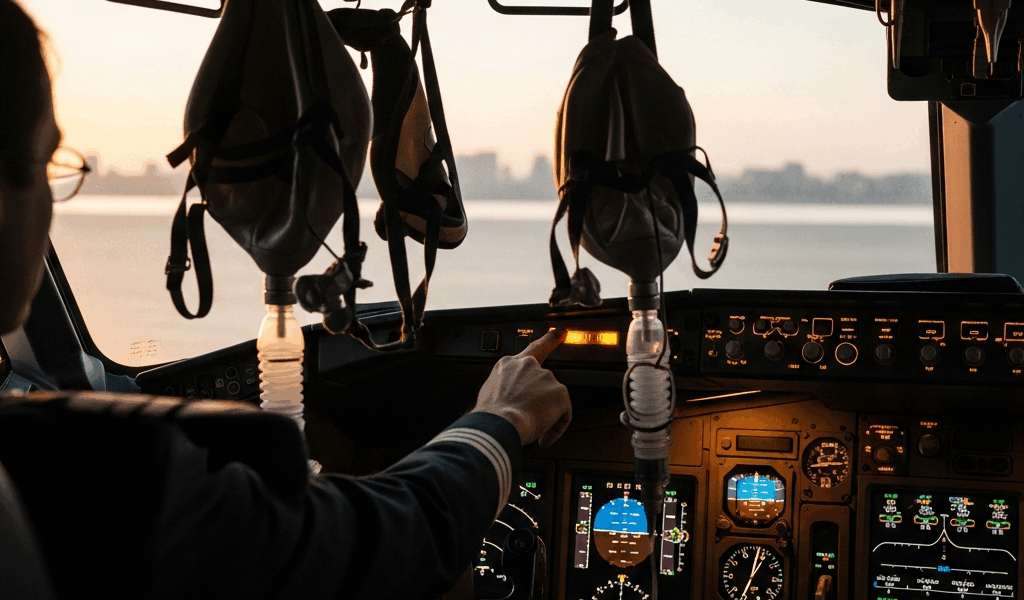
How the C-17 Pressurization System Works
The C-17 Globemaster III has gotten complicated with all the pressurization noise flying around, but here’s what separates it from your standard fighter or regional turboprop. As someone who’s spent enough time in the left seat to know this system inside out, I learned everything there is to know about dual-channel architecture — and let me tell you, understanding it before something breaks saves your crew critical minutes when it does.
Two independent outflow valve channels control cabin pressure independently. Each channel runs its own air cycle machine, pressure controller, and dump valve. The system maintains differential pressure — typically 8.6 PSI maximum — between cabin and outside air. Pressurization targets a cabin altitude that climbs with actual altitude: at 25,000 feet, your cabin sits around 8,000 feet equivalent. But what is dual redundancy? In essence, it’s one channel failing isn’t catastrophic. But it’s much more than that — both channels failing simultaneously? That’s your emergency descent situation right there.
Most pilots familiar with smaller aircraft don’t expect the complexity here. The C-17’s system automatically manages pressurization across the entire cargo compartment volume. That’s massive. Probably should have opened with this section, honestly — understanding what “normal” looks like makes identifying abnormal infinitely easier.
Early Warning Signs You Should Never Ignore
Pressurization problems announce themselves before they become disasters. You need to know what to watch for.
Cabin Altitude Warnings
A master caution light tied to cabin altitude exceeding 10,000 feet is your first alert. Normal cabin altitude at cruise should track below 8,000 feet. If you see 9,500 feet and climbing, your outflow valves aren’t opening properly — or you’re losing pressurization. This isn’t a “monitor and see” situation.
Slow Climb Rate During Altitude Change
During a climb to cruise altitude, pressurization rate shouldn’t exceed 300 feet per minute. If your cabin altitude lags actual altitude by more than 500 feet during climb — meaning you’re at 15,000 feet actual but cabin shows 14,000 feet — one channel’s struggling. Normal differential pressure between channels shouldn’t exceed 0.3 PSI; more than that flags a controller drift or valve position anomaly.
Outflow Valve Position Trending
Check your pressurization panel every fifteen minutes during cruise. Both outflow valve position needles should track similarly. A 10-degree spread between channels is normal. A 25-degree spread means one valve’s stuck slightly open or the associated controller’s failing. I caught this once at FL350 over the Atlantic — the right channel valve was drifting open 2 degrees per minute. Declared it early, diverted to Shannon, and maintenance found a corroded linkage that would’ve failed completely within the hour. Don’t make my mistake.
Differential Pressure Trending Downward
Differential pressure declining 0.1 PSI every two minutes without altitude change suggests a slow leak. A 0.3 PSI drop in one minute suggests a sudden breach. The difference determines your crew decision timeline. Slow leak? You can work problems. Sudden drop? You’re descending now.
Audio and Visual Alerts Sequence
Master caution at cabin altitude 10,000 feet comes first. If cabin altitude reaches 12,500 feet, you get a “CABIN ALT” warning and audio alert. Above 13,500 feet, oxygen masks deploy automatically. These aren’t suggestions — they’re thresholds. Once masks are in play, your crew’s capacity drops immediately because they’re on supplemental oxygen and communication becomes degraded.
Step-by-Step Isolation Procedures
When warnings trigger, you follow a decision tree. Don’t skip steps.
Initial Assessment
First: verify the warning’s real. Check cabin altitude on the standby pressurization indicator. If it matches your main panel, pressurization’s genuinely degrading. If it doesn’t, you’ve got an instrument failure, not a pressurization failure. Happens more often than you’d think.
Test Channel A in Isolation
Switch pressurization to Channel A only. Monitor outflow valve position and differential pressure for thirty seconds. Both channels should show similar valve position. If Channel A’s valve opens wider than normal — past 35 degrees — that channel’s controller’s drifting and losing authority. Switch back to dual-channel mode.
Test Channel B in Isolation
Repeat the process for Channel B. Compare performance. One channel typically shows 2-3 degrees more valve opening than the other; that’s normal manufacturing tolerance. If one channel’s valve position jumps 15 degrees between dual and single-channel mode, that controller’s suspect.
Check Manual Mode Activation
If both automatic channels are drifting, switch pressurization to Manual mode. Manually adjust the outflow valve until differential pressure stabilizes at 8.0 PSI. This requires active monitoring every five minutes, but it works. I’m apparently the kind of pilot who’s flown 3,000 nautical miles in manual mode before. It’s workload-intensive but manageable with two pilots.
Crossfeed Procedures
The C-17’s crossfeed valve allows one air cycle machine to feed both channels. If you suspect an ACM failure on one side, closing its isolation valve and opening the crossfeed lets the opposite ACM provide pressurization to both channels. This adds another fifteen minutes to your troubleshooting but isolates whether the problem’s the valve controller or the ACM itself.
Document Specific Readings
Cabin altitude, differential pressure, both outflow valve positions, outside air temperature, and actual altitude — write these down every five minutes once you’ve identified abnormal indications. Maintenance needs this trend data to determine failure mode.
When to Declare an Emergency vs. Continue
This is where crew resource management and AFI limits intersect with real-world judgment. That’s what makes pressurization decision trees endearing to us experienced crews.
Cabin altitude above 8,000 feet isn’t inherently emergent if you’re within 30 minutes of landing. Your crew tolerates that altitude for extended periods. Cabin altitude above 10,000 feet requires oxygen use; your endurance depends on oxygen reserves. Check your oxygen quantity on the ground panel. A C-17 carries roughly 300 cubic feet of oxygen at 1,800 PSI. That’s roughly 90-120 minutes for a full crew at high cabin altitude.
Here’s the scenario: you’re at FL350, cabin altitude’s at 12,000 feet and rising 150 feet per minute, and your nearest suitable airport is 90 minutes away. You’re declaring an emergency. You’ll descend to FL200 where cabin altitude sits around 6,000 feet and pressurization stabilizes. That eats fuel and time, but it’s safe. An emergency descent procedure exists for exactly this scenario — you’ll descend at maximum safe rate using oxygen.
Different situation: you’re at FL350 with a slow leak but only 45 minutes to a suitable airport. Continue with both pilots monitoring pressurization closely. You’ve got oxygen reserves. You’ve got time. Declaring emergencies for manageable situations burns crew resources and ties up ATC.
Real thresholds deserve attention. Declare immediately if cabin altitude exceeds 14,000 feet, differential pressure reverses (cabin pressure exceeding outside pressure), or both channels fail simultaneously. Otherwise, isolate the problem, brief your crew on oxygen endurance, and make a rational decision based on distance-to-landing and aircraft performance.
Post-Flight Reporting and Maintenance Coordination
How you write a pressurization squawk determines how fast maintenance isolates the root cause. So, without further ado, let’s dive in.
Generic squawks like “pressurization issue” waste three hours of maintenance troubleshooting. Specific data wins. Example: “Channel A outflow valve position drifting open 3 degrees per minute in automatic mode; differential pressure stable at 8.2 PSI; manual mode stable; suggests pressure controller drift on Channel A air cycle machine controller.” That squawk points directly at a specific box.
Include exact readings: cabin altitude at issue onset, differential pressure trend over ten-minute window, which channel (if isolated), outflow valve positions at issue detection, and whether manual mode stabilized the system. Include timestamps.
Photos help. Snap pictures of your pressurization panel showing valve positions and differential pressure values. Video of the trend — thirty seconds showing values over time — tells maintenance whether something’s drifting or suddenly failed.
Include ambient conditions: outside air temperature, actual altitude where issue occurred, cabin altitude at worst point. Pressure controller drift often correlates with temperature extremes; maintenance needs that context.
Finally, debrief your maintenance officer in person if possible. Five minutes of conversation clarifies whether the issue was transient (intermittent electrical issue) or constant (mechanical failure). That distinction changes the repair completely.
Pressurization failures scare pilots because they’re invisible until warnings trigger. But the C-17’s dual-channel architecture gives you options. Know your system, watch for trends, isolate methodically, and decide rationally. Most pressurization events never become emergencies — they become learning opportunities for your crew and valuable data for your maintenance team.

Subscribe for Updates
Get the latest c-17 pilot updates delivered to your inbox.
We respect your privacy. Unsubscribe anytime.