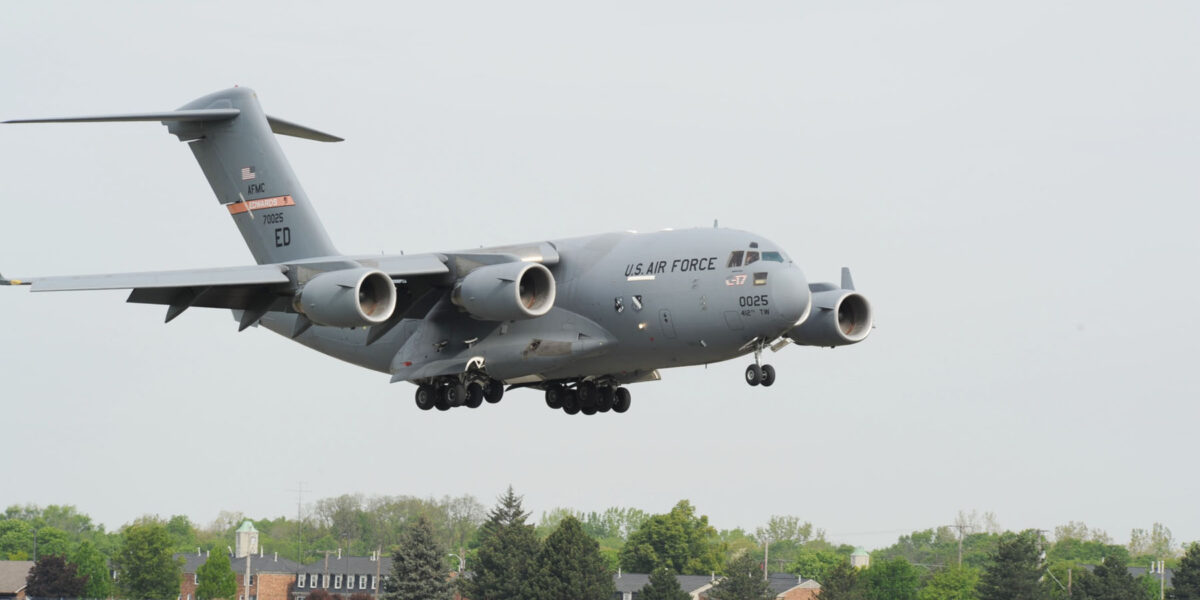
2,400-Foot Takeoffs: The Performance Numbers That Make the C-17 Tactical

The numbers that define C-17 performance seem almost impossible: a 585,000-pound aircraft that can take off in 2,400 feet, land in less than 3,000 feet, and operate from runways that would be dangerously short for aircraft half its weight. These aren’t theoretical figures—they’re demonstrated capabilities that C-17 crews execute routinely. Understanding how the aircraft achieves this performance reveals engineering brilliance that sets it apart from every other heavy airlifter.

Takeoff Performance

The 2,400-Foot Claim

At combat weight and sea level conditions, the C-17 can become airborne in approximately 2,400 feet. To put this in perspective:

  • A fully loaded 737 needs roughly 6,000-7,000 feet
  • The C-5 Galaxy needs over 8,000 feet at maximum weight
  • Many regional airports have runways shorter than what the C-17 requires

“Combat weight” is key—this isn’t maximum gross weight but rather a tactical configuration optimized for short-field operations. At maximum takeoff weight of 585,000 pounds, runway requirements increase substantially.

How It’s Possible

Several design features enable this remarkable performance:

High Thrust-to-Weight Ratio: The four Pratt & Whitney F117-PW-100 engines produce over 160,000 pounds of combined thrust. At combat weight, this gives a thrust-to-weight ratio that accelerates the aircraft rapidly.

Externally Blown Flaps: The engines are positioned so their exhaust flows directly over the extended flaps. This “blows” additional airflow over the high-lift surfaces, dramatically increasing lift at low speeds. The externally blown flap system essentially creates extra wing area aerodynamically.

Advanced Wing Design: The supercritical wing generates high lift at low speeds while remaining efficient at cruise. Combined with full-span leading edge slats, the wing achieves lift coefficients that smaller aircraft can only dream of.

Takeoff Technique

C-17 takeoffs from short fields use maximum performance technique:

  1. Run engines to maximum thrust against brakes
  2. Release brakes and accelerate
  3. Rotate at computed VR (rotation speed)
  4. Climb at maximum gradient angle
  5. Accelerate and configure for departure

The fly-by-wire system assists by optimizing control surface deflections for maximum performance without pilot workload.

Landing Performance

Assault Landing Capability

The C-17 can land on runways as short as 3,000 feet at combat weight—again, a figure that seems impossible for an aircraft this size. The landing sequence looks distinctly different from conventional transport operations:

Steep Approach: Rather than the typical 3-degree glidepath, tactical C-17 approaches can use descent angles up to 7 degrees. This clears obstacles near the runway and reduces exposure to ground threats.

Slow Approach Speed: The externally blown flaps allow approach speeds as low as 115 knots indicated airspeed at lighter weights. For comparison, a 747 approaches at roughly 150 knots.

Precise Touchdown: The fly-by-wire system’s Direct Lift Control allows pilots to fine-tune the glidepath without changing pitch attitude, enabling precise touchdown point control.

Stopping Power

Once on the ground, multiple systems combine to stop the aircraft quickly:

  • Ground spoilers: Deploy automatically on touchdown, killing lift and putting weight on the wheels
  • Thrust reversers: All four engines can reverse thrust, creating massive deceleration
  • Carbon brakes: High-capacity brakes with anti-skid protection
  • Autobrake: Automatic application of pre-selected deceleration rate

The combination stops the aircraft so quickly that first-time passengers often comment on the dramatic deceleration.

Climb Performance

Initial climb rate depends heavily on weight and conditions, but the C-17 demonstrates impressive vertical performance:

  • Sea level, standard day, max weight: 1,800-2,000 feet per minute
  • Combat weight: Over 3,000 feet per minute initially
  • Three-engine: Reduced but positive climb at max weight

Tactical Departure

For operations from hostile areas, the C-17 can execute tactical departure profiles that maximize altitude gain in minimum time. These departures use:

  • Maximum thrust from brake release
  • Early rotation
  • Maximum angle of climb
  • Rapid configuration changes to clean up drag

The goal is gaining altitude and distance from the departure point as quickly as possible—important when the airfield might be within range of ground threats.

Cruise Performance

Speed and Altitude

At cruise, the C-17 typically operates at:

  • Speed: Mach 0.74-0.77 (approximately 450 knots true airspeed)
  • Altitude: 28,000-35,000 feet depending on weight
  • Fuel flow: 17,000-22,000 pounds per hour total

These figures reflect the balance between speed, fuel efficiency, and altitude capability. Higher and faster would burn more fuel; lower and slower would extend flight time but reduce daily utilization.

Range

Unrefueled range varies dramatically with payload:

  • Maximum payload (170,900 lbs): Approximately 2,400 nautical miles
  • Typical tactical payload (60,000 lbs): Over 4,000 nautical miles
  • Ferry configuration (minimum payload): Over 5,200 nautical miles

These ranges assume no aerial refueling. With tanker support, the C-17’s range becomes essentially unlimited—limited only by crew duty time.

Austere Field Performance

The performance numbers that really set the C-17 apart involve operations from unprepared surfaces:

Surface Requirements

The aircraft is certified for:

  • Paved runways: Standard operations at all weights
  • Semi-prepared surfaces: Compacted dirt or gravel meeting specific CBR requirements
  • Grass and soil: With appropriate ground pressure limitations

Ground Flotation

The 24-wheel main landing gear distributes weight across enough tire contact area to keep ground pressure within limits for semi-prepared surfaces. This allows operations at airfields that would be unusable for comparable aircraft.

Performance Planning

Before every mission, crews compute detailed performance data:

  • Takeoff speeds and distances for current conditions
  • Climb performance and obstacle clearance
  • Fuel consumption for planned altitudes and speeds
  • Landing performance at destination and alternates
  • Engine-out capabilities throughout the flight

These calculations account for temperature, pressure altitude, wind, runway condition, and aircraft weight. The flight management computers assist, but crews must understand the underlying factors to make good decisions.

Design Trade-Offs

Achieving this tactical performance required engineering compromises:

Fuel Efficiency: The high-lift systems and robust landing gear add weight and drag that reduce cruise efficiency compared to pure strategic airlifters.

Speed: Optimizing for short-field performance means the C-17 is slower than commercial jets of similar size.

Complexity: The externally blown flaps, sophisticated FBW system, and multi-wheel landing gear are mechanically complex and maintenance-intensive.

Boeing and the Air Force decided these trade-offs were worth it for an aircraft that could perform both strategic and tactical missions—a decision validated by decades of operational success.

Why It Matters

The C-17’s performance numbers aren’t just bragging rights—they translate directly into operational capability. When disaster strikes a remote area or military operations require heavy equipment at a forward location, the C-17’s short-field performance means direct delivery rather than transshipment from distant airports.

For C-17 crews, understanding these performance parameters is essential for mission planning and execution. The margins are real, and respecting them is what separates routine operations from dangerous ones. The aircraft is remarkably capable, but that capability must be applied with knowledge and judgment.

Jason Michael

Jason Michael

Author

Jason Michael is a Pacific Northwest gardening enthusiast and longtime homeowner in the Seattle area. He enjoys growing vegetables, cultivating native plants, and experimenting with sustainable gardening practices suited to the region's unique climate.

✈️ Get the latest C-17 news & insider content

Shop C-17 Gear

Subscribe for Updates

Get the latest articles delivered to your inbox.