C-17 Specs Every Pilot Should Know
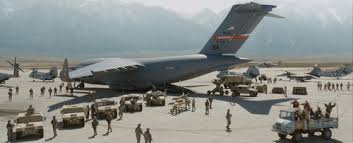
The C-17 Globemaster III is the U.S. Air Force’s premier strategic and tactical airlifter. This comprehensive specifications guide covers the aircraft’s dimensions, performance capabilities, and key systems that make it one of the most versatile military transport aircraft ever built.
Dimensions
The C-17 is a large aircraft designed to carry outsized cargo while maintaining the ability to operate from relatively short runways.
| Length | 174 feet (53 meters) |
| Wingspan | 169 feet 10 inches (51.77 meters) |
| Height | 55 feet 1 inch (16.8 meters) |
| Cargo Compartment Length | 88 feet (26.8 meters) |
| Cargo Compartment Width | 18 feet (5.5 meters) |
| Cargo Compartment Height | 12 feet 4 inches (3.76 meters) |
The aircraft uses approximately 8% composite materials, primarily in secondary structures and control surfaces, reducing weight while maintaining structural integrity.
Weight Specifications
| Empty Weight | 282,500 pounds (128,100 kg) |
| Maximum Takeoff Weight | 585,000 pounds (265,350 kg) |
| Maximum Payload | 170,900 pounds (77,500 kg) |
| Maximum Fuel Capacity | 181,054 pounds (82,000 kg) |
Powerplant
The C-17 is powered by four Pratt & Whitney F117-PW-100 turbofan engines. These military engines are derived from the commercial PW2040 engines used on the Boeing 757 airliner.
| Engine Type | Pratt & Whitney F117-PW-100 turbofan |
| Number of Engines | 4 |
| Thrust per Engine | 40,440 pounds |
| Total Thrust | 161,760 pounds |
A key feature of these engines is their thrust reversers, which can be deployed in flight for steep tactical descents and on the ground for backing the aircraft without ground support equipment.
Performance
Speed
| Maximum Speed | 515 knots (590 mph / 950 km/h) |
| Cruise Speed | 450 knots (518 mph / 830 km/h) at Mach 0.74 |
Range
| Range with 160,000 lb payload | 2,400 nautical miles (early aircraft) / 2,800 nautical miles (extended range models) |
| Maximum Unloaded Range | 6,230 nautical miles (11,540 km) |
| Ferry Range | 5,200+ nautical miles with aerial refueling capability |
Extended-range models incorporate a sealed center wing bay as an additional fuel tank, increasing range by approximately 400 nautical miles with full payload.
Altitude
| Service Ceiling | 45,000 feet (13,716 meters) |
| Initial Cruise Altitude (loaded) | 28,000 feet (8,534 meters) |
Short Field Performance
One of the C-17’s most impressive capabilities is its ability to operate from austere airfields that would be inaccessible to other strategic airlifters.
| Minimum Runway Length | 3,500 feet (1,067 meters) |
| Minimum Runway Width | 90 feet (27 meters) |
| Surface Capability | Paved, unpaved, and unimproved surfaces |
The aircraft can operate from unpaved runways, though this increases the probability of minor damage and requires more frequent inspections.
Cargo Capabilities
Palletized Cargo
- 18 standard 463L cargo pallets
- Maximum pallet weight varies by position
- Dual rail system for rapid loading/unloading
Vehicle Capacity
The C-17 can transport a wide variety of military vehicles:
- 1 M1 Abrams main battle tank (69 tons)
- 3 Stryker infantry combat vehicles
- 3 Bradley Fighting Vehicles
- 2 UH-60 Black Hawk helicopters (with rotors removed)
- 1 AH-64 Apache helicopter
Airdrop Capability
| Single Load Airdrop | 60,000 pounds (27,216 kg) |
| Sequential Load Airdrop | 110,000 pounds (49,895 kg) |
| Paratroopers | 102 fully equipped troops |
Crew
| Minimum Crew | 3 (pilot, copilot, loadmaster) |
| Troop Seating | 102 troops or 134 with centerline seats |
| Aeromedical Configuration | 36 litter patients plus medical crew |
The three-person crew represents a significant reduction from earlier strategic airlifters like the C-5 Galaxy, which requires five crew members.
Avionics and Systems
- Four Honeywell multifunction CRT displays
- Dual Head-Up Displays (HUD)
- Quadruple-redundant fly-by-wire flight controls
- Dual GPS/INS navigation
- Digital flight management system
- Engine Indicating and Crew Alerting System (EICAS)
- Enhanced Vision System (EVS)
- Weather radar
- Satellite communication capability
Defensive Systems
The C-17 can be equipped with various defensive systems depending on mission requirements:
- AN/AAR-47 Missile Warning System
- AN/ALE-47 Countermeasures Dispenser System
- AN/ALR-69A Radar Warning Receiver
- Large Aircraft Infrared Countermeasures (LAIRCM)
Production and Fleet
| Manufacturer | Boeing (formerly McDonnell Douglas) |
| First Flight | September 15, 1991 |
| Total Produced | 279 aircraft |
| Unit Cost | Approximately $218 million (FY98) |
| Production End | 2015 |
Operators
- United States Air Force (223 aircraft)
- Royal Australian Air Force (8 aircraft)
- Royal Air Force (8 aircraft)
- Royal Canadian Air Force (5 aircraft)
- Qatar Emiri Air Force (8 aircraft)
- United Arab Emirates Air Force (6 aircraft)
- Indian Air Force (11 aircraft)
- Kuwait Air Force (2 aircraft)
- NATO Strategic Airlift Capability (3 aircraft)
Comparison with Other Airlifters
| Specification | C-17 | C-5M Galaxy | C-130J Hercules |
|---|---|---|---|
| Max Payload | 170,900 lbs | 281,000 lbs | 42,000 lbs |
| Range (with payload) | 2,400+ nm | 2,150 nm | 1,800 nm |
| Min Runway | 3,500 ft | 6,000 ft | 3,000 ft |
| Crew | 3 | 5 | 3 |
The C-17 bridges the gap between tactical and strategic airlift, combining the payload capacity approaching the C-5 with short-field performance closer to the C-130.

Subscribe for Updates
Get the latest articles delivered to your inbox.
We respect your privacy. Unsubscribe anytime.