C-5 vs C-17 vs C-130 Military Airlifter Comparison
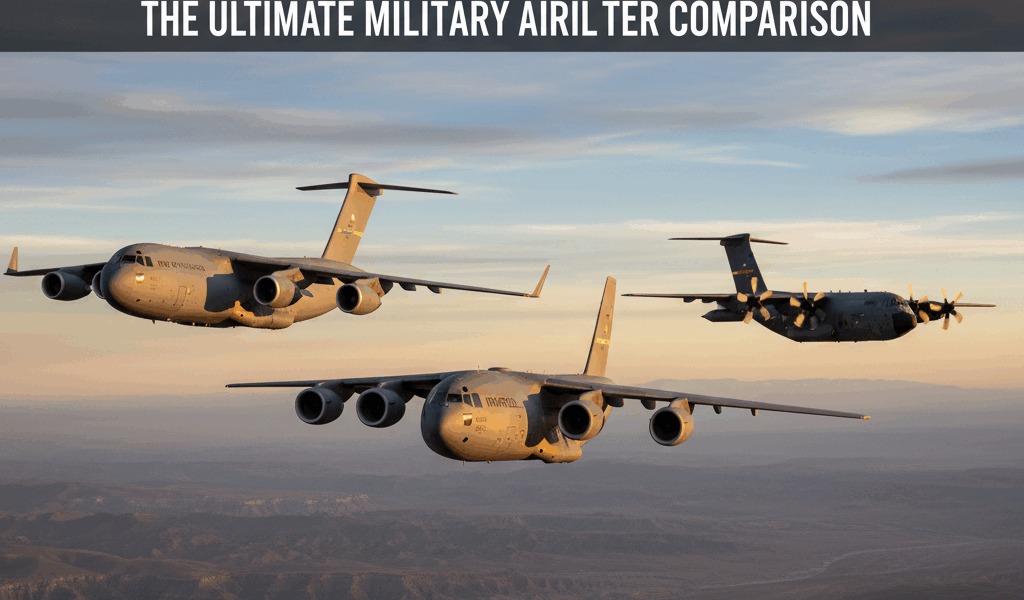
If you’ve spent any time around military airlift, you’ve probably heard people compare the C-5, C-17, and C-130. They’re all cargo planes, right? Just pick whichever one is available and call it good?
Not quite.
Each of these aircraft was designed for specific missions, and they excel in different scenarios. The C-5 is the heavyweight champion. The C-17 is the versatile all-rounder. The C-130 is the tactical workhorse. And understanding when to use each one matters if you’re planning cargo movement or considering an aircrew career.
Let me break down the differences, because they’re more significant than you might think.
The Quick Specs Comparison
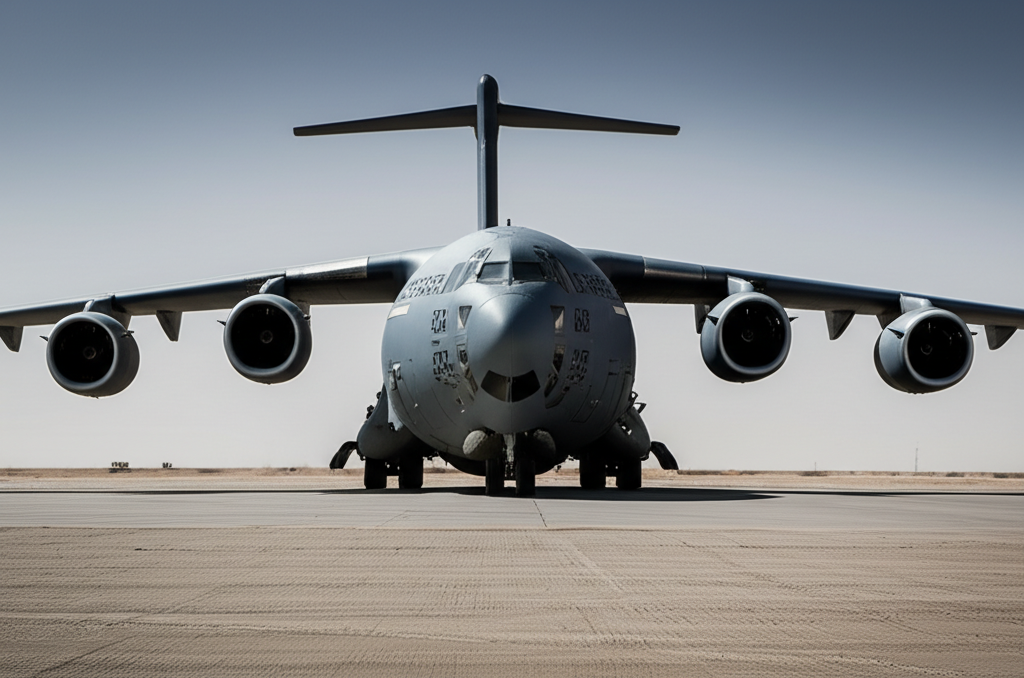
Before we dig into the details, here’s a table that shows the basic numbers:
| Specification | C-5M Super Galaxy | C-17 Globemaster III | C-130J Super Hercules |
|---|---|---|---|
| First Flight | 1968 (C-5A), 1986 (C-5B), 2006 (C-5M) | 1991 | 1996 (J model) |
| Wingspan | 222.8 feet | 169.8 feet | 132.6 feet |
| Length | 247.8 feet | 174 feet | 97.8 feet |
| Height | 65.1 feet | 55.1 feet | 38.8 feet |
| Cargo Compartment Length | 143.9 feet | 88 feet | 55.9 feet |
| Cargo Compartment Width | 19 feet | 18 feet | 10.3 feet |
| Cargo Compartment Height | 13.5 feet | 12.4 feet | 9 feet |
| Maximum Payload | 281,000 lbs | 170,900 lbs | 42,000 lbs |
| Maximum Takeoff Weight | 840,000 lbs | 585,000 lbs | 175,000 lbs |
| Cruising Speed | 518 mph (Mach 0.77) | 515 mph (Mach 0.76) | 417 mph (Mach 0.63) |
| Range (max payload) | 2,150 nautical miles | 2,400 nautical miles | 1,300 nautical miles |
| Range (reduced payload) | 5,500+ nautical miles | 6,230 nautical miles | 3,000+ nautical miles |
| Runway Required (landing) | 4,900 feet | 3,500 feet | 3,000 feet |
| Crew | 7 (2 pilots, 2 flight engineers, 3 loadmasters) | 3 (2 pilots, 1 loadmaster) | 3 (2 pilots, 1 loadmaster) |
| Engines | 4 × GE CF6-80C2 | 4 × P&W F117-PW-100 | 4 × Rolls-Royce AE 2100D3 |
| Active Aircraft (USAF) | 52 | 222 | 300+ |
| Unit Cost (approx) | $224 million | $218 million | $67 million |
Those numbers tell part of the story, but let’s dig into what they actually mean in practice.
The C-5: When You Need to Move Everything
The C-5 Galaxy is absolutely massive. If you’ve never seen one in person, it’s hard to appreciate the scale. The cargo compartment is nearly 144 feet long—you could park two full-size school buses end to end with room to spare.
The maximum payload capacity is 281,000 pounds. That’s more than the C-17 and C-130 combined. The C-5 can carry six AH-64 Apache helicopters at once. It can carry two M1 Abrams tanks. It can carry practically any vehicle in the U.S. military inventory.
The C-5 is also the only aircraft that can carry certain outsize cargo. Equipment that’s too wide, too tall, or too heavy for anything else? That’s going on the C-5.
Here’s what makes the C-5 unique: it can kneel. The entire aircraft lowers its nose and tail sections, which means you can drive vehicles straight through—in the front door, out the back door. This makes loading and unloading significantly faster for rolling stock.
The C-5M (the modernized version) has new engines, avionics, and systems that make it more reliable than the older C-5A and C-5B models. The early C-5s had a reputation for maintenance issues, but the M model is substantially better.
But the C-5 has limitations. It needs long runways—nearly 5,000 feet for landing and even more for takeoff when fully loaded. That means it can’t operate from austere or tactical airfields. You need an established airbase with substantial infrastructure.
The C-5 also requires a large crew. Two pilots, two flight engineers, and three loadmasters. That’s seven people compared to three on the C-17 or C-130. More people means more complexity in crew scheduling and coordination.
The operating costs are substantial. The C-5 burns fuel at a prodigious rate, and maintenance requirements are significant. You don’t launch a C-5 unless you really need its unique capabilities.
When to Use the C-5
You want the C-5 when you’re moving outsize or extremely heavy cargo that won’t fit on anything else. Moving multiple helicopters? C-5. Moving tanks? C-5. Moving large construction equipment for base building? C-5.
You also want the C-5 for strategic airlift when you need to move the maximum amount of cargo in a single sortie. If you’re deploying an entire unit and need to move all their equipment, the C-5’s capacity advantage means fewer flights and faster deployment.
The C-5 excels at point-to-point movement between established airbases. Dover to Ramstein? Perfect C-5 mission. Travis to Andersen? Great use of the aircraft.
What you don’t use the C-5 for is tactical missions, austere airfield operations, or situations requiring flexibility. The airplane is too large, too demanding of infrastructure, and too expensive to operate in those scenarios.
The C-17: The Jack of All Trades
The C-17 was designed to bridge the gap between strategic and tactical airlift, and it succeeds brilliantly at that mission.
The cargo compartment is 88 feet long—substantial, but less than the C-5. Maximum payload is 170,900 pounds—again, less than the C-5 but still very capable. What the C-17 gives up in raw capacity, it gains in versatility.
The C-17 can land on short, unpaved runways. The official spec is 3,500 feet, but skilled crews have landed on even shorter strips when necessary. That means you can fly into forward operating bases, austere airfields, and locations that would be impossible for the C-5.
The aircraft has high-lift devices and thrust reversers that allow steep approaches and short landings. You can fly a tactical approach—staying high until the last moment, then diving for the runway to minimize exposure to ground threats. Try that in a C-5 and you’ll have a very bad day.
The C-17 can also conduct airdrop missions. It can drop paratroopers, heavy equipment, and supplies. The aircraft can do LAPES (Low-Altitude Parachute Extraction System), JPADS (Joint Precision Airdrop System), and various other airdrop methods. That tactical flexibility matters.
Probably should mention that the C-17 only requires a three-person crew—two pilots and one loadmaster. No flight engineers needed thanks to modern avionics and automated systems. This makes crew scheduling easier and reduces the logistics burden.
The C-17 can also refuel in flight, which extends its range significantly. The C-5 can do this too, but the C-17’s receiver is more commonly used for operational missions.
Maintenance requirements are lower than the C-5. The aircraft is newer and was designed with reliability in mind. Mission-capable rates are generally higher, which means more availability when you need it.
The downside? The C-17 costs almost as much as a C-5 but carries significantly less cargo. If you’re just moving cargo between established bases and you don’t need tactical capabilities, the C-5 is more economical per ton of cargo moved.
When to Use the C-17
The C-17 is your go-to for missions that require tactical flexibility combined with substantial cargo capacity. Moving equipment to a forward operating base with a short runway? C-17. Conducting an airdrop of heavy equipment? C-17. Rapidly deploying forces to an undeveloped airfield? C-17.
The C-17 is also excellent for strategic missions where you might not need quite as much capacity as the C-5 provides. Moving one or two helicopters? A C-17 can handle it, and you’ll have an easier time finding crew and scheduling the mission.
The aircraft excels at missions requiring quick turnaround times. Land, offload, reload, and launch—the C-17 does this faster than the C-5 thanks to its more compact size and smaller crew requirement.
The C-17 is also preferred for VIP transport when cargo capacity is needed. The aircraft can be configured with passenger seating while still carrying cargo, and it’s more comfortable than a pure cargo mission would suggest.
For airlift planners, the C-17 is often the default choice because it can handle such a wide variety of missions. If you’re not sure which aircraft you need, the C-17 can probably do it.
The C-130: The Tactical Expert
The C-130 Hercules is smaller, slower, and carries less cargo than either the C-5 or C-17. But it’s been in production since 1954 (the newest J model since 1996) because it fills a critical niche.
The cargo compartment is 55.9 feet long, 10.3 feet wide, and 9 feet high. Maximum payload is 42,000 pounds. Those numbers look unimpressive compared to the C-5 or C-17, but the C-130 was designed for tactical missions where size is actually a disadvantage.
The C-130 can land on dirt strips, grass fields, and even ice runways. It needs only about 3,000 feet of runway under optimal conditions, and skilled crews can manage less. The aircraft has high wings, which means the engines are well above the ground and less likely to ingest debris on unpaved surfaces.
The C-130 is also significantly cheaper to operate than either the C-5 or C-17. Lower fuel consumption, simpler systems, and a huge global support infrastructure mean you can operate C-130s in places where maintaining larger aircraft would be impractical.
The aircraft is incredibly versatile. Special operations variants, gunship variants, firefighting variants, weather reconnaissance variants—the C-130 platform has been adapted for dozens of specialized missions. The basic cargo variant can be reconfigured quickly for different mission types.
Cruising speed is lower—417 mph compared to over 500 for the C-5 and C-17. That matters on long-range missions but is less important for tactical operations where you’re flying relatively short distances.
The C-130 excels at airdrop missions. The aircraft can fly low and slow, making it ideal for precision drops. Paratroopers love jumping from C-130s because the slower speed and lower altitude make for gentler exits and more accurate landings.
Probably should mention that the C-130 is also the most widely used cargo aircraft globally. Dozens of countries operate them, which means parts availability and maintenance support are available almost anywhere. If you break down in a remote location, you have a much better chance of finding C-130 parts than C-5 or C-17 components.
The downside is capacity. If you need to move a large amount of cargo, you’ll need multiple C-130s to equal one C-17. That means more sorties, more fuel consumption, and more complexity in coordination.
The C-130 also can’t carry outsize cargo. If it doesn’t fit through a door that’s 10.3 feet wide and 9 feet tall, you’re not loading it on a C-130.
When to Use the C-130
The C-130 is ideal for tactical missions into austere locations. Short, rough airfield in a remote area? C-130 is your aircraft. Need to move troops and equipment to a forward operating base? C-130.
The aircraft is also perfect for intra-theater airlift. Moving cargo and personnel between bases within a combat zone or region? C-130s handle this mission constantly. They’re the workhorses of tactical airlift.
The C-130 excels at special operations support. Infiltrating or exfiltrating special forces teams, conducting low-level supply drops to remote locations, or providing dedicated support to unconventional warfare missions—these are all C-130 specialties.
For humanitarian missions in underdeveloped regions, the C-130’s ability to operate from minimal infrastructure makes it invaluable. Delivering supplies to disaster areas where major airports are damaged? The C-130 can land on roads or fields if necessary.
Training missions also favor the C-130. The lower operating costs mean you can fly more training sorties for the same budget. Paratroopers need to practice jumping? C-130 is the economical choice.
Side-by-Side Mission Comparisons
Let’s look at some specific scenarios and which aircraft makes the most sense.
Deploying a Combat Brigade
A heavy brigade combat team has tanks, infantry fighting vehicles, artillery, trucks, and thousands of tons of equipment. You need everything moved from Fort Hood to Kuwait as quickly as possible.
Primary aircraft: C-5 and C-17 combination. Use C-5s for the tanks and other outsize cargo. Use C-17s for the bulk of the equipment. The C-5’s superior payload capacity means fewer flights for the heaviest items, while the C-17s handle everything else efficiently.
You probably wouldn’t use C-130s for this mission because the cargo is too heavy and the distances too long. You’d need dozens of C-130 flights to equal a handful of C-5 and C-17 sorties.
Resupplying a Forward Operating Base
You have an FOB in Afghanistan with a 4,000-foot dirt runway. You need to deliver ammunition, food, water, vehicle parts, and mail.
Primary aircraft: C-130. The short, unpaved runway rules out the C-5 entirely. The C-17 could do it, but using such an expensive asset for routine resupply isn’t economical. The C-130 handles this mission perfectly—it can land on the rough runway, offload quickly, and launch back out with minimal ground time.
Humanitarian Relief After Hurricane
A major hurricane has devastated a Caribbean island. The main airport is damaged but has a 5,000-foot paved runway still usable. You need to deliver generators, water purification equipment, medical supplies, and food.
Best aircraft: C-17. The runway can handle it, and the cargo capacity is substantial. The C-17 can carry more than a C-130 but doesn’t require the perfect infrastructure that the C-5 prefers. You could use any of the three aircraft, but the C-17 offers the best balance of capacity and flexibility.
If the runway were shorter or less stable, you’d shift to the C-130. If you were delivering cargo to a major airport in the region and then distributing from there, a C-5 might make sense for the initial delivery.
Airdrop to Special Forces Team
A special forces team operating in remote mountains needs resupply. There’s no suitable landing zone, so you’ll need to conduct a precision airdrop at night.
Only option: C-130. The C-17 can conduct airdrops, but for a small, precision drop to a special operations team, the C-130’s slower speed and more established procedures make it the better choice. The C-5 doesn’t conduct tactical airdrops at all.
Moving Helicopters to Europe
You need to move six Apache helicopters from Fort Bliss to Ramstein Air Base in Germany.
Best aircraft: One C-5. It can carry all six helicopters in a single flight. Alternatively, you’d need three C-17 flights (carrying two helicopters each), which means more fuel, more crew duty time, and more complexity.
If you only needed to move two helicopters, a C-17 would be fine. But for maximum efficiency moving multiple aircraft, the C-5 is hard to beat.
Operational Considerations
Beyond just cargo capacity and runway requirements, there are other factors that influence which aircraft gets used.
Aircrew Availability
There are simply more C-17 and C-130 crews available than C-5 crews. If you need an aircraft immediately, you’re more likely to find available crew for the more common aircraft.
Maintenance Status
Mission-capable rates vary. Generally, C-17s have higher MC rates than C-5s, and C-130s have the highest of all. If you’re planning an operation, aircraft availability matters as much as capability.
Basing Options
C-130s are based at more locations worldwide than C-17s, which are based at more locations than C-5s. If you need aircraft from a specific region, your options may be limited by what’s actually stationed there.
Political Considerations
Some countries are more willing to allow C-130 overflights or landings than larger strategic airlifters. The C-130’s role as a tactical aircraft makes it less threatening politically than strategic bombers rolling into a sensitive region.
The Future
All three aircraft will remain in service for years to come, but their roles may evolve.
The C-5 fleet is the smallest and oldest. Even with the M model upgrades, the basic airframe dates to the 1960s and 1980s. The Air Force has discussed eventually replacing the C-5, but no concrete plans exist yet. For now, it remains the only option for certain outsize cargo.
The C-17 production line closed in 2015, which means no new aircraft are being built. The existing fleet of 222 aircraft will need to last decades. The Air Force is investing in upgrades and service life extension programs to keep them flying.
The C-130J is still in production, and orders continue from both the U.S. and foreign countries. The basic design has proven so successful that it will likely remain in service well into the 2050s or beyond.
For Aircrew Considering Career Paths
If you’re trying to decide which aircraft to fly, here’s my take:
Fly the C-5 if you want to move the biggest cargo and you don’t mind operating primarily from established bases. You’ll have a larger crew to work with, and you’ll see major hubs around the world. The missions are often long-range strategic movements. The community is smaller, which means everyone knows everyone.
Fly the C-17 if you want versatility. You’ll do strategic missions, tactical missions, airdrops, and everything in between. You’ll land at major airports and dirt strips. The C-17 community is large and well-established, with bases on both coasts and multiple overseas locations. Career progression opportunities are abundant because there are so many aircraft and crews.
Fly the C-130 if you want tactical operations and the most diverse mission set. You’ll support special operations, conduct low-level flying, work in challenging environments, and really feel like you’re doing tactical airlift. The C-130 community is the largest, which means lots of assignment options. You’ll also have more opportunities to fly in different C-130 variants if you’re interested in specialization.
All three are great aircraft with dedicated communities. Your choice should depend on what type of flying appeals to you most.
The Bottom Line
So which aircraft is best? There’s no single answer—it depends entirely on the mission.
The C-5 is best when you need maximum cargo capacity and you’re operating between established airfields. It’s the heavy lifter that makes deploying large forces possible.
The C-17 is best when you need substantial capacity combined with tactical flexibility. It’s the Swiss Army knife of airlift—not the absolute best at any single mission, but capable of handling almost anything.
The C-130 is best for tactical operations, austere airfields, and situations where operating economy matters. It’s the workhorse that handles the daily grind of tactical airlift around the world.
The U.S. Air Force needs all three precisely because they serve different roles. Trying to do everything with just one aircraft would mean compromising capability somewhere.
For airlift planners, the decision tree is relatively straightforward:
– Can only the C-5 carry this cargo? Then use the C-5.
– Is this a tactical mission to an austere field? Then use the C-130.
– Everything else? Probably a C-17, though specific circumstances might favor one of the others.
Each aircraft represents decades of engineering focused on specific mission requirements. The C-5, C-17, and C-130 aren’t competing with each other—they’re complementing each other as parts of a comprehensive airlift system.
And together, they provide the United States with unmatched global airlift capability that no other nation can replicate.

Subscribe for Updates
Get the latest c-17 pilot updates delivered to your inbox.
We respect your privacy. Unsubscribe anytime.