C-17 Rejected Takeoffs: Decision Factors and Simulator Training
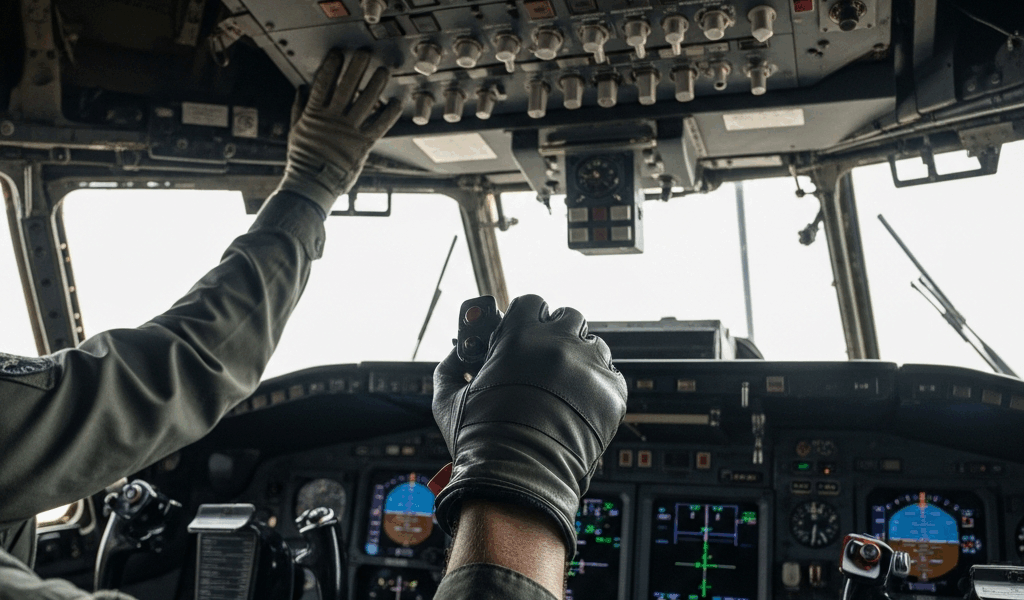
A rejected takeoff is a crew decision to stop the C-17 on the runway instead of continuing into flight. It is one of aviation’s most time-critical events, but the correct decision depends on aircraft speed, performance data, the indication or condition observed, runway characteristics and current approved guidance.
This public overview explains the decision framework and training system. It does not provide C-17 reject criteria, callouts, control inputs, braking technique or post-stop procedures. Operational crews must use current technical orders, checklists and unit training.
What is a rejected takeoff?
Every takeoff begins with an acceleration phase in which the aircraft is still on the ground. If a significant problem develops, the crew may have to decide whether stopping on the runway is safer than continuing the takeoff and handling the condition in flight.
The answer is not simply “stop for every warning.” As speed increases, the energy that the brakes must absorb rises sharply and the runway remaining decreases. At the same time, some conditions can make continued flight unsafe. C-17 crews prepare for that decision before applying takeoff power.
Why aircraft weight and runway matter
The Air Force lists the C-17’s maximum gross takeoff weight as 585,000 pounds. A real departure can be far lighter, and its stopping and takeoff performance change with weight, runway length and condition, wind, temperature, elevation and aircraft configuration.
Crews use approved performance data for the actual aircraft and conditions. A generic speed or distance copied from an online article cannot replace that calculation. The original version of this page invented a universal 40-to-100-knot decision window and unsupported stopping distances; those claims have been removed.
What kinds of conditions can affect the decision?
At a public level, a crew may need to assess:
- engine or fire indications;
- loss of directional control;
- flight-control, warning or aircraft-system indications;
- tire, brake or landing-gear concerns;
- runway contamination, wildlife or another external hazard;
- any condition covered by the current aircraft guidance.
An indication is not proof of a specific failure, and different conditions can have different criteria. The aircraft commander and crew apply the current guidance to what the aircraft is actually doing.
Who is on the C-17 crew?
The standard C-17 crew consists of two pilots and one loadmaster, according to the Air Force fact sheet. The earlier article incorrectly described a four-person flight deck with a flight engineer. The C-17 does not use a flight engineer as part of its standard crew.
During takeoff, the pilots divide aircraft-control, monitoring and communication duties according to their briefing and approved procedures. The loadmaster manages cargo-compartment responsibilities and participates in crew coordination within the loadmaster’s role.
What stopping systems does the C-17 have?
The C-17 has wheel brakes, anti-skid protection and thrust reversers, but their availability and effectiveness depend on the actual condition. The aircraft’s four F117-PW-100 engines use thrust reversers that direct airflow upward and forward, a feature that also supports operations at austere fields.
Knowing that those systems exist is different from prescribing how to use them during a reject. Brake-energy limits, reverse-thrust use, steering, aircraft control and evacuation decisions belong in current aircraft guidance and crew training.
Why brake energy matters
Stopping a heavy aircraft converts kinetic energy into heat, much of it in the wheel brakes. Higher speed and weight mean substantially more energy. That is why takeoff planning considers whether a stop can be accomplished within the applicable limits and available runway.
After a high-energy stop, hot brakes and tires can create hazards for the crew, passengers, firefighters and maintenance personnel. The correct actions depend on the condition and current checklist. The original page’s fixed temperatures, cooling times, parking-brake directions and differential-thrust advice were unsupported and have been removed.
How crews prepare before takeoff
Preparation begins before the aircraft moves. Pilots review aircraft status, weather, runway conditions, performance data and relevant contingencies. A clear crew briefing establishes responsibilities and reduces ambiguity if something changes during the roll.
This is crew resource management in practice: shared expectations, disciplined monitoring and concise communication. It does not mean every scenario uses one universal spoken script.
How rejected takeoffs are trained
Air Education and Training Command reporting says C-17 pilots learn through technical instruction, simulators and aircraft training. The simulators expose students to normal and emergency situations in a controlled environment before their first takeoff.
Simulator training is especially valuable for rejected-takeoff scenarios because instructors can combine system indications, weather, runway conditions and crew workload without risking an aircraft or runway overrun. Students can be evaluated on recognition, judgment, aircraft control and coordination using the approved lesson objectives.
Training continues after initial qualification. The Air Force’s 2025 training-system review describes formal courses at Altus and recurring classroom and simulator training at regional sites.
Why internet “step-by-step” instructions are unreliable
Procedure-style pages become dangerous and inaccurate when they:
- publish one decision speed for every weight and runway;
- invent crew positions or callouts;
- assume one warning proves one failure;
- give control or braking instructions without the checklist’s conditions;
- use fixed cooling times or evacuation rules;
- ignore changes to technical data and aircraft configuration.
The useful public lesson is that rejected takeoffs are planned, briefed and repeatedly trained. The actual decision and response belong to qualified crews using current data.
For related training, see inside C-17 simulator training and the Altus C-17 training guide.
C-17 rejected-takeoff FAQ
Does the C-17 have one universal reject speed?
No public number applies to every takeoff. Aircraft weight, runway, weather, configuration and the specific condition all matter.
Does a flight engineer make the call?
No. The standard C-17 crew has two pilots and one loadmaster, not a flight engineer.
Why use a simulator?
It allows instructors to present emergencies and demanding runway conditions safely, repeatedly and with measurable training objectives.
What should a real pilot do?
Use the current C-17 technical order, checklist, performance data and unit procedures. This page is not operational guidance.
Official sources
- U.S. Air Force: C-17 Globemaster III fact sheet
- Air Education and Training Command: C-17 technical, simulator and aircraft training
- U.S. Air Force: C-17 simulator training
- Air Mobility Command: emergency training in C-17 simulators
- Air Force: 2025 C-17 training-system review
An engine problem can change the takeoff decision; see the C-17 engine-failure overview.

Subscribe for Updates
Get the latest c-17 pilot updates delivered to your inbox.
We respect your privacy. Unsubscribe anytime.