Your Guide to Becoming a C-17 Pilot
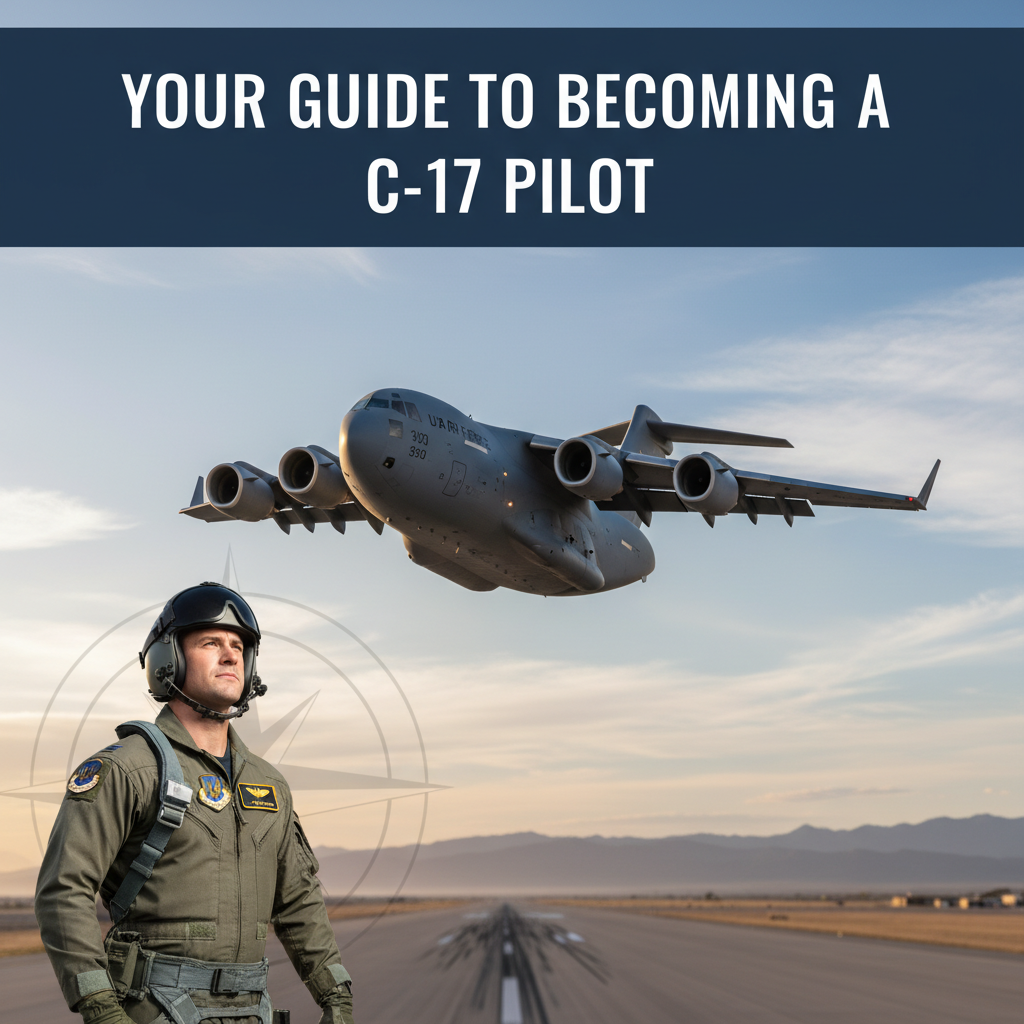
People ask me all the time how to become a C-17 pilot. The honest answer? There’s no guaranteed path. But here’s the process, from someone who actually went through it.
First, Become an Air Force Officer
You can’t fly military aircraft as an enlisted member. You need a commission, which means one of three routes:
- Air Force Academy — Four years in Colorado Springs. Competitive to get in, demanding once you’re there. Good pilot selection rates historically.
- ROTC — Do Air Force Reserve Officer Training Corps at a civilian university. You’ll balance military training with regular college. Pilot slots are competitive but available.
- Officer Training School (OTS) — Already have a degree? OTS is about 8 weeks of condensed officer training. Pilot slots through this route have varied over the years depending on Air Force needs.
Whichever path you choose, you need a bachelor’s degree. Any major works, though STEM fields don’t hurt.
Get Selected for Pilot Training
Being an officer doesn’t mean you’ll fly. You need a pilot slot, and those go to candidates based on a combination of factors:
- Physical qualifications (vision, height, overall health)
- AFOQT scores (the Air Force’s aptitude test for officers)
- TBAS scores (a test specifically predicting pilot aptitude)
- GPA and leadership assessments
- Commander recommendations
The standards change yearly based on how many pilots the Air Force needs. Some years they’re desperate for bodies; other years slots are scarce. Timing matters more than people admit.
Survive Undergraduate Pilot Training
UPT is roughly a year of your life at one of a handful of bases (Columbus AFB, Laughlin AFB, Vance AFB, or a few others). You’ll start in the T-6 Texan II learning basic airmanship, then progress to the T-1 Jayhawk if you’re tracking toward heavies (cargo, tankers) or the T-38 Talon if you’re going fighters/bombers.
The attrition rate isn’t trivial. People wash out for flying deficiencies, airsickness, or just deciding this isn’t for them. It’s a firehose of information delivered at a pace that doesn’t let up.
Class ranking matters. The higher you finish, the better your odds of getting the aircraft you want.
Track Selection: Getting the C-17
Here’s the part nobody can fully control. At the end of UPT, you’ll get “dropped” an aircraft based on your preferences, your ranking, and what the Air Force needs to fill.
If you want the C-17 specifically, you’ll likely go through the T-1 track (multi-engine/tanker-transport). Your class ranking determines when you pick on drop night. Top performers get first choice from whatever aircraft are available. If there’s a C-17 slot and you’re high enough in the ranking, it’s yours.
But here’s reality: sometimes there are no C-17 slots available for your class. Sometimes there are five. The needs of the Air Force drive this, not your preferences.
C-17 Formal Training Unit
Get a C-17 assignment and you’re headed to Altus AFB, Oklahoma for the Formal Training Unit (FTU). This is where you actually learn to fly the Globemaster—systems, procedures, emergency ops, tactical flying, airdrop, the works.
The FTU takes several months. You’ll fly the simulator extensively before touching the real aircraft, then gradually build up to more complex missions. By the end, you’ll be a qualified C-17 copilot ready for your first operational squadron.
Operational Assignment
After the FTU, you’ll PCS (move) to an operational C-17 unit. Major bases include:
- Joint Base Charleston, South Carolina
- Joint Base Lewis-McChord, Washington
- Travis AFB, California
- Dover AFB, Delaware
There are also Guard and Reserve units flying C-17s if that’s more your speed later in your career.
The Reality Check
From starting college to sitting in the left seat of a C-17 as a qualified copilot, you’re looking at roughly 6-8 years minimum. It’s a long road with multiple points where things can go sideways.
But if you make it? You’ll fly a $220 million aircraft to places most people will never see, doing missions that actually matter. Not a bad way to spend a career.

Subscribe for Updates
Get the latest c-17 pilot updates delivered to your inbox.
We respect your privacy. Unsubscribe anytime.